



Definition and Purpose of a Lease to Own Equipment Agreement
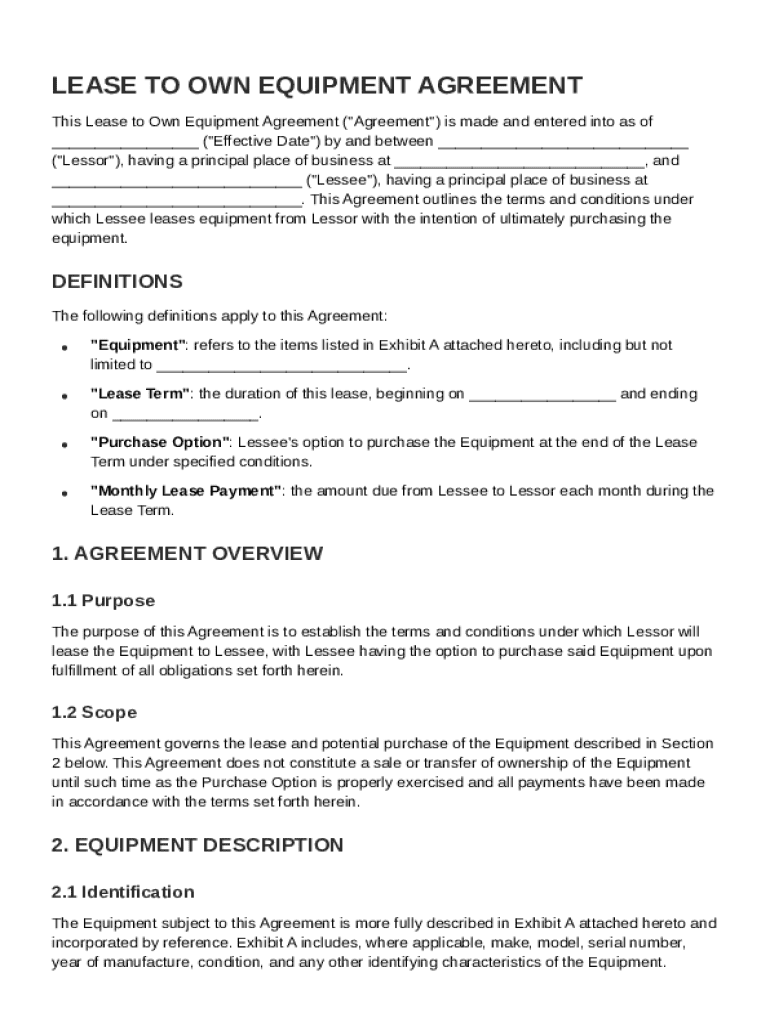
A Lease to Own Equipment Agreement is a contractual document that stipulates the conditions under which a lessor leases equipment to a lessee with an option for the lessee to purchase the equipment at the conclusion of the lease term. This agreement covers critical components such as the responsibilities and obligations of both parties, payment schedules, and maintenance requirements.
The agreement is designed to provide businesses and individuals the flexibility to lease necessary equipment initially and later purchase it, if desired. It is particularly beneficial for companies that prefer not to commit significant capital upfront, allowing a trial period before deciding on a purchase. Additionally, this contractual arrangement details the protocol for addressing events of default, ensuring both lessor and lessee understand their respective remedies in cases of non-compliance.
Key Elements of the Lease to Own Equipment Agreement Template
An effective Lease to Own Equipment Agreement must include specific elements to ensure clarity and legal enforceability:
- Definitions and Parties: Clearly define the roles and identities of the lessor and lessee, as well as a detailed description of the equipment involved.
- Lease Term and Payment Details: Specify the duration of the lease, the payment frequency, and the amount due. Include any penalties for late payments.
- Maintenance and Insurance Requirements: Outline the lessee's responsibilities regarding equipment maintenance and insurance coverage to avoid depreciation and damage.
- Purchase Option Terms: Detail how and when the purchase option can be exercised, including any conditions or financial obligations that must be met to complete the purchase.
- Default Events and Remedies: Provide an exhaustive list of default events, such as missed payments or violation of terms, and the resulting consequences or remedies available to the lessor.
Legal Use and Compliance
Ensuring legal compliance in the creation and execution of a Lease to Own Equipment Agreement is paramount. This agreement is subject to both federal and state regulations, which mandate specific disclosures and stipulations to be present. Compliance with these regulations ensures the agreement is legally enforceable and protects the rights of both parties.
Legal consultation is recommended when drafting such agreements to ensure all legal frameworks are adhered to. This includes understanding the ESIGN Act requirements for legally binding electronic signatures if the agreement is to be executed digitally.
Steps to Complete the Lease to Own Equipment Agreement Template
Completing a Lease to Own Equipment Agreement Template involves several structured steps to ensure the document is accurate, complete, and legally sound:
- Gather Necessary Information: Collect details about the parties involved, the equipment, and terms of the lease and purchase.
- Customize the Template: Fill in the template with specific information, ensuring that all sections accurately reflect the agreed-upon terms.
- Review Legal Requirements: Check compliance with legal requirements, including any state-specific conditions that could affect the agreement.
- Verify Financial Details: Ensure that all financial data, such as payment schedules and amounts, are correct and meet both parties' approval.
- Secure Electronic Signatures: If using digital signing capabilities such as those provided by DocHub, follow proper protocols to authenticate signatures.
Important Terms Related to the Agreement
Several essential terms commonly appear within a Lease to Own Equipment Agreement, each carrying specific significance in the context of the agreement:
- Lessee: The party receiving the equipment under the lease agreement.
- Lessor: The party providing the equipment and holding the title during the lease term.
- Lease Term: The period during which the lessee has possession of the equipment while making agreed-upon payments.
- Purchase Option: A clause allowing the lessee to purchase the leased equipment at the end of the lease period.
- Default: Conditions under which the lessee fails to comply with the agreement, like missed payments, necessitating remediation measures.
Use Cases for the Lease to Own Equipment Agreement Template
Businesses and individuals utilize a Lease to Own Equipment Agreement for various strategic and financial reasons:
- Startup Businesses: Small businesses with limited upfront capital can lease necessary equipment to conserve resources for other operations.
- Seasonal Businesses: Companies with irregular equipment needs can lease equipment for peak periods without committing to a full purchase.
- Testing Equipment: Businesses may lease to evaluate equipment performance before making a significant purchase decision, minimizing investment risks.
State-Specific Rules and Differences
While the Lease to Own Equipment Agreement provides a general framework, specific rules and requirements vary across different states, influencing:
- Taxation: Some states may have tax implications that differ for leased versus purchased equipment, affecting financial planning.
- Legal Enforcement: State laws dictate how agreements are enforced, particularly concerning default events and remedies.
- Regulation Compliance: State-specific regulations could impose additional disclosure or operational requirements that must be reflected in the agreement.
Versions or Alternatives to the Lease to Own Equipment Agreement
There are variations and alternatives to the standard Lease to Own Equipment Agreement that cater to differing needs:
- Pure Lease Agreements: For those who do not wish to purchase equipment, a simple lease without the purchase option may be more appropriate.
- Conditional Sales Contracts: These agreements are similar but emphasize the sales aspect rather than leasing, providing a direct path to acquisition post-lease.
- Operating vs. Financing Leases: Depending on how the lease is structured financially and tax-wise, companies may choose one over the other to align with their accounting preferences.
Who Typically Uses the Lease to Own Equipment Agreement Template
A diverse range of entities benefits from using a Lease to Own Equipment Agreement:
- Small and Medium Enterprises (SMEs): Often opt for leasing to align cash flow with operational needs without compromising equipment quality.
- Construction Companies: Regularly use this agreement type for heavy machinery and equipment, balancing between short-term project needs and long-term investments.
- Technology Firms: Often lease cutting-edge technology equipment, ensuring access to the latest advances without excessive capital layout.