
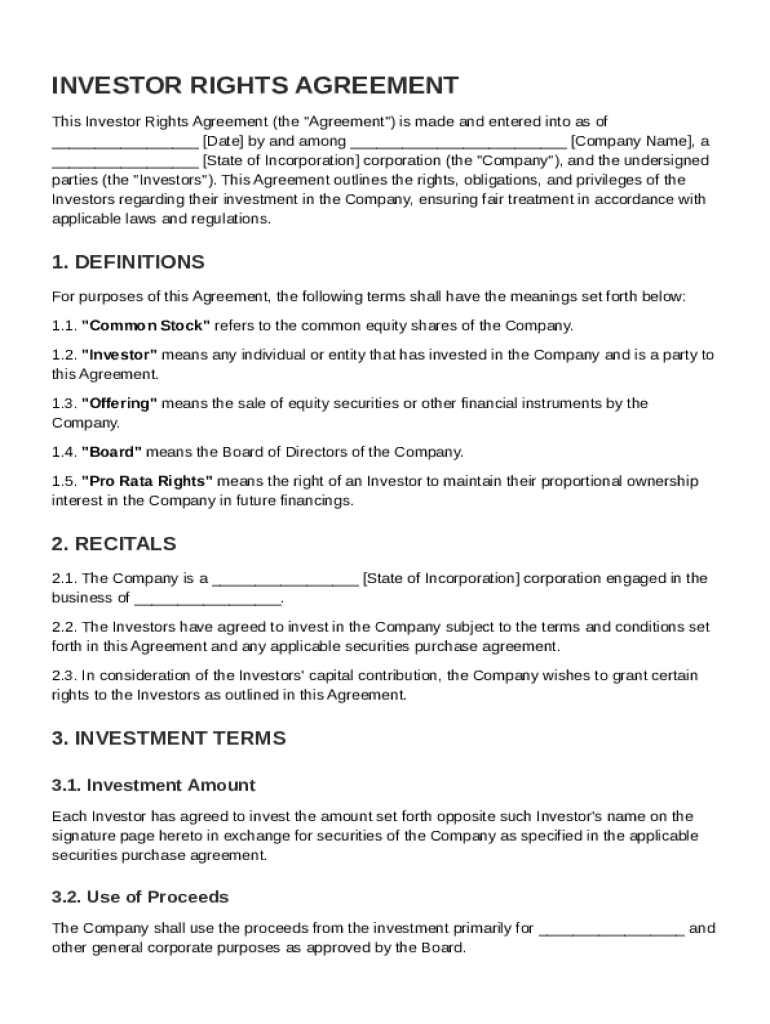







Definition and Meaning
An Investor Rights Agreement is a legal document that details the rights and obligations between investors and a company in which they have invested. It typically outlines terms such as investment amounts, use of proceeds, information rights, voting rights, board representation, registration rights, pro rata participation, transfer restrictions, confidentiality obligations, and dispute resolution. This agreement is designed to protect investors while ensuring fair treatment and safeguarding the interests of the company.
Key Elements of the Investor Rights Agreement Template
The template for an Investor Rights Agreement includes various essential elements that streamline the understanding and agreement between the involved parties:
- Investment Amounts: Defines the total funds invested by each party.
- Use of Proceeds: Describes how the invested funds will be utilized within the company.
- Information Rights: Details the right of investors to access the company’s financial and operational data.
- Voting Rights: Outlines the rights of investors to vote on certain company matters.
- Board Representation: Specifies any seats given to investors on the company’s board of directors.
- Registration Rights: Addresses investors' rights to demand registration of securities for sale.
Steps to Complete the Investor Rights Agreement Template
Completing an Investor Rights Agreement involves several sequential steps:
- Gather Required Information: Collect necessary details about the investment, parties involved, and specific terms.
- Define Investment Terms: Clearly outline the investment amount, use of proceeds, and any conditions associated.
- Specify Rights and Obligations: Detail the rights like voting, board representation, and registration rights.
- Include Confidentiality and Dispute Resolution Clauses: Provide clauses related to confidentiality and processes for resolving disputes.
- Review and Finalize Draft: All parties should review the draft to ensure all terms are accurately represented before final signing.
How to Use the Investor Rights Agreement Template
Using the Investor Rights Agreement Template can simplify the agreement creation process:
- Customize the Template: Fill in specific information about the investment and parties involved.
- Include All Necessary Clauses: Ensure all relevant clauses such as confidentiality, dispute resolution, and obligations are included.
- Consult Legal Expertise: Have a legal expert review the template to ensure compliance with legal standards and relevance to your specific situation.
- Obtain Signatures: Once the agreement is verified, obtain the necessary signatures from all parties to make it binding.
Who Typically Uses the Investor Rights Agreement Template
The Investor Rights Agreement Template is primarily used by:
- Startups and New Ventures: Companies looking to raise funds from investors typically use this agreement to formalize rights and obligations.
- Existing Corporations: Established businesses seeking additional investment to expand operations or fund new projects.
- Investment Firms: Institutional investors and venture capitalists often require such agreements when investing in a company.
- Legal Professionals: Attorneys and consultants advising businesses or investors on their investment dealings.


Legal Use of the Investor Rights Agreement Template
The legal use of an Investor Rights Agreement Template entails:
- Ensuring compliance with federal and state laws governing securities and investments.
- Structuring it to reflect any state-specific requirements and investor protection laws.
- Including necessary disclaimers and warranties to reduce legal liability.
- Providing clarity on dispute resolution processes as per jurisdictional norms.
State-Specific Rules for the Investor Rights Agreement Template
Different states may have unique requirements or variations for Investor Rights Agreements:
- Securities Regulations: Each state may have differing rules concerning registration of securities.
- Investor Protections: Requirements for investor protections may vary, such as financial disclosures or board representation stipulations.
- Voting and Proxy Laws: Specific rules on how investor voting and proxy setup must be documented.
- Dispute Resolution: Preferred or required methods of resolving disputes might differ by state law.
Examples of Using the Investor Rights Agreement Template
Here are practical examples of scenarios where the Investor Rights Agreement Template might be used:
- Scenario 1: A tech startup seeking to raise Seed funding from angel investors uses this agreement to specify the terms of investment and protect the interests of both parties.
- Scenario 2: A manufacturing company that offers Series A funding opportunities ensures that investor rights are clearly defined, including information access and board participation.
- Scenario 3: An investor looking to safeguard their equity stake in a growing company utilizes this agreement to enforce voting rights and registration rights in forthcoming public offerings.




