






Definition and Purpose of the Incident and Injury Form in Child Care
The Incident and Injury Form serves as a critical documentation tool within child care settings. This form allows caregivers and staff to record detailed accounts of any injuries sustained by children. It is essential for ensuring that appropriate actions are taken in response to an incident and for maintaining clear communication with parents or guardians regarding the welfare of their children.
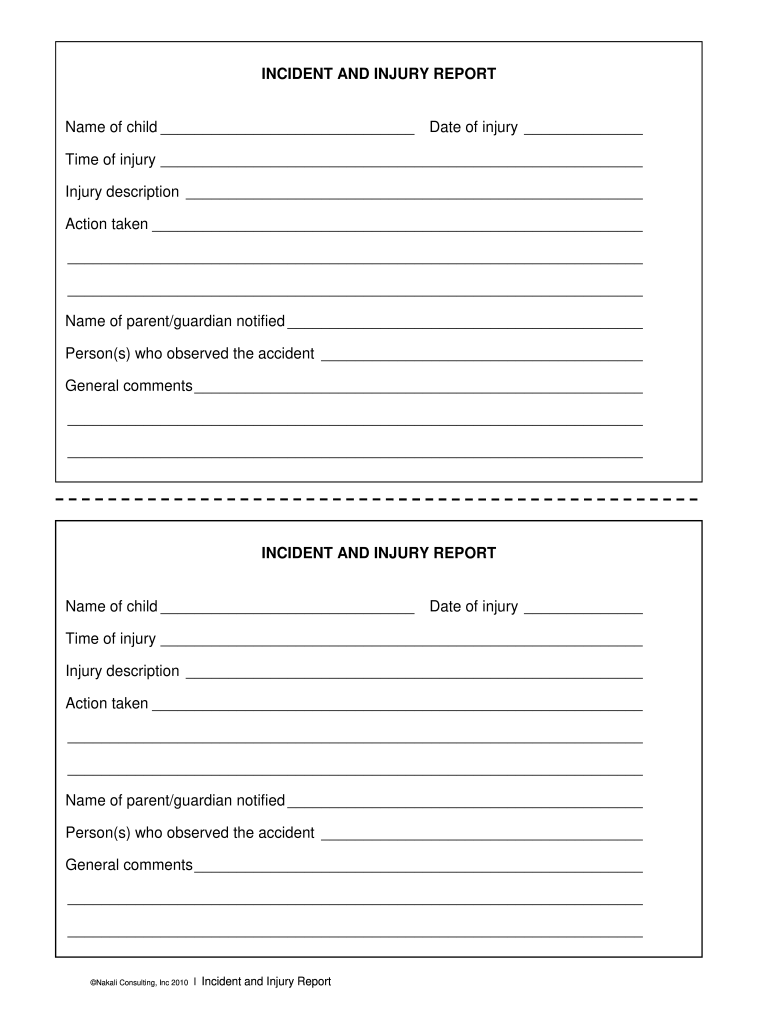
The form typically includes key information such as the child's name, the date and time of the incident, a description of the injury or incident, actions taken in response, individuals notified (including parents or guardians), witnesses to the event, and any additional comments relevant to the situation. Having this information documented is crucial for both compliance and improvement of safety protocols within child care facilities.
In addition to documentation, the Incident and Injury Form helps organizations identify patterns of incidents that may indicate underlying safety concerns or require staff training. By reviewing the completed forms regularly, management can devise strategies to mitigate risks and enhance child safety policies, making it a fundamental component in the childcare industry.
Key Elements of the Incident and Injury Form in Child Care
Understanding the key components of the Incident and Injury Form is vital for effectively utilizing it in a childcare environment. Each section of the form gathers specific information that is essential for resolving the incident and preventing future occurrences. Key elements typically include:
-
Child Information: Includes the child's full name, age, and any relevant medical history or allergies that may affect the response to the injury.
-
Incident Details: Captures the date, time, and location of the incident, providing context and helping to understand environmental factors that may have contributed to the injury.
-
Description of Injury: A detailed account of the injury itself, specifying the type, severity, and immediate symptoms observed.
-
Actions Taken: Outlines the steps taken immediately after the incident, such as first aid administered, notifications made to health professionals or parents, and any follow-up actions required.
-
Witnesses: Records individuals who witnessed the incident, which provides additional perspective and corroboration of the events as they transpired.
-
Parent/Guardian Notification: Details regarding when and how parents were notified, emphasizing communication and transparency with families.
-
Additional Comments: Offers space for any supplementary observations that may be relevant, such as comments from witnesses or staff reflections on preventative measures.
Thoroughly filling these elements ensures comprehensive data collection, which is essential for reviewing incidents and enhancing child safety protocols.
Steps to Complete the Incident and Injury Form in Child Care
Completing the Incident and Injury Form requires careful attention to detail and a clear understanding of the incident's context. The following steps provide a structured approach to ensure accuracy and thoroughness:
-
Gather Information: Collect all necessary details about the incident before filling out the form. This includes talking to the child, witnesses, and reviewing the area where the incident occurred to gather comprehensive information.
-
Document Child Information: Start the form by noting the child's full name, age, and any relevant health information, ensuring the data is current and accurate.
-
Describe the Incident: Clearly outline the date, time, and specific location of the incident. Provide a detailed, objective narrative of what occurred, avoiding assumptions or emotional language.
-
Detail the Injury: Describe the nature of the injury. Include specifics about the visible signs (e.g., bruising, cuts) and any immediate symptoms reported by the child.
-
Record Actions Taken: Document the steps taken immediately following the incident. This may include administering first aid, moving the child to a safe location, or contacting medical personnel.
-
Note Witnesses: List any staff or other individuals who witnessed the incident and can provide additional context or verification of the event.
-
Complete Parent Notification Section: Clearly indicate when and how the child's parents or guardians were informed about the incident, including any follow-up conversations.
-
Provide Additional Comments: Utilize this section to note any insights or suggested improvements for safety practices based on the incident.
-
Review and Submit: Before finalizing the form, review all entries for accuracy and completeness. After ensuring everything is correctly filled out, submit the form according to your child care facility's procedures.
Adhering to these steps ensures that all incidents are documented comprehensively, enabling childcare providers to enhance their safety protocols effectively.
Legal Use of the Incident and Injury Form in Child Care
The legal implications surrounding the use of the Incident and Injury Form are significant, as accurate documentation can protect childcare facilities from liability. Here are key aspects to consider:
-
Compliance Requirements: Many states have regulations mandating the completion of incident reports whenever a child is injured while in a care setting. This compliance is essential for maintaining licensure and accreditation.
-
Documentation Integrity: The form serves as an official record that can be referenced in case of disputes or investigations by regulatory bodies. Accurate and timely submissions demonstrate a facility’s accountability and adherence to safety regulations.
-
Reporting to Authorities: In some cases, particularly serious injuries or repeated incidents, child care providers may need to report the occurrence to local or state child welfare agencies. Having well-documented forms can facilitate this process and ensure proper follow-up.
-
Legal Protection: In the event of a liability claim, detailed incident reports play a crucial role in establishing what occurred, aiding in defending against allegations of negligence. Thorough documentation that accurately captures the sequence of events can be a vital component of legal defense.
Utilizing the Incident and Injury Form accurately and consistently is not just a best practice but a legal necessity in supporting child care providers and ensuring child safety.
Examples of Using the Incident and Injury Form in Child Care
Illustrating how the Incident and Injury Form is employed can provide practical insights for child care providers. Here are several scenarios showcasing its importance:
-
Accidental Falls: A child trips while playing outdoors and sustains a scraped knee. The caregiver fills out the form, noting the child’s name, the location, the details of the fall, and the first aid provided. This incident is documented to ensure parents are informed and preventive measures can be reviewed.
-
Bites or Scratches: If a child bites another child in a classroom setting, the form would note the details of both children, the context of the event, and any actions taken, such as notifying parents and seeking medical attention where necessary.
-
Food Allergies: In the case of an allergic reaction to a snack, the form captures not only the child’s name and the time of the incident but also the specific allergen and the response initiated by caregivers, crucial for maintaining safety protocols in food handling.
-
Behavioral Incidents: When one child injures another during an altercation, documentation of the incident provides a clear timeline and details that can be reviewed, helping caregivers address behavioral patterns and improve conflict resolution practices.
By using the Incident and Injury Form effectively in these scenarios, child care providers enhance their safety practices and ensure that consistent measures are followed to prevent similar occurrences in the future.




