Definition & Meaning
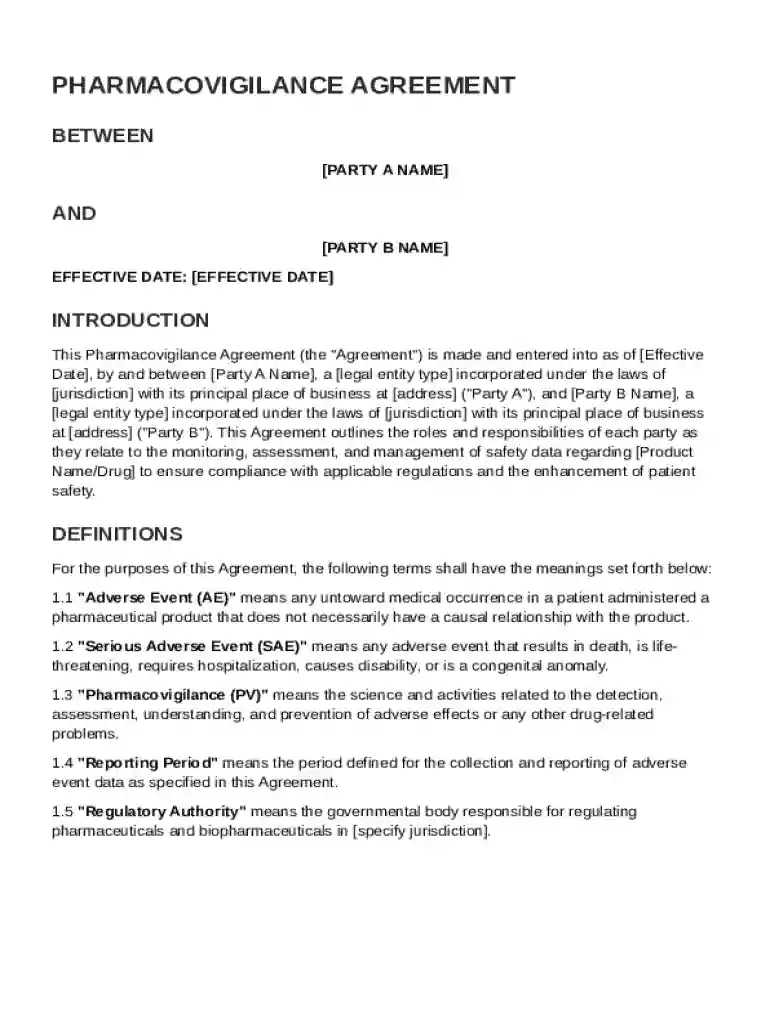
The Pharmacovigilance Agreement Template is a structured document outlining the roles and responsibilities of two parties, typically a pharmaceutical company and its collaborator, in monitoring and managing safety data for a specific pharmaceutical product. This template establishes a comprehensive framework for compliance with regulatory requirements, covering the collection, assessment, and reporting of adverse events associated with the product. It includes definitions of critical terms, responsibilities, data sharing protocols, and reporting timelines.
Key Components
- Roles and Responsibilities: Clear definition of what each party is accountable for to ensure streamlined processes and avoid misunderstandings.
- Data Collection and Reporting: Comprehensive guidelines on how safety data and adverse events should be collected, assessed, and reported.
- Compliance Obligations: Specific legal and regulatory standards that both parties must adhere to, including FDA and other international regulations.
How to Use the Pharmacovigilance Agreement Template
Utilizing a Pharmacovigilance Agreement Template involves understanding the structure and required sections of the document. Here’s how you can effectively put it into use:
- Review the Template: Ensure all sections applicable to the specific agreement are included and correctly formatted.
- Customize Content: Adapt the template details to align with the particular agreement's needs and both parties' roles.
- Consult Legal Experts: Prior to finalizing the document, it's essential to get legal counsel to review for any gaps or legal risks.
Practical Considerations
- Customization: Adjust the template to reflect the specific project or product details.
- Validation: Ensure all terms are mutually agreed upon before signing.
- Documentation: Maintain a copy of the signed agreement for compliance and audit purposes.
Key Elements of the Pharmacovigilance Agreement Template
The template encompasses several critical elements designed to ensure comprehensive pharmacovigilance practices. These elements include:
Responsibilities and Obligations
- Data Sharing Protocols: Establishes secure and efficient data transfer methods between parties.
- Confidentiality Agreements: Details measures to protect sensitive information from unauthorized access.
- Training Requirements: Specifies training protocols for all involved personnel to ensure consistent understanding and execution.
Quality Assurance
- Audit Trail: A system for tracking and documenting changes made to the agreement and safety data.
- Quality Checks: Routine evaluations to verify that the procedures and data reporting meet set standards.
Steps to Complete the Pharmacovigilance Agreement Template
Completing the Pharmacovigilance Agreement Template involves several meticulous steps. Here’s a guideline for filling it out:
- Identify Parties: Clearly list the names and roles of both parties involved.
- Define Scope: Ensure the document clearly details the scope of safety data management.
- Establish Timelines: Agree on timelines for the reporting and evaluation of adverse events.
- Outline Compliance Standards: Specify the relevant regulatory standards both parties must comply with.
- Review and Approval: Conduct a thorough review with legal consultants and obtain signatures from the authorized representatives.
Detailed Process
- Data Input: Accurately fill in required information, ensuring no section is overlooked.
- Validation: Double-check each section for accuracy and alignment with regulatory standards.
- Finalization: Once completed, confirm that all sections meet contractual obligations before signing.
Important Terms Related to Pharmacovigilance Agreement Template
Understanding specific terms is vital for those working with Pharmacovigilance Agreements. Some important terms include:
Regulatory Terms
- Adverse Event: Any undesirable experience associated with the use of a medical product.
- Serious Adverse Event: An adverse event leading to death, hospitalization, or significant disability/incapacity.
Contractual Terms
- Indemnification Clause: Provision for compensating a party for any loss or damage incurred.
- Dispute Resolution Mechanism: Predefined process for resolving conflicts between parties.
Legal Use of the Pharmacovigilance Agreement Template
Using a Pharmacovigilance Agreement Template legally involves ensuring compliance with applicable laws and regulations in the pharmaceutical industry. Key considerations include:
Compliance
- Adherence to Laws: Ensuring the agreement complies with U.S. FDA regulations and international standards.
- Record Keeping: Mandatory retention of documentation to support audits and legal inquiries.
- Notification Protocols: Legal requirement to report adverse events to relevant bodies promptly.
Contract Validity
- Mutual Agreement: Ensuring informed consent by all parties involved.
- Authorization: Verification that signatories are authorized to enter into the agreement on behalf of their respective parties.
Examples of Using the Pharmacovigilance Agreement Template
Real-world examples help illustrate how a Pharmacovigilance Agreement Template is implemented:
- Partnerships: A pharmaceutical company collaborating with a contract research organization to monitor a drug's safety.
- International Collaborations: Agreements between a U.S.-based pharmaceutical firm and overseas partners to manage safety data, considering both local and international regulations.
- Product Launches: Using the template to define safety monitoring processes for new drug trials.
Lessons from Use Cases
- Flexibility: Adaptability is essential for incorporating changes related to new legislation or adverse event trends.
- Communication: Effective communication protocols within the agreement enhance the collaboration between parties.
Software Compatibility (TurboTax, QuickBooks, etc.)
When dealing with a Pharmacovigilance Agreement Template, it's crucial to understand its compatibility with popular documentation and compliance software:
Digital Tools
- Document Editors: Use software like Microsoft Word and Google Docs for drafting and sharing the template.
- Compliance Software: Integrations with compliance tracking systems help maintain adherence to reporting standards.
- Secure Repositories: Store and manage sensitive data securely using platforms like DocHub, ensuring ease of access and management across parties.
Advantages of Compatibility
- Efficiency: Streamlined workflows with software integrations reduce manual efforts and errors.
- Security: Enhanced data protection through secure software environments.