Definition & Meaning
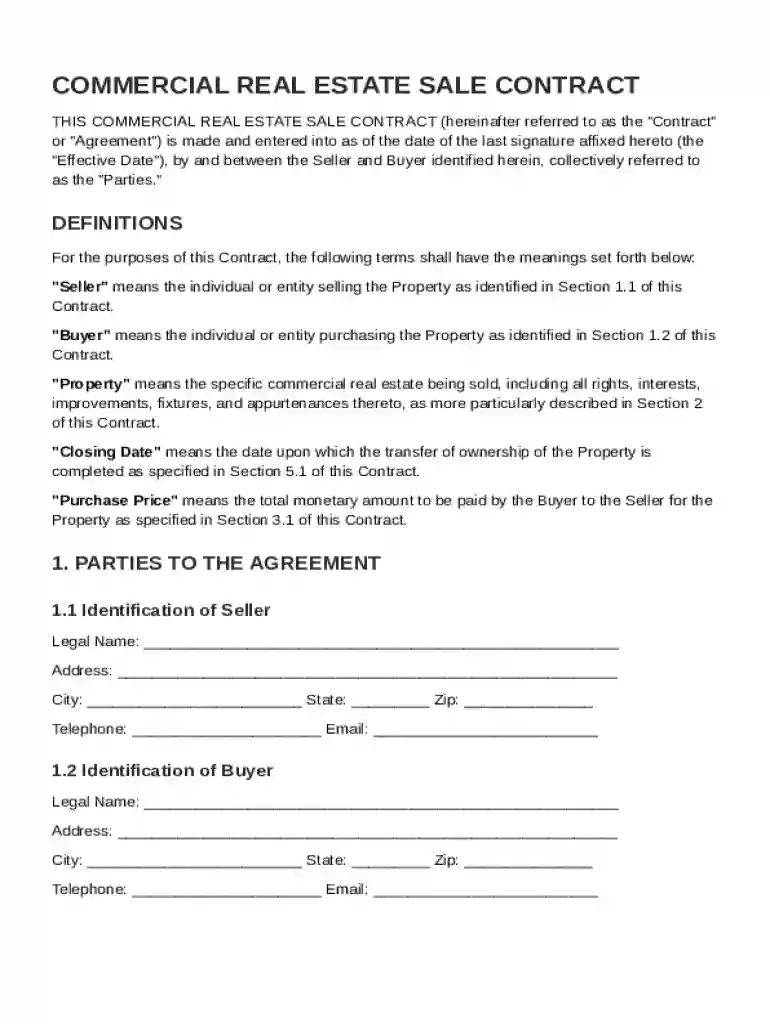
A Commercial Real Estate Sale Contract Template is a legally binding document used to outline the agreements between a seller and a buyer regarding the sale of a specific commercial property. This template serves as a standardized form to ensure all necessary details and provisions are included systematically, providing clarity and protection for both parties involved.
- Key Components: The contract typically includes sections such as the identification of parties involved, a detailed description of the property, agreed purchase price, payment terms, and conditions precedent to closing.
- Legal Framework: It is designed to comply with the legal standards and requirements that govern real estate transactions, ensuring that all transactions are conducted legally and fairly.
Key Elements of the Commercial Real Estate Sale Contract Template
Understanding the integral parts of the contract is essential for both parties. Here are the primary sections included:
- Identification of Parties: Clearly names and defines the seller and buyer involved in the transaction.
- Property Description: Offers an accurate and detailed description of the commercial property being sold, including address, plot size, and additional characteristics.
- Purchase Price & Payment Terms: Specifies the agreed-upon sale price and details the payment schedule, including any deposits or installment plans.
- Closing Process: Lays out the steps that need to be completed before the transaction is finalized, including the transfer of title.
- Representations and Warranties: Outlines the assurances each party must provide to ensure the property and the transaction meet agreed standards.
- Risk of Loss: Details provisions on how risks to the property will be managed between the signing and the closing of the contract.
Steps to Complete the Commercial Real Estate Sale Contract Template
Completing the template involves several precise steps to ensure accuracy and compliance:
- Gather Necessary Information: Collect details about the property, including legal description and market valuation, and personal details of both parties.
- Fill Out Identification Details: Enter the names, roles (seller or buyer), and contact information of both parties.
- Detail the Property Description: Accurately describe the property, specifying dimensions, boundaries, and any included fixtures.
- Set Purchase Price and Terms: Agree on a purchase price and lay out clear payment terms and timelines.
- Outline Conditions Precedent: Identify any conditions that must be met prior to closing, such as inspections or financing contingencies.
- Review and Sign: Both parties should review the completed contract carefully before signing to affirm agreement and understanding.
Legal Use of the Commercial Real Estate Sale Contract Template
A primary consideration in using such a template is adhering to legal standards:
- Compliance with State Laws: Each contract must comply with the specific real estate laws and regulations of the state where the property is located.
- Enforceability: For the contract to be enforceable, it must include clear terms and be signed by both parties.
- Risk and Liability Management: The template helps outline risk management strategies and clearly defines liabilities, mitigating disputes.
Important Terms Related to Commercial Real Estate Sale Contract Template
Understanding specific terms within the context of this template is vital:
- Conditions Precedent: Events or actions that must occur before the contract becomes binding.
- Indemnification Clause: Provisions that require one party to compensate another for certain costs and losses.
- Governing Law: The jurisdiction whose laws will be used to interpret the contract.
State-by-State Differences
Commercial real estate contracts can vary significantly depending on state regulations:
- Disclosure Requirements: Different states may have varying disclosure requirements, detailing what the seller must inform the buyer about the property.
- Local Compliance: Ensure compliance with local zoning laws and property tax requirements.
Digital vs. Paper Version
The contract can be completed in both digital and paper formats, each having its advantages:
- Digital Version: Offers convenience and accessibility, ensuring easy edits and electronic signatures through platforms like DocHub.
- Paper Version: Provides a traditional method often preferred for face-to-face transactions or when technological access is limited.
Choosing the format depends on the parties' preferences and the transaction's nature, but electronic versions streamline the process and reduce logistical constraints.