Definition & Meaning
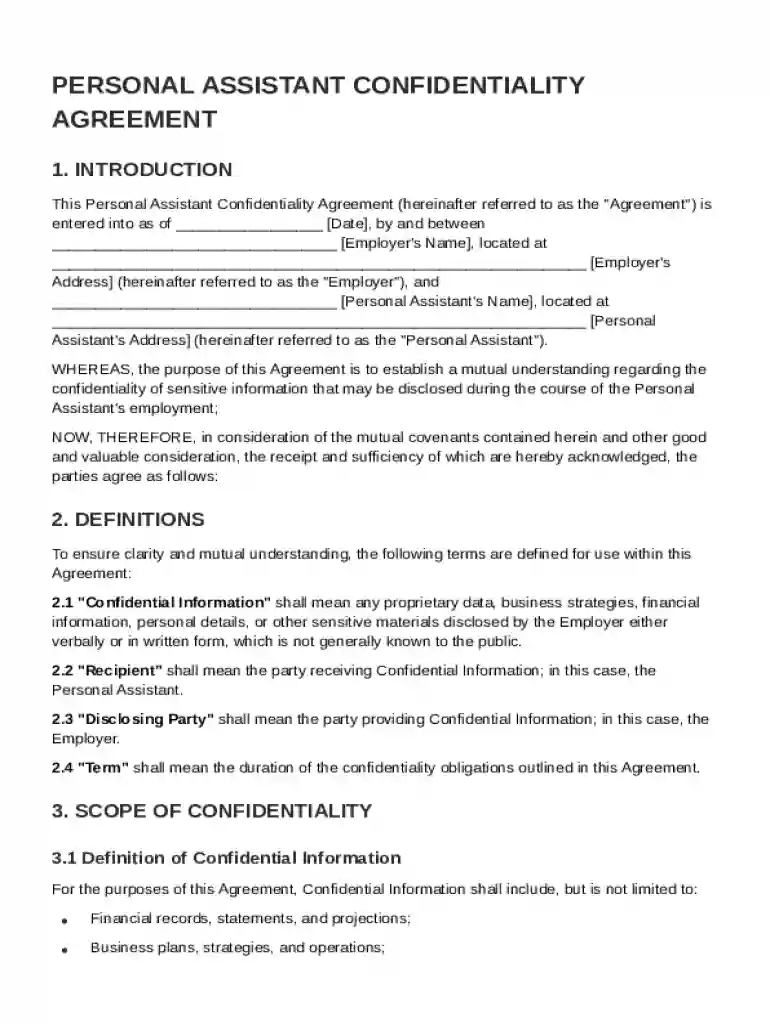
The Personal Assistant Confidentiality Agreement Template is a legal document designed to establish a mutual understanding between an employer and a personal assistant regarding the handling of sensitive information. This agreement defines 'Confidential Information' and sets forth specific obligations for maintaining confidentiality. It outlines the responsibilities of the personal assistant to protect sensitive data, exceptions to these obligations, and the duration of the agreement. The agreement ensures that both parties are clear on what constitutes confidential information and how it should be safeguarded during and after employment.
Key Provisions
- Confidential Information: Specifies what types of information are deemed confidential, including trade secrets, client lists, and personal data.
- Obligations: Details the duties of the personal assistant to keep information confidential and restricts unauthorized disclosure.
- Exceptions: Lists scenarios where disclosure is permitted, such as legal requirements or consent by the employer.
- Duration: Specifies the period for which confidentiality must be maintained, often continuing beyond the term of employment.
How to Use the Personal Assistant Confidentiality Agreement Template
Utilizing the Personal Assistant Confidentiality Agreement Template involves several straightforward steps to customize and execute the agreement effectively. This template is designed to be flexible, allowing users to tailor specific sections to fit the unique needs of their employment relationship.
Steps for Customization
- Download and Review: Obtain the template from a reputable source, ensuring it aligns with state-specific legal requirements.
- Identify Confidential Information: Clearly define what information is considered confidential in the context of the job.
- Tailor Obligations: Modify the obligations section to reflect the specific duties and expectations from the personal assistant.
- Set Exceptions and Duration: Adjust these clauses to meet your requirements, considering legal obligations and business needs.
- Legal Review: It is often beneficial to have a legal professional review the customized document to ensure compliance.
Steps to Complete the Personal Assistant Confidentiality Agreement Template
Completing the Personal Assistant Confidentiality Agreement Template involves careful attention to detail and ensures that all necessary sections are customized appropriately. Follow these steps to complete the agreement.
Detailed Procedure
- Gather Information: Collect details about the employer, personal assistant, and the nature of the confidential information.
- Fill Out the Template: Input the gathered data into the respective sections of the template.
- Review for Accuracy: Double-check all entries to ensure that there are no errors or omissions.
- Signatures: Secure signatures from both the employer and the personal assistant, acknowledging their understanding and agreement.
- Distribute Copies: Provide signed copies to both parties for their records.
Key Elements of the Personal Assistant Confidentiality Agreement Template
Understanding the key elements of the Personal Assistant Confidentiality Agreement Template is crucial for its effective implementation. These components ensure that the agreement is comprehensive and legally binding.
Essential Sections
- Parties Involved: Clearly names the employer and the personal assistant.
- Definition of Confidential Information: Outlines specific categories of information that are protected.
- Confidentiality Obligations: Details the duties required to safeguard confidential information.
- Duration and Termination: Specifies how long the obligations last and the conditions under which the agreement may be terminated.
- Consequences of Breach: Describes potential legal actions or penalties in the event of a breach.
Important Terms Related to the Personal Assistant Confidentiality Agreement Template
Familiarizing yourself with important terms related to the Personal Assistant Confidentiality Agreement Template enhances understanding and ensures proper usage.
Glossary
- Non-Disclosure Agreement (NDA): A generic term that refers to a contract where parties agree not to disclose certain information.
- Trade Secret: Information, including formulas, practices, processes, designs, instruments, or patterns, not commonly known or reasonably ascertainable.
- Breach of Contract: Occurs when one party fails to fulfill their obligations as outlined in the contract.
- Jurisdiction: The legal territory in which the agreement is executed and enforceable.
Legal Use of the Personal Assistant Confidentiality Agreement Template
The legal application of the Personal Assistant Confidentiality Agreement Template is integral to its function as a protective measure for sensitive information. Understanding its legal aspects ensures compliance and enforceability.
Legal Considerations
- Enforcement: Ensure the agreement complies with local and federal laws to be legally binding.
- Governing Law: Specify which state's law governs the agreement and disputes arising from it.
- Legal Recourse: Outline the remedies available in case of a breach, such as injunctions or monetary damages.
Who Typically Uses the Personal Assistant Confidentiality Agreement Template
The Personal Assistant Confidentiality Agreement Template is employed by various parties who handle sensitive information in professional settings. Identifying typical users helps tailor the agreement to specific needs.

Common Users
- Individual Employers: Individuals who hire personal assistants for help with private and professional tasks often use this agreement to protect personal and business information.
- Small Businesses: Utilize the agreement to safeguard proprietary information shared with personal assistants or administrative staff.
- Corporate Executives: Use these agreements to maintain the confidentiality of strategic company information.
State-Specific Rules for the Personal Assistant Confidentiality Agreement Template
Different states may have varying legal requirements for confidentiality agreements. Understanding these state-specific rules ensures compliance and enforceability of the agreement in the relevant jurisdiction.
Considerations by State
- State Laws: Some states have specific statutes governing confidentiality and trade secrets that must be integrated into the agreement.
- Legal Requirements: States like California may have particular rules regarding the enforceability of non-compete clauses, often related to confidentiality agreements.
- Revisions Needed: Legal advice might be required to tailor the agreement according to state laws and ensure it does not contain any illegal provisions.