Definition and Purpose of a Building Lease Agreement
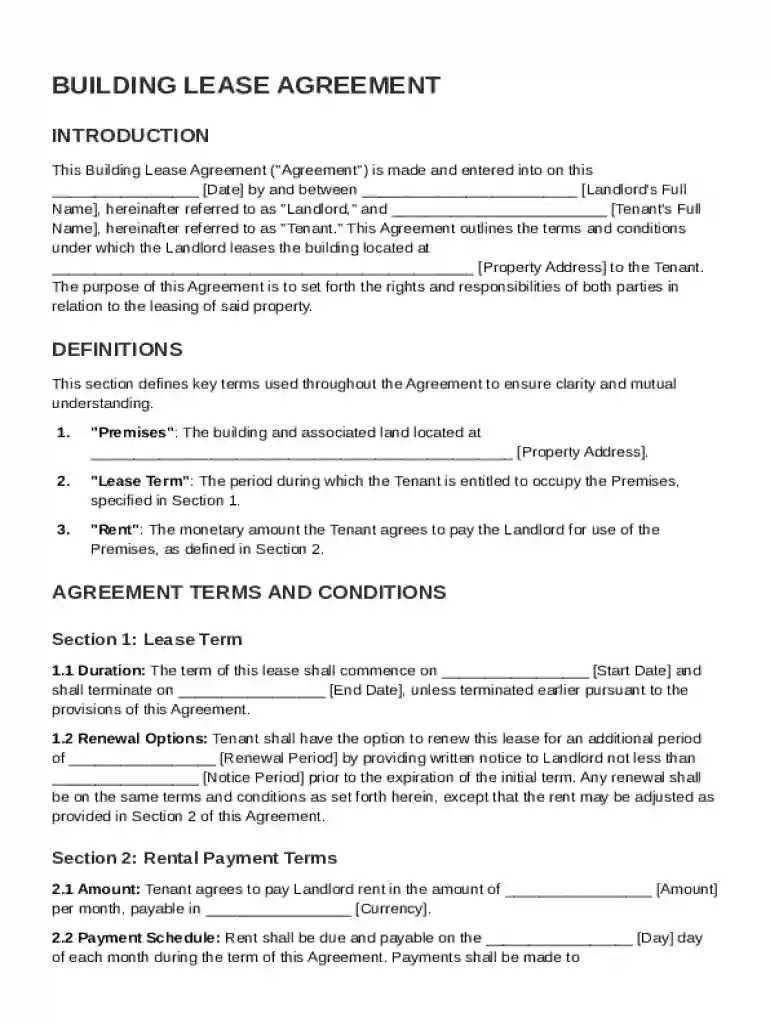
A Building Lease Agreement is a legally binding contract outlining the terms and conditions between a landlord and a tenant for the leasing of a property. This document serves to clearly define the rights and responsibilities of both parties involved in the lease, ensuring that each understands their obligations. Common components of a Building Lease Agreement include lease duration, rental payment terms, security deposit stipulations, maintenance duties, property usage permissions, and grounds for termination. The purpose of this agreement is to prevent disputes by establishing a clear framework for the landlord-tenant relationship.
Steps to Complete the Building Lease Agreement Template
Completing a Building Lease Agreement Template involves several sequential steps:
- Fill in Tenant and Landlord Information: Begin by entering the identifying details of the tenant(s) and landlord, including names and contact information.
- Specify Property Details: Include a detailed description of the property being leased, such as its address and any specific features or furnishings included.
- Set Lease Terms and Conditions: Define the duration of the lease, whether it is a fixed-term or month-to-month agreement. Also, specify renewal conditions if applicable.
- Outline Financial Obligations: Clearly state the amount of rent, due dates for payments, acceptable payment methods, and any penalties for late payments. Include details about the security deposit and its conditions.
- Define Maintenance Responsibilities: Specify which party is responsible for property maintenance and repairs, as well as their respective obligations regarding utilities and property upkeep.
- Include Additional Clauses: Add any additional mutually agreed-upon clauses, such as pet policies, guest allowances, or subletting permissions.
- Signature and Date: Both parties must sign and date the document to formalize the agreement, confirming their understanding and acceptance of its terms.
Who Uses the Building Lease Agreement Template
The Building Lease Agreement Template is commonly used by:
- Landlords: Individuals or businesses leasing out residential, commercial, or mixed-use properties.
- Tenants: Individuals or entities seeking to rent a property for living, office, or business purposes.
- Property Managers: Professionals managing properties on behalf of owners who require consistent lease agreements for tenants.
- Real Estate Agents: Facilitators who assist in the drafting and execution of lease agreements for their clients.
This template is essential for ensuring a mutual understanding between parties and protecting both landlords' and tenants' interests.
Key Elements of the Building Lease Agreement Template
The Building Lease Agreement Template comprises several critical elements:
- Property Details: Precise specifications about the location and characteristics of the rented property.
- Lease Duration: Information about the start and end dates of the lease term, including any provisions for renewal.
- Payment Terms: Detailed rental amounts, payment schedules, and methods, including procedures for security deposit handling.
- Rights and Obligations: Stipulations regarding the responsibilities of the tenant and landlord, particularly in relation to maintenance and use of the property.
- Rules and Regulations: Policies surrounding property use, including potential restrictions on alterations, noise levels, and parking.
- Termination Conditions: Conditions and processes for legally ending the lease agreement, either by completion, breach, or mutual consent.
Legal Use of the Building Lease Agreement Template
This template serves a critical legal function in formalizing the lease agreement process, making it crucial for both parties to fully understand their commitments:
- Contract Enforcement: The template provides a legally enforceable record that can be used in legal proceedings if necessary, thus protecting both parties’ rights.
- Compliance with Local Laws: It ensures that the terms comply with relevant federal, state, and local laws regarding landlord-tenant relationships, including fair housing laws.
- Dispute Resolution: By clarifying terms, this agreement can resolve potential misunderstandings or disputes, offering legal recourse where necessary.
State-Specific Rules for the Building Lease Agreement Template
Each U.S. state may have specific statutes that govern the rental of properties, affecting various aspects of lease agreements:
- Security Deposit Norms: Different states have varying maximum limits and return time frames for security deposits.
- Lease Termination Notices: State laws dictate required notice periods for lease termination or renewal.
- Tenant Rights: Variations exist in tenant rights concerning property maintenance, eviction processes, and privacy laws.
It is important for both parties to be familiar with and adhere to these state-specific regulations to ensure their agreement’s legality and enforceability.
Important Terms Related to the Building Lease Agreement Template
Understanding key terminology in the Building Lease Agreement is critical:
- Lessee/Lessor: The tenant (lessee) and landlord (lessor) involved in the rental.
- Premises: The physical space being leased.
- Lease Condition: Preconditions such as security deposits or maintenance terms that must be met.
- Sublease: Allowing the property to be rented out by the tenant to another party, typically requiring landlord approval.
- Default: Failure of either party to meet their obligations as outlined in the agreement.
These terms, among others, provide clarity and ensure that both landlord and tenant are fully aware of what the agreement entails.
Examples of Using the Building Lease Agreement Template
The Building Lease Agreement Template can be applied in various contexts:
- Residential Leasing: Used by landlords renting apartments, houses, or multi-family units to individuals or families.
- Commercial Space Leasing: Suitable for leasing office spaces or retail locations to businesses.
- Mixed-Use Property Leasing: Ideal for properties used for dual purposes, such as a combined residential and office space.
In each of these scenarios, the lease agreement serves to specify terms and conditions unique to the property’s type and use, protecting the interests of both parties involved.