
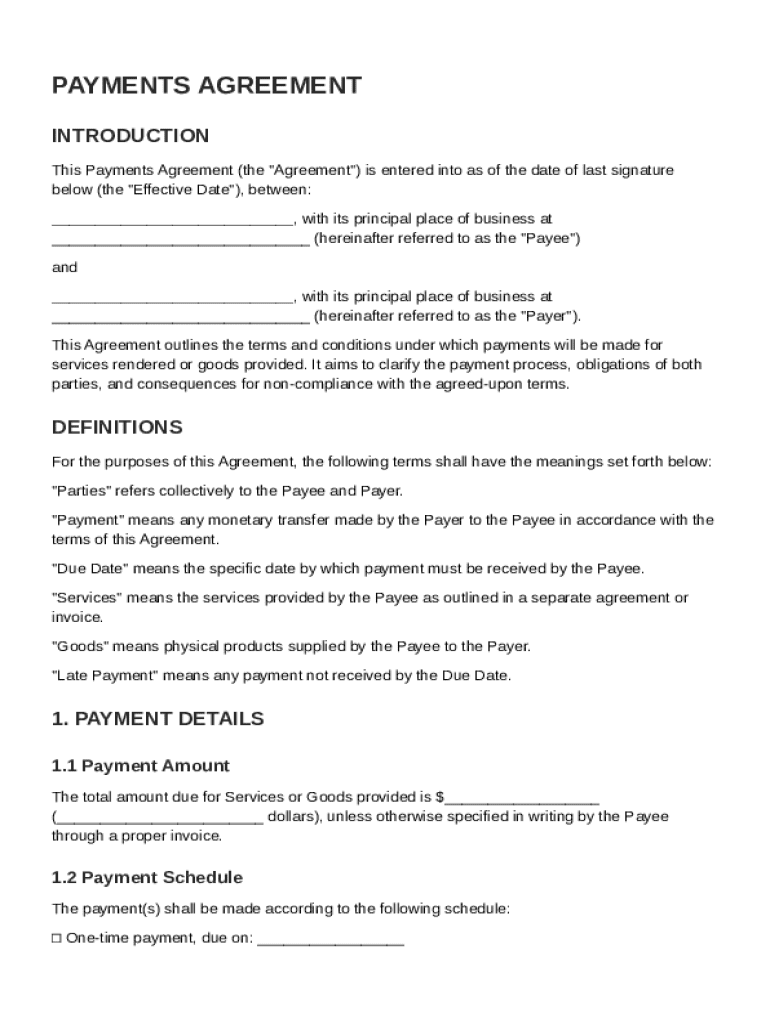




Definition and Purpose of the Payments Agreement Template
A Payments Agreement Template is a structured document used to outline the specific terms and conditions related to payments between a payee and a payer. In a typical scenario, this agreement applies to exchanges involving services rendered or goods provided. It serves several essential functions:
-
Clarification of Payment Terms: This document specifies the key payment terms, such as due dates, amounts, and accepted methods, to prevent misunderstandings.
-
Legal Responsibilities: Both parties are informed of their obligations and responsibilities, ensuring accountability.
-
Dispute Resolution: It provides a framework for resolving disputes by detailing procedures for non-compliance and late payment consequences.
Using such a template ensures both contractual parties have a mutual understanding, avoiding potential legal complications.
Steps to Use the Payments Agreement Template
Engaging with the Payments Agreement Template involves several critical steps to ensure all terms are clearly defined and agreed upon. Here's a practical guide:
-
Initial Preparation:
- Identify the specific services or goods related to the payment agreement.
- List down the details of both parties involved.
-
Customization:
- Fill in the template with customized information, such as payment schedules and specific terms agreed upon by both parties.
- Add clauses specific to your transaction, like grace periods or penalties for late payments.
-
Review and Approval:
- Together with the counterparty, review all filled-in details for accuracy and completeness.
- Seek any legal consultation if complex terms are involved.
-
Finalization:
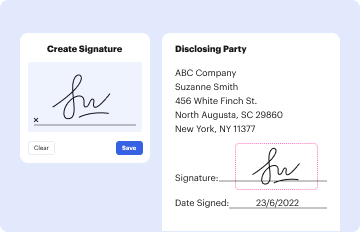
- Both parties sign the document, effectively binding the agreement.
- Distribute copies to all involved parties.
Each step ensures the document captures the accurate nuances of the agreement, reducing the risk of future disputes.
Key Elements of the Payments Agreement Template
To effectively safeguard both parties' interests, a Payments Agreement Template should be comprehensive and include the following key components:
-
Parties Information: Names, roles, and contact information of both the payee and payer.
-
Payment Details: Clearly defined payment amounts, expected dates, and acceptable methods (e.g., bank transfer, credit card).
-
Scope of Work or Description of Goods: A precise description of the services provided or goods exchanged.
-
Consequences for Late Payments: Any penalties that apply if payments are not made on time.
-
Termination Clauses: Outline conditions under which the contract may be terminated.
Each of these elements contributes to a clear and enforceable agreement that minimizes misunderstandings.
Legal Implications and Usage
Payments Agreement Templates hold significant legal weight as they formalize payment terms. Understanding the legal implications is crucial:
-
Legally Binding Contracts: Once signed, the agreement becomes a legally binding contract enforceable in court.
-
Protection of Rights: Both parties are assured protection of their respective rights and obligations are legally supported.
-
Remedy and Relief: Provisions included to address breaches by any party, ensuring there is a fair resolution process.
Understanding these legal aspects enhances the template's effectiveness and mitigates risks for both parties.
Who Typically Uses the Payments Agreement Template
This template is versatile and can be used by various individuals or entities who engage in commercial transactions:
-
Freelancers and Independent Contractors: Use it to define payment terms with clients for freelance work.
-
Small and Medium Enterprises (SMEs): Ensures clear payment terms with vendors and service providers.
-
Large Corporations: Utilized in complex agreements involving substantial sums and multiple parties.
-
Non-profits and NGOs: For agreements involving sponsors or partners.
Each of these users benefits from the structured clarity the template provides, reducing the stress of potential conflicts.

Important Terms Related to the Payments Agreement Template
Using the template involves understanding various terms critical to contractual agreements. Here are a few:
-
Invoice: A detailed list of goods or services with a statement of the amount due for payment.
-
Net Terms: The agreed payment period after an invoice is issued (e.g., Net 30 means payment is due in 30 days).
-
Interest: Charges that may accrue on overdue payments, calculated as a percentage of the outstanding amount.
Understanding these terms ensures informed decisions and more robust agreement formulations.
Examples of Using the Payments Agreement Template
Practical applications show the versatility of the Payments Agreement Template in different settings:
-
Freelancers can use it for receiving payments from various clients. An independent graphic designer, for instance, might use an agreement template to specify payment per project, and detail timelines for installments.
-
Small Business Owners might utilize it to formalize ongoing service agreements with suppliers, ensuring regular inventory restock aligns with their cash flow arrangements.
-
Construction Companies: When contractors engage multiple suppliers or service providers, the template assures clarity in terms, thereby reducing operational disruptions due to payment-related disputes.
These scenarios reflect the template's applicability across diverse industry practices.
State-Specific Rules for the Payments Agreement Template
The use of Payments Agreement Templates may be subject to specific state regulations in the United States:
-
Usury Laws: Different states have varied regulations capping the amount of interest charged on late payments.
-
Legal Requirements: Certain jurisdictions may require specific disclosures in business contracts to be legally binding.
-
Enforcement Procedures: The process to enforce agreements or resolve disputes may vary by state, requiring local legal consultation.
Ensuring compliance with these state rules enhances the agreement's enforceability and shields the parties from legal pitfalls.