




01. Edit your form online
Type text, add images, blackout confidential details, add comments, highlights and more.

Type text, add images, blackout confidential details, add comments, highlights and more.

Draw your signature, type it, upload its image, or use your mobile device as a signature pad.

Send it via email, link, or fax. You can also download it, export it or print it out.
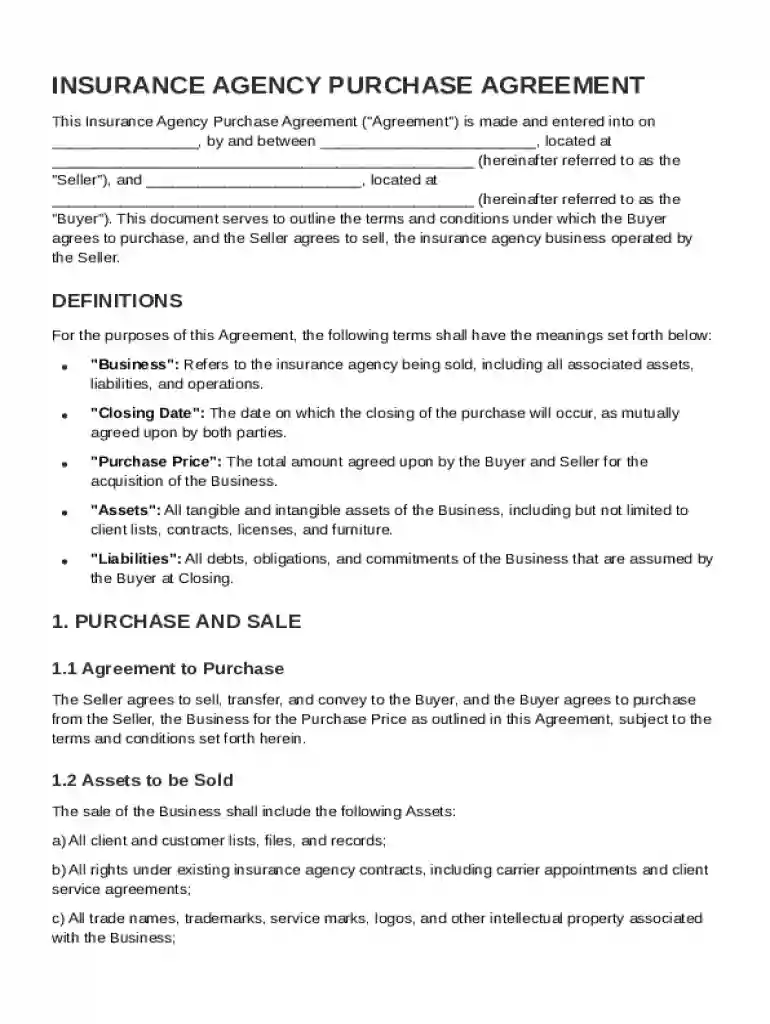
The Insurance Agency Purchase Agreement Template is a legally structured document utilized to facilitate the sale of an insurance agency. It outlines agreed terms and specific conditions between the Seller and Buyer, ensuring a transparent and mutually understood transaction. This template includes the scope of assets being transferred, detailed payment terms, and stipulations about due diligence and regulatory sign-offs necessary to finalize the sale. By defining every aspect of the sale, it aims to avert potential disputes and misunderstandings, ensuring that all parties are on the same page.
This comprehensive document encompasses several critical components. It starts with defining the key terms relevant to the transaction, providing clarity to both parties. The purchase and sale of assets section breaks down tangible and intangible assets involved in the transfer. Detailed payment terms describe how, when, and what amount is to be paid, including any installments or contingencies. Conditions precedent such as regulatory approvals are also enumerated, ensuring all legal prerequisites are satisfied before completion.
Furthermore, representations and warranties from both buyer and seller are necessary, adding layers of security against misrepresentation. Non-compete clauses and confidentiality agreements are crucial for protecting the business's future integrity. Finally, miscellaneous provisions govern various scenarios that might arise during the lifespan of the agreement, ensuring a comprehensive coverage.
Employing the template involves understanding its structure and adapting it to the specifics of the transaction at hand. Initially, it requires identifying both parties involved and meticulously filling out personal and business details. Next, parties should articulate the assets for transfer and negotiate the payment terms. Due diligence protocols should be detailed to facilitate a smooth transition.
Afterward, both parties need to review representations, warranties, and covenants related to non-competition and confidentiality. At each stage, the involvement of legal professionals is advised to ensure the document's legality and structural integrity. Close review of closing procedures and indemnification clauses is vital before executing the agreement.
The primary advantage of this template is its structured approach, which simplifies the transaction process and reduces legal risk. By adhering to a standardized format, parties can ensure they meet all necessary legal obligations. The inclusion of specific clauses for non-competition and confidentiality protects the buyer, while indemnification clauses afford the seller some security.
Moreover, using a template helps streamline the agreement process, significantly reducing the time spent drafting and negotiating. It mitigates potential errors and omissions that could arise from scratch-made documents, offering a reliable foundation for a legally sound purchase agreement.
The template is primarily used by parties engaged in the buying or selling of insurance agencies. Prospective buyers interested in acquiring business assets and existing business owners looking to sell use this document to formalize their deal. Legal advisors facilitating the transaction process also rely heavily on this template to guide discussions and negotiations.
Additionally, financial advisors might use the template to assess the financial aspects of the sale and structure payment terms accordingly. Regulatory bodies and compliance officers may also reference this agreement to ensure the transaction meets industry regulations and requirements.


Understanding the terminology used within the template is crucial for effective use. Key terms include "assets," which refers to both tangible and intangible property transferring hands, and "due diligence," denoting the investigative steps prior to purchase. "Non-compete clause" restricts the seller from engaging in similar business against the interests of the buyer.
"Indemnification" involves promises from one party to compensate the other for specific costs or damages. Familiarity with these terms, among others, ensures clear communication and understanding between parties involved in the agreement.
The template is structured to align with legal requirements relevant to the acquisition of an insurance agency. These include adherence to industry-specific regulations, certifications, and permits that the business must maintain post-sale. Legal advisors are indispensable in customizing the template to the specific legal landscape, ensuring compliance with both federal and state regulations.
The document also ensures conforming transactions adhere to antitrust laws and other relevant commercial statutes. Legal vetting prior to signing is essential to adapt the form correctly to the contextual legal environment, reinforcing its enforceability and validity.
Completing the Insurance Agency Purchase Agreement involves gathering a series of essential documents. These include financial records of the agency, such as balance sheets and income statements. Legal documents like business licenses, and regulatory compliance reports are critical for due diligence.
Moreover, asset lists detailing both tangible and intangible properties are necessary. Insurance policies, customer contracts, and employee agreements should also be reviewed as part of the preparatory process. This documentation provides a holistic view of the business being sold, ensuring transparency and reducing the risk of post-sale disputes.
Each state may impose unique regulations affecting the execution of such agreements. These can include licensing requirements, taxation clauses, and employment law considerations unique to the region. Buyers and sellers must be aware of these state-specific nuances, as they may impact the structure and enforceability of the agreement.
Legal counsel familiar with local jurisdiction is crucial in navigating these variables and tailoring the agreement accordingly. Understanding these differences can aid in crafting a more robust agreement, offering protection adapted to the specific regulatory environment.
Consider a mid-sized insurance firm undergoing acquisition by a national chain. This agreement can be used to outline the structural terms for employee retention, integration of IT systems, and transitioning of client accounts. Alternatively, it can serve a small operator selling to an entrepreneur, detailing asset transfers and non-compete clauses to protect business interests.
These examples underscore the document's versatility in facilitating various types of transactions within the insurance sector, ensuring clarity and fairness are maintained throughout the process.
At DocHub, your data security is our priority. We follow HIPAA, SOC2, GDPR, and other standards, so you can work on your documents with confidence.



THIS PURCHASE AGREEMENT (Agreement) contains Apples standard Purchase Order Terms and. Conditions and shall apply to any Purchase Order (a PO) issued
Jun 25, 2009 The reserves for payment of benefits, losses, claims and expenses under all Insurance Contracts of AIA, PhilAm and each Insurance Subsidiary as.


