






Definition & Meaning
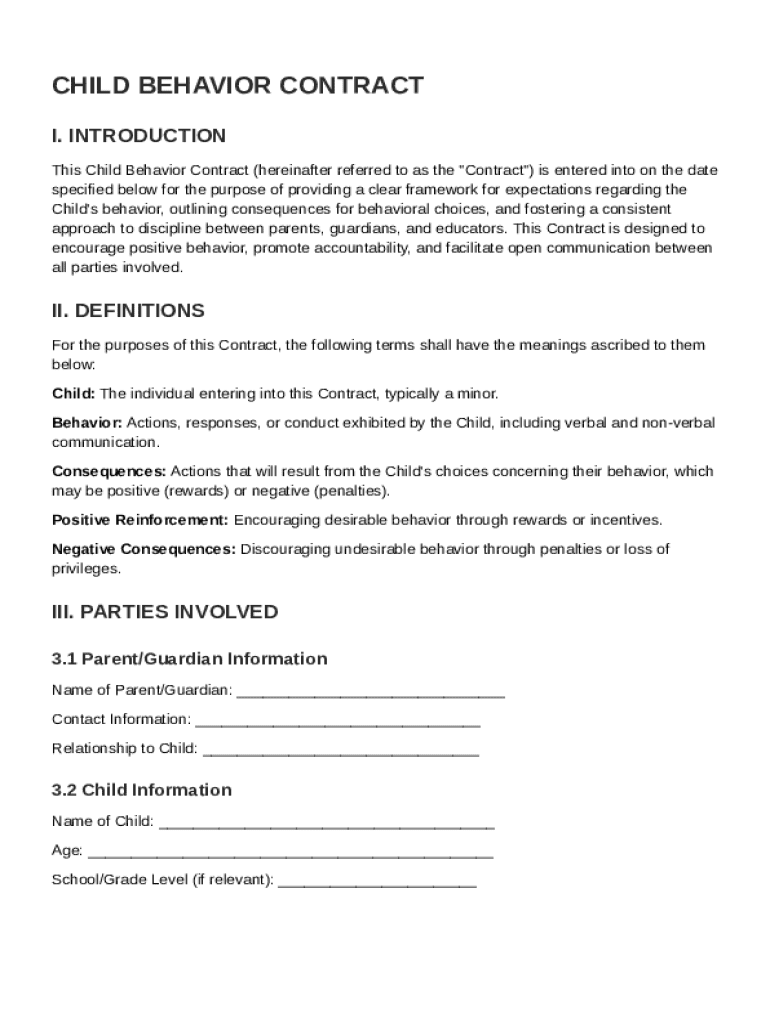
A Child Behavior Contract Template is a structured tool designed to help parents, guardians, educators, and children collaboratively outline acceptable behaviors, the expectations surrounding them, and the consequences or rewards resulting from adherence or deviation from these behaviors. This form creates a framework designed to promote accountability and constructive behavior among children by clearly laying out rules and responsibilities in a mutually agreed-upon format.
This contract serves as a communication bridge between the child and their caregivers or teachers, clarifying what is expected in various situations. The definition of acceptable behavior may vary depending on the child's age, maturity level, and specific circumstances, and the contract can be customized accordingly.
Key Elements of the Child Behavior Contract Template
The Child Behavior Contract Template typically encompasses several critical components that ensure it effectively meets its purpose:
- Behavioral Expectations: Detailed descriptions of the behaviors that are expected from the child. These are tailored to the child's specific needs and contexts, focusing on both school and home environments.
- Consequences and Rewards: Specifications of the consequences for failing to meet expectations and the rewards for meeting or exceeding them. This dual approach encourages a balance of accountability and positive reinforcement.
- Roles and Responsibilities: Clear assignments of roles and responsibilities for all parties involved, including parents, teachers, and the child. This ensures everyone understands their part in the contract.
- Signatures: The physical or electronic signatures of all parties, confirming that they agree to the terms outlined in the contract. This formalizes the agreement and emphasizes the importance of the commitments made.
How to Use the Child Behavior Contract Template
To effectively use a Child Behavior Contract Template, follow these steps:
-
Consultation and Preparation: Begin by discussing the need for the contract with all parties involved — the child, parents, and any educators or counselors. This establishes a foundation for the agreement and ensures everyone's input is considered.
-
Customization: Tailor the template to fit the child's specific needs by adjusting the expectations, rewards, and consequences. Consider the child’s age, developmental stage, and individual circumstances to ensure appropriateness.
-
Review and Agreement: Present the draft contract to the child in a way they can understand. Go through each point to ensure clarity and address any questions or concerns. This step is critical for ensuring the child's buy-in.
-
Signing: Once all parties agree to the terms, obtain signatures to formalize the contract. This step underscores the agreement’s seriousness and validity.
-
Implementation and Monitoring: Regularly review the child's progress and adherence to the contract. Make necessary adjustments as needed and reinforce accountability through consistent follow-up on both rewards and consequences.
Who Typically Uses the Child Behavior Contract Template
The Child Behavior Contract Template is mainly used by:
- Parents and Guardians: They use the template to establish a structured environment aimed at guiding their child's behavior through clear expectations.
- Teachers and Educators: They can adapt behavior contracts for use in classroom settings to manage group dynamics and individual student behavior.
- Counselors and Behavioral Specialists: These professionals may incorporate behavior contracts as part of broader behavioral intervention strategies for children requiring more focused guidance.
- Childcare Providers and After-school Programs: These entities benefit from standardized behavior expectations to maintain a positive and regulated environment.


Steps to Complete the Child Behavior Contract Template
Completing a Child Behavior Contract Template involves the following steps:
-
Identify Behavioral Goals: Determine the specific behaviors that you want to encourage or modify. This step should involve input from all concerned parties to create a comprehensive and relevant list.
-
Develop Consequences and Rewards: Establish appropriate and realistic consequences for non-compliance and rewards for meeting behavioral goals. Ensure these are motivating and enforceable.
-
Outline Supporting Steps: Identify actionable steps or strategies needed to help the child succeed, such as breaking tasks into smaller steps or providing extra support in challenging areas.
-
Draft the Contract: Use the template to document all identified goals, consequences, rewards, roles, and responsibilities. Ensure clarity and conciseness while being thorough.
-
Review and Revise: Conduct a final review with all parties involved to confirm understanding and agreement. Make any necessary adjustments.
-
Signatures: Obtain the signatures of the child, parents, and any other involved parties. This formalizes the agreement and signifies commitment.
Examples of Using the Child Behavior Contract Template
Several scenarios demonstrate how this template can be applied:
-
Academic Improvement: A behavior contract might focus on goals such as completing homework on time, respecting classmates, and improving grades, with rewards like extra leisure time or a special outing.
-
Home Responsibilities: A contract at home may prioritize chores, interpersonal relationships within the family, and screen time management. Rewards could include additional screen time or a favorite meal.
-
Behavioral Adjustments in Social Settings: For a child struggling with social interactions, a contract could outline steps for making friends, managing conflict, or reducing outbursts, complemented by rewards like attending a social event.
In each example, the contract is customized to address the child's unique situation and reinforce positive habits.
Important Terms Related to Child Behavior Contract Template
Several important terms are frequently used in conjunction with child behavior contracts:
-
Behavioral Modification: Strategies aimed at changing undesirable behaviors into positive actions.
-
Positive Reinforcement: Providing incentives to encourage continuous adherence to desired behaviors.
-
Accountability: Ensuring the child understands they are responsible for their actions and the associated outcomes.
-
Consistency: Maintaining steady and predictable enforcement of rules and consequences, crucial for effective behavior management.
These terms highlight the foundational principles behind behavior contracts and assist in setting mutually beneficial agreements.
Legally Binding Nature of the Child Behavior Contract Template
While not a legally binding document in the traditional sense, a Child Behavior Contract serves as a moral agreement. It is not enforceable in court but functions to create a reliable structure for behavior management. Importantly, it fosters communication, cooperation, and a sense of responsibility between children and their caregivers, paving the way for improved relationships and better discipline outcomes.