
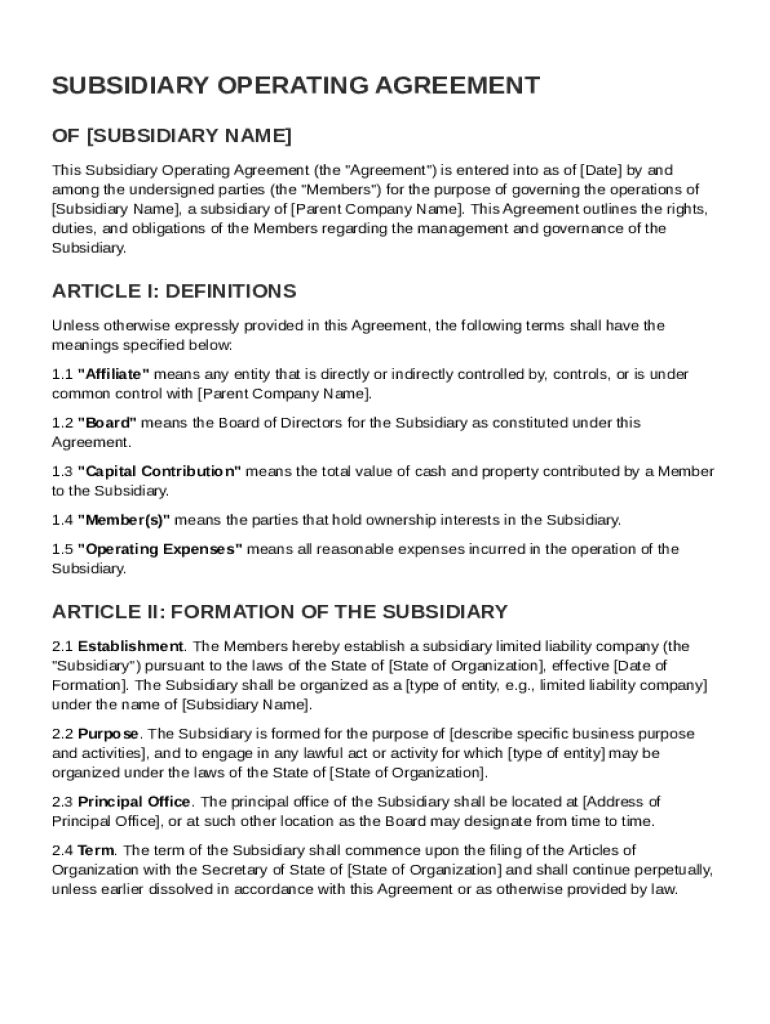







Definition and Purpose of a Subsidiary Operating Agreement Template
A Subsidiary Operating Agreement Template is a legal document that outlines the operational framework and governance structure for a subsidiary company. It provides a detailed account of the rights, duties, and obligations of the members, including management roles, capital contributions, profit-sharing arrangements, and procedures for transferring ownership interests. The agreement serves as a guiding document for how the subsidiary should operate under the umbrella of the parent company. It typically includes provisions for compliance with relevant laws and regulations, thus ensuring legal protection and operational consistency.
Practical Examples
- Small Business Expansion: A company looking to expand its operations may establish a subsidiary in another state. The Subsidiary Operating Agreement Template can help outline how the new entity will operate independently while still aligning with the parent company's objectives.
- International Operations: For businesses operating across borders, this agreement serves as a crucial document in navigating legal requirements and operational frameworks in different jurisdictions.
Key Elements of the Subsidiary Operating Agreement Template
The template typically includes several essential components that define the subsidiary's operational framework and governance:
- Management Structure: Details on how the subsidiary will be managed, including the roles and responsibilities of the board of directors and executive officers.
- Capital Contributions: Information on the initial and ongoing financial investments required from the parent company or other shareholders.
- Profit Distributions: Guidelines on how profits will be shared among the members, including any reinvestment strategies or dividend policies.
- Transfer of Interests: Procedures for transferring ownership stakes, whether through sale, inheritance, or other means.
Examples and Subsections
- Board Authority: The agreement specifies the decision-making processes, highlighting scenarios requiring board approval versus those that can be autonomously managed by executives.
- Dissolution Procedures: Steps to be followed in case of liquidation, outlining asset distribution and liability settlements.
How to Use the Subsidiary Operating Agreement Template
Using the Subsidiary Operating Agreement Template effectively involves understanding its structure and customizing it to fit the specific needs of the subsidiary:
- Identify Key Participants: Clearly designate the individuals and entities involved, such as shareholders, directors, and managers.
- Customize Sections: Modify template sections to align with business objectives, regulatory requirements, and industry-specific practices.
- Review Legal Compliance: Ensure the template adheres to both federal and state laws to avoid potential legal issues.
Scenario
- Tech Startup: A burgeoning tech company employs the template to manage a new software development subsidiary, adjusting sections related to intellectual property rights and innovation incentives.
Steps to Complete the Subsidiary Operating Agreement Template
Completing the Subsidiary Operating Agreement Template requires careful attention to detail and collaboration among stakeholders. Here are the steps involved:
- Gather Initial Information: Collect data about the subsidiary, including its mission, objectives, and operational specifics.
- Draft Agreement Sections: Begin drafting each section, ensuring clarity and comprehensiveness.
- Legal Review: Consult with legal advisors to ensure compliance with jurisdictional laws and regulations.
- Stakeholder Feedback: Share the draft with key stakeholders for input and revisions.
Detailed Breakdown
- State Compliance: Different sections might need alterations to comply with state-specific requirements, such as registration procedures or tax obligations.
Legal Use of the Subsidiary Operating Agreement Template
The legal importance of a Subsidiary Operating Agreement Template cannot be overstated. This document ensures:
- Compliance: Adherence to both local and federal laws regarding subsidiary operations.
- Dispute Resolution: Provides a basis for resolving conflicts between involved parties by clearly outlining expectations and procedures.
- Regulatory Protection: Offers evidence of regulatory compliance to protect against legal penalties.
Examples
- Manufacturing Subsidiary: Identifies terms for environmental compliance and safety regulations to meet industry standards.
State-Specific Rules
The Subsidiary Operating Agreement Template might need specific alterations depending on the state of operation. Each state has unique regulations that impact subsidiary business operations:
- California: Requires specific disclosures pertaining to environmental and labor laws.
- Texas: May have different tax implications and corporate governance norms to consider.
Nuances and Variations
- Registration Fees: Varies widely by state, requiring different initial setup fees and ongoing expenses.
- Tax Obligations: Understanding state-specific taxation will influence how the subsidiary reports earnings and distributes dividends.
Who Typically Uses the Subsidiary Operating Agreement Template
This template is a valuable tool for various business entities and individuals, including:
- Parent Companies: Large corporations organizing their subsidiary’s operations for consistent management and control.
- Legal Advisors: Offering consultation to clients involved in subsidiary formation and management.
- Corporate Executives: Directly involved in drafting, analyzing, and approving the agreement to align with strategic goals.

Use Cases
- Franchise Chains: Employ the template to maintain uniform standards and practices across geographically dispersed franchise units.
Important Terms Related to Subsidiary Operating Agreement Template
Familiarity with key legal and business terms is crucial when working with the Subsidiary Operating Agreement Template:
- Member: An individual or entity holding ownership interests in the subsidiary.
- Fiduciary Duty: Obligations of the subsidiary’s management to act in the best interest of the company.
- Quorum: The minimum number of board members required to conduct official business.
Glossary
- Capital Contribution: The financial investment made by members to the subsidiary's operations.
- Dissolution: The formal closing down of the subsidiary’s operations and distribution of remaining assets.
Consider integrating these insights into the template when drafting or reviewing your Subsidiary Operating Agreement to ensure comprehensive coverage and alignment with legal requirements.




