
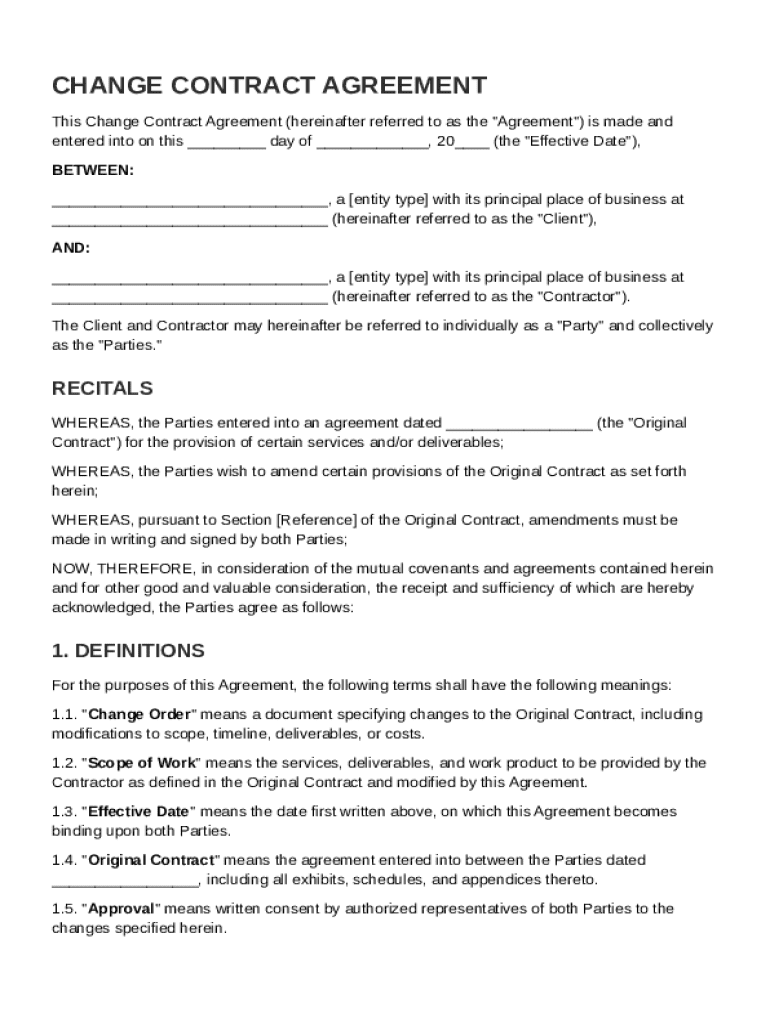




Definition and Meaning of Change Contract Template
A Change Contract Template serves as a formal document intended to modify an existing contract between parties, typically a Client and a Contractor. This template helps outline adjustments to various aspects, including the scope of work, timeline, payment terms, and any additional costs involved. By clearly defining the roles and responsibilities of both parties, it ensures that modifications are documented in writing and must be signed by authorized representatives before becoming effective. A Change Contract Template provides transparency and structure, minimizing misunderstandings and disputes during project execution.
Steps to Complete the Change Contract Template
-
Review the Original Contract: Begin by thoroughly examining the original contract to understand its terms, conditions, and scope of work. This sets the groundwork for identifying which areas require changes.
-
Identify Necessary Changes: Determine the specific changes needed. Common alterations might relate to work scope adjustments, timelines, additional costs, or alterations in deliverables.
-
Draft the Changes: Use the Change Contract Template to draft the required changes, ensuring clarity and thoroughness in the documentation. Each change should be clearly specified, with an explanation of why it is necessary.
-
Consult with All Parties: Collaborate with involved parties to review proposed changes. Ensure that all stakeholders agree and provide input where necessary.
-
Finalize the Document: Make any required modifications based on feedback and prepare the final version. Confirm it aligns with the alterations agreed upon by all parties.
-
Sign the Document: Ensure that authorized representatives of all parties involved sign the Change Contract Document. This is critical for the changes to be legally binding.
Why You Should Use a Change Contract Template
Using a Change Contract Template is vital to maintaining clarity and legal compliance when altering contract terms. It ensures that:
- Documentation: Changes are officially recorded, reducing potential disputes.
- Accountability: Specifies the responsibilities of all parties involved.
- Clarity: Clearly outlines what is being changed and why, mitigating the risk of future misunderstandings.
- Legal Compliance: Guarantees the changes adhere to the legal standards by requiring authorization from all parties before changes are enacted.
Key Elements of the Change Contract Template
A Change Contract Template typically includes several critical elements:
- Description of Changes: Detailed account of each change to the original contract.
- Reason for Changes: Rationale behind why changes are being implemented.
- Adjusted Terms: Includes modifications to timelines, payment schedules, and responsibilities.
- Signatures: Spaces for signatures from authorized representatives of both parties.
- Dates: Effective date of changes and any deadlines related to new terms.
Legal Use of the Change Contract Template
The Change Contract Template is a legally recognized tool for contract amendments. Its legal framework ensures:
- Compliance with Laws: Aligns with the ESIGN Act and other relevant legislation.
- Binding Modifications: Changes become legally binding once signed, holding all parties accountable.
- Protection: Guards against unauthorized changes and helps enforce agreed alterations through formal documentation.
Who Typically Uses the Change Contract Template
The Change Contract Template is utilized by a diverse range of business entities:
- Businesses and Corporations: Ensuring project modifications are implemented smoothly during operations.
- Freelancers and Consultants: Adjusting terms of service contracts with clients when project scope changes.
- Legal Professionals: Drafting legally compliant amendments for their clients' contracts.
- Project Managers: Coordinating changes in contracts to align with project adjustments.

State-Specific Rules for the Change Contract Template
Different states may have specific rules affecting contract amendments. Considerations include:
- Specific Requirements: Some states require a notary for certain types of modifications.
- Jurisdiction Concerns: Ensure that the template and changes comply with regional contract laws.
- Regulatory Adherence: Amendments must conform to state regulations regarding contract entries.
Examples of Using the Change Contract Template
Practical examples help illustrate the utility of a Change Contract Template:
- Construction Projects: Modifying timelines and project deliverables when unforeseen circumstances arise.
- Software Development: Updating payment terms and milestone delivery based on client feedback during project phases.
- Partnership Agreements: Adjusting the scope of work or investment contributions from partners in a business venture.
By offering a standardized method for documenting changes, the Change Contract Template remains an essential resource across various industries and scenarios, ensuring both accountability and flexibility in contractual relationships.