







Definition & Meaning
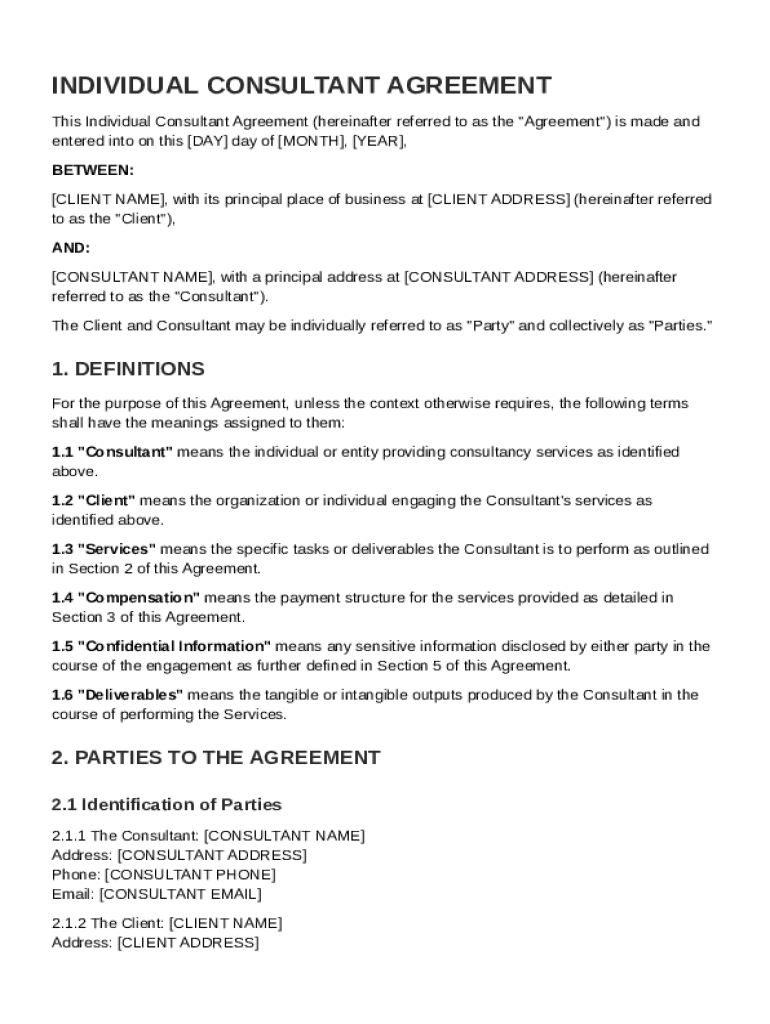
The Individual Consultant Agreement Template is a legal document designed to formalize the working relationship between a client and an individual consultant. This template serves as a comprehensive guide to outline the terms of service, expectations, and other critical aspects of the consultancy engagement. With key elements such as scope of services, compensation, and confidentiality obligations, the agreement ensures that both parties understand their roles and responsibilities, minimizing potential disputes or misunderstandings. This document is particularly useful for formalizing agreements in an independent contractor relationship, clarifying that the consultant is not an employee but rather an independent service provider.
Key Elements of the Individual Consultant Agreement Template
Scope of Services
The agreement clearly defines the services to be provided by the consultant. This section outlines the specific tasks, deliverables, and objectives that the consultant is expected to achieve. Providing a detailed description of the scope helps in managing expectations and provides a benchmark for evaluating the consultant's performance. A well-defined scope can prevent scope creep and help maintain a focused and efficient working relationship.
Compensation Details
Compensation is a critical aspect of the agreement. It outlines the payment terms, including the rate of pay, payment schedule, and any additional expenses that the consultant is entitled to claim. This section ensures transparency and accountability, outlining whether the consultant will be paid hourly, per project, or receive a flat fee. Agreement on compensation reduces the likelihood of disputes over payments and provides financial clarity.
Confidentiality Obligations
Given the sensitive nature of consultancy work, confidentiality obligations are essential. This section of the template ensures that the consultant maintains the privacy of any proprietary or sensitive information shared by the client. It may include terms about the handling, protection, and non-disclosure of confidential information. Incorporating confidentiality clauses protects both parties from potential data breaches or information misuse.
How to Use the Individual Consultant Agreement Template
-
Determine Agreement Needs: Identify the specific consultancy services needed and ensure the template accommodates those requirements.
-
Customize the Template: Adjust the template to fit the particular terms and conditions agreed upon by the client and consultant, including service details and compensation agreements.
-
Review Legal Terminologies: Have the agreement examined by a legal professional to ensure that all clauses are valid and align with federal and state laws.
-
Get Mutual Agreement: Discuss and confirm each section with the consultant to ensure mutual understanding and acceptance before signing.
-
Sign and Store Securely: Once both parties approve the terms, sign the agreement electronically or physically and keep secure copies for future reference.
Legal Use of the Individual Consultant Agreement Template
The Individual Consultant Agreement Template is legally binding and enforceable in court if properly executed. This template is compliant with federal and state laws in the United States, aligning with regulations that govern independent contractor relationships. Legal compliance involves including clauses related to intellectual property rights, indemnification, and dispute resolution mechanisms. This agreement can be used as evidence in legal proceedings to demonstrate the agreed-upon terms between the parties.
Who Typically Uses the Individual Consultant Agreement Template


Independent Consultants
Freelancers and independent contractors use this template to formalize their client agreements. It provides a structured way to establish contractual obligations and secure their working terms, ensuring they get paid for their services while protecting their professional interests.
Businesses and Organizations
Companies that need specialist advice or services without hiring full-time employees use this template. It allows them to engage experts for specific projects or short-term tasks while keeping costs and commitments more flexible than traditional employment relationships.
Important Terms Related to Individual Consultant Agreement Template
-
Independent Contractor: A self-employed person contracted to perform services or tasks for another entity under specified terms without becoming an employee.
-
Indemnification: A provision in which one party agrees to compensate the other for certain costs and losses arising from specific conditions.
-
Governing Law: Specifies the legal jurisdiction whose laws will apply in interpreting the terms of the agreement and handling disputes.
Steps to Complete the Individual Consultant Agreement Template
-
Fill in Identifying Information: Enter the names and contact information of both the client and consultant to establish the parties involved.
-
Describe the Scope of Services: Clearly outline the consultant's tasks, deliverables, and anticipated outcomes to prevent potential conflicts over duties.
-
Define Compensation Terms: Include detailed information about payment amounts, schedules, and acceptable payment methods.
-
Include Legal Clauses: Add essential components such as confidentiality, indemnification, and governing law clauses to protect both parties' interests.
-
Review and Make Necessary Revisions: Check for accuracy and completeness, making adjustments as needed to accurately reflect the agreement reached.
-
Sign the Agreement: Both parties should provide signatures to signify their acceptance and understanding of the terms.
State-Specific Rules for the Individual Consultant Agreement Template
While the template is generally applicable across the U.S., state-specific regulations may impose additional requirements. For example, some states have more stringent rules on classifying workers as independent contractors, which can affect the terms and validity of the agreement. Certain states may also require particular clauses or stipulations to adhere to local employment and tax laws. Therefore, consulting with a local legal advisor ensures compliance with state regulations and mitigates potential legal challenges.




