






Definition and Purpose of Suicide Contract Template
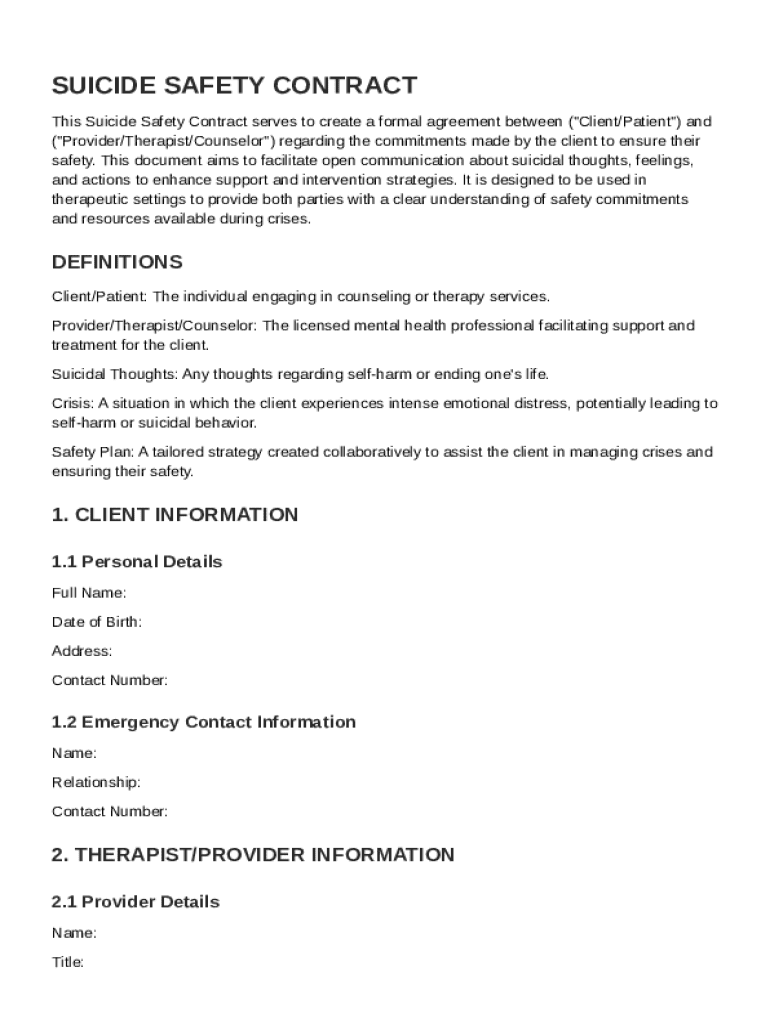
The "Suicide Contract Template," commonly referred to as a Suicide Safety Contract, is a formalized document crafted to foster a mutual understanding between a client and a mental health professional. It sets forth an agreement that outlines commitments related to managing suicidal thoughts and averting crises. This contract typically includes sections for personal data, emergency contact information, risk assessment, safety commitments, available resources, and procedures for periodic review. The primary purpose is to ensure the client’s safety by promoting open communication and collaboration in developing a customized safety plan. This document serves not only as a preventive measure but also as a tool that reinforces trust and engagement between the involved parties.
Steps to Complete the Suicide Contract Template
-
Collection of Personal Data: Start by filling out personal information such as full name, date of birth, and contact details. This section ensures that all parties involved can readily identify the document holder.
-
Risk Assessment: Collaborate with the mental health professional to identify and document specific factors contributing to the client's suicidal thoughts. This step provides a baseline for what triggers these thoughts and helps in creating preventive strategies.
-
Safety Commitments: Outline agreements of actions the client will take to counter suicidal thoughts. Examples include reaching out to designated support contacts, agreeing to delay actions during crises, and avoiding harmful environments or substances.
-
Emergency Contacts and Resources: List emergency contacts, including family members, friends, and professionals. Include immediate mental health resources like hotlines and local support centers.
-
Review and Update Procedures: Establish a schedule and method for reviewing and updating the contract. This ensures that the document remains relevant and reflects any changes in the client’s situation or state of mind.
Key Elements of the Suicide Contract Template
- Personal and Emergency Contact Information: Crucial for immediate identification and reaching out during emergencies.
- Assessment of Risk Factors: Identifies potential triggers and guides the client’s approach to managing these.
- Commitments and Agreements: Specific actions and promises made by the client to maintain safety.
- Support Systems and Resources: Detailed list of people and organizations available for assistance.
- Review Mechanisms: Plans for routinely reassessing the document's relevance and efficacy.
State-Specific Rules Impacting the Suicide Contract Template
While the Suicide Contract Template is generally standardized, the implementation may vary by state due to differing legislation. Some states have specific mandates on how mental health agreements should be structured and recorded. Professionals must remain informed about any regional legal requirements that could influence how this contract is enforced or recognized in legal contexts.
Legal Use of the Suicide Contract Template
The contract is a preventive measure and is not legally enforceable in the sense of a traditional contract. Instead, its purpose lies in reinforcing commitment rather than serving as a legal document carrying penalties. However, by providing structure and a written commitment, it can be a crucial part of a broader therapeutic approach that has legal standing when integrated with professional treatment plans.
Importance of the Suicide Contract Template
This template is vital as it creates a documented commitment between a client and a mental health provider. It helps clients articulate their thoughts, recognize risks, and identify resources proactively. By formalizing this process, it fosters a stronger connection between the client and their support network, encouraging an ongoing dialogue that is crucial for effective mental health management.
Who Typically Uses the Suicide Contract Template
Common users include mental health professionals such as psychologists, therapists, and counselors who engage with clients experiencing suicidal thoughts. Additionally, hospitals and mental health institutions may employ these templates as part of their intake and crisis intervention processes. Clients in various treatment stages may also find this document useful for self-monitoring and engaging support systems effectively.


Form Variants and Digital Vs. Paper Versions
In some scenarios, variants of the Suicide Contract Template may exist, accommodating different therapeutic approaches or specific client needs. Additionally, the choice between digital and paper forms depends on accessibility and preference. The digital version facilitates easy updates and sharing, while the paper version may provide tangible reassurance to the client.
Examples of Using the Suicide Contract Template in Real-world Scenarios
- Case Study 1: A teenager experiencing bullying finds solace in a contract that promises to contact a trusted adult before making harmful decisions.
- Case Study 2: A veteran dealing with PTSD employs the contract to structure coping mechanisms and identify safe spaces.
- Case Study 3: A college student facing immense stress uses the contract to remind themselves to utilize campus mental health resources.
These examples highlight how tailored contracts serve as practical tools, affirming their importance across diverse settings.