Definition and Purpose of the Child Custody Agreement Template
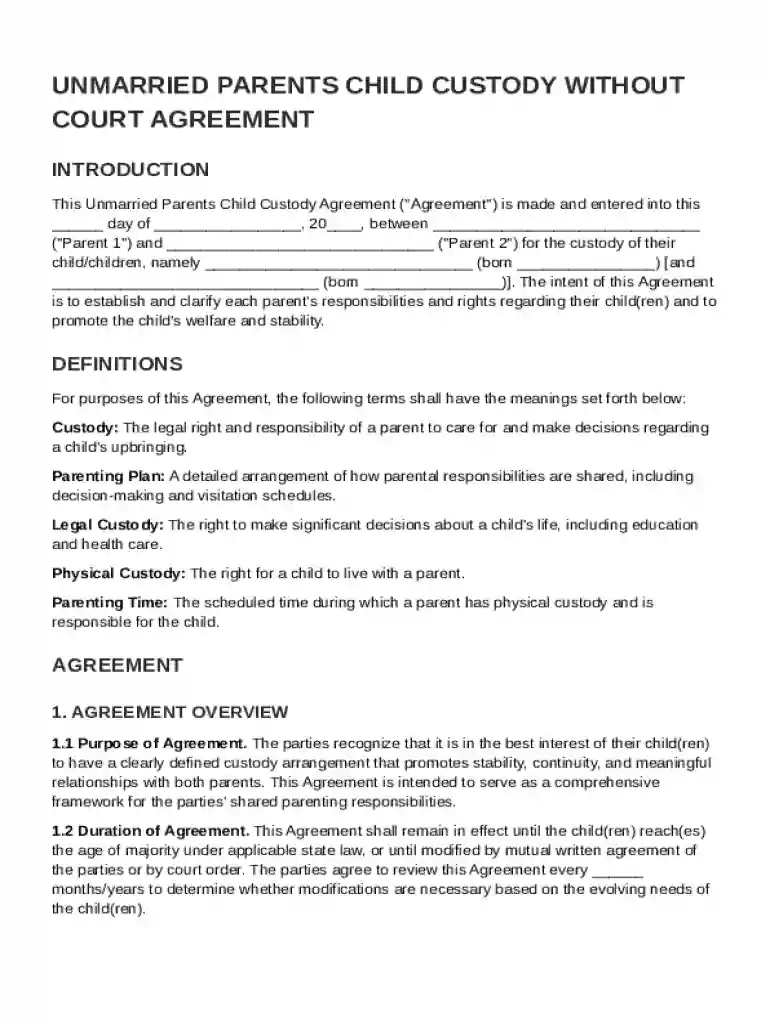
The "Unmarried Parents Child Custody Without Court Agreement Template" serves as a formal contract between unmarried parents to outline the custody arrangement of their child. This template is instrumental in establishing parental rights and responsibilities, focusing on the child's well-being and stability without involving court intervention. Although it's not legally binding in the same way a court order would be, this agreement acts as a mutual understanding between both parties, detailing the physical and legal custody arrangements.
Types of Custody Explained
- Physical Custody: Designates where the child will physically reside. It can be shared or granted to one parent while the other has visitation rights.
- Legal Custody: Involves decision-making authority on the child's upbringing, such as education, healthcare, and religious teachings. Typically shared between both parents.
Benefits of Using a Template
- Customized Arrangements: Allows parents to create a personalized schedule that fits their unique circumstances.
- Cost-Effective: Avoids the financial burden of court fees and legal services.
- Flexible: Adaptable to changes in parental situations or children's needs over time.
How to Use the Unmarried Parents Child Custody Without Court Agreement Template
Using the template requires careful attention to detail to ensure all aspects of the child's welfare and the parents' responsibilities are adequately addressed.
Steps to Create the Agreement
- Download the Template: Access the template from a reliable document platform such as DocHub to ensure the most updated version.
- Fill Out Personal Details: Include the names, contact information, and addresses of both parents.
- Detail Custody Arrangements: Specify physical and legal custody details. Include visitation schedules or shared residency details.
- Outline Decision-Making Responsibilities: Clearly state which parent is responsible for key decisions in the child’s life.
Ensuring Compliance
- Mutual Understanding: Both parents should agree on each term and condition laid out in the template.
- Legal Advice: Although not required, consulting a family law attorney can provide additional assurance that the agreement aligns with state regulations.
Key Elements of the Child Custody Agreement
Developing a thorough agreement involves several critical components that protect all parties' interests.
Custody and Visitation Schedule
- Regular Schedule: Defines the daily, weekly, and holiday living arrangements.
- Vacation Planning: Lists provisions for vacations and special occasions that may not adhere to the regular schedule.
Financial Responsibilities
- Child Support Details: Outline any financial contributions required from one or both parents.
- Healthcare Costs: Specify how medical expenses will be shared, including insurance coverage and deductibles.
Communication Protocols
- Frequency of Contact: Determine the regularity and methods (phone, video calls) through which the non-residential parent can contact the child.
- Emergency Procedures: Establish guidelines for communication during emergencies to ensure both parents are informed swiftly.
Legal Use and Limitations
While this agreement strives to maintain parental harmony and child stability, there are limits to its enforceability.
Legal Recognition
- Non-Binding Nature: Such agreements are not legally enforceable in the same way a court order is but provide a framework to minimize conflict.
- Potential Modifications: Either parent can request modifications in the agreement if circumstances change significantly.
Court Involvement
- Amendments and Disputes: In cases where disputes arise that cannot be amicably resolved, legal intervention may be required to formalize a court order.
- Child's Best Interest: Any custody decision will emphasize the child's best interests above parental convenience.
Important Terms and Definitions Related to the Agreement
Familiarity with specific legal and custody terminology ensures that all parties comprehensively understand the agreement's content.
Specific Terms
- Sole Custody: One parent has exclusive physical and legal custody responsibilities.
- Joint Custody: Both parents share custody, which can cover both physical and legal aspects.
- Visitation Rights: Outlines the schedule for the non-custodial parent's time with the child.
Communication and Conflict Resolution
- Mediation Clause: Many templates include a provision for mediation to handle disagreements.
- Review and Modification Clause: Specifies how and when the agreement can be reviewed or altered.
Understanding and executing these terms and processes in the Unmarried Parents Child Custody Agreement is crucial for safeguarding the interests of both the child and the parents involved.