






Definition & Meaning
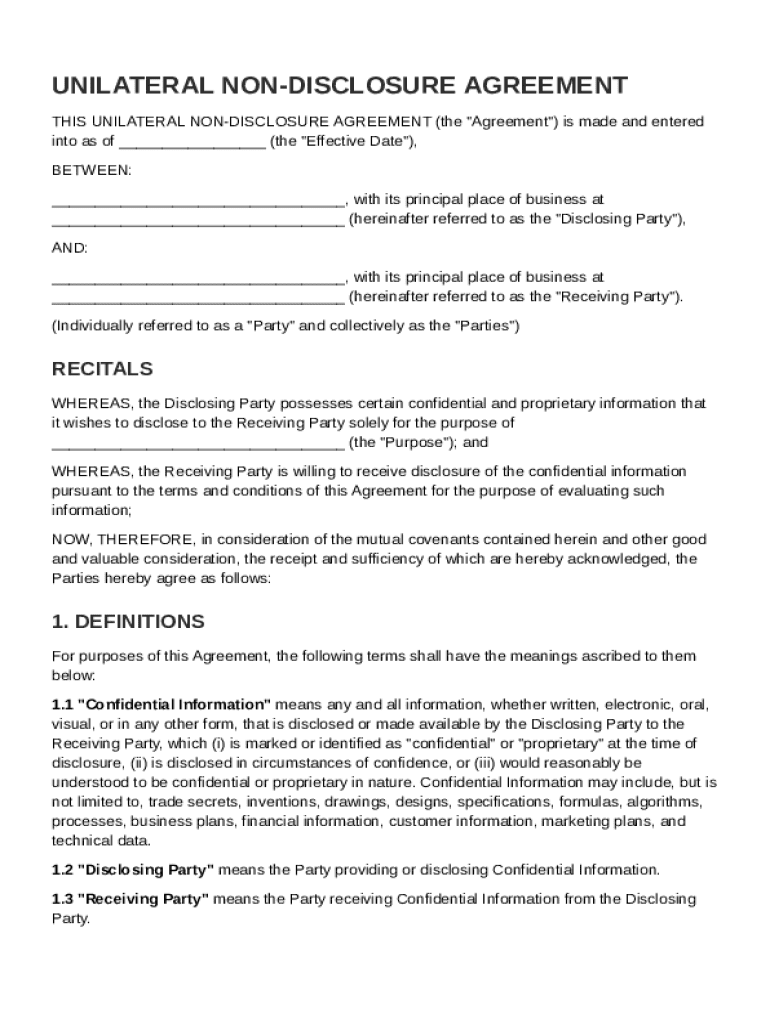
A Unilateral Non-Disclosure Agreement (NDA) is a legal instrument used to protect confidential information shared by one party (the Disclosing Party) with another (the Receiving Party). It outlines the terms under which sensitive data, such as trade secrets or proprietary knowledge, will be disclosed. The agreement mandates that the Receiving Party is legally bound to maintain the confidentiality of the disclosed information, preventing unauthorized access or further dissemination. The NDA ensures no rights to intellectual property are granted, clarifying that the document's purpose is strictly for confidentiality rather than transferring ownership.
How to Use the Unilateral Non-Disclosure Agreement Template
Users looking to utilize the Unilateral NDA template should first review its contents to ensure all relevant clauses are included. Begin by identifying the roles of the Disclosing and Receiving Parties and adjust the template to reflect specific details pertinent to the information being shared.
Steps to Follow:
- Review Definitions: Ensure all terms are clearly defined, particularly what constitutes "Confidential Information."
- Specify Purpose: Clearly articulate the purpose for which the information is being shared, establishing the scope of use.
- Customize Obligations: Layout specific obligations for confidentiality, including any exceptions or conditions for permissible disclosure.
- Include Legal Provisions: Incorporate applicable laws and jurisdiction to finalize the document legally.
- Sign and Distribute: After tailoring the agreement, both parties should sign the NDA, either digitally or in print, before sharing any confidential information.
Important Terms Related to Unilateral Non-Disclosure Agreement Template
Understanding the terminology within the Unilateral NDA is crucial for effective use. Key terms include:
- Confidential Information: Details the type of data protected under the NDA, such as business strategies, client lists, or technical information.
- Receiving Party: The individual or entity that receives the confidential information and must uphold its secrecy.
- Disclosing Party: The owner of the confidential information who discloses it to another under the agreement terms.
- Exclusions from Confidentiality: Instances where information does not remain confidential, such as when it becomes publicly known.
Key Elements of the Unilateral Non-Disclosure Agreement Template
A comprehensive Unilateral NDA should contain several essential elements:
- Introduction and Purpose: The rationale and context behind the NDA.
- Scope of Confidentiality: Define the boundaries of what information is protected and the extent of that protection.
- Duration of Obligation: Specify how long the Receiving Party must maintain confidentiality.
- Consequences of Breach: Outline potential legal actions or damages if the NDA is violated.
Legal Use of the Unilateral Non-Disclosure Agreement Template
In the U.S., NDAs are governed by both federal and state law, making them legally binding contracts. They are crucial in business to protect proprietary information and intellectual property. To ensure enforceability, the NDA must be clearly worded and mutual in terms of understanding, though it remains unilateral in the disclosure itself.
Application:
- Corporate Settings: Common in mergers, acquisitions, or joint ventures.
- Employment Negotiations: Used in protecting company information when hiring.
Examples of Using the Unilateral Non-Disclosure Agreement Template
Several real-world scenarios underscore the importance of a Unilateral NDA:
- Technology Startups: Protects innovations from being disclosed during investor meetings or potential partnerships.
- Freelance Work: Ensures service providers do not disclose client strategies or data.
- Retail Development: Used when sharing designs or product concepts with manufacturers.
Versions or Alternatives to the Unilateral Non-Disclosure Agreement Template
While the unilateral NDA focuses on one-way information exchange, alternatives include:
- Mutual NDAs: Both parties share and protect confidential information.
- Invention Assignments: Bespoke agreements focusing on intellectual property rights.
Understanding different versions provides flexibility in choosing the right NDA type for distinct business needs.
Business Types that Benefit Most from Unilateral Non-Disclosure Agreement Template
Some businesses especially benefit from unilateral NDAs:
- Startups and Small Businesses: Protect emerging business ideas or technology innovations.
- Consulting Firms: Safeguard client information while performing services.
- Manufacturers: Secure design and process details during production collaborations.
Industries with high competition or invention rates frequently use unilateral NDAs as part of their strategic protocol to secure proprietary information.