





Definition and Meaning
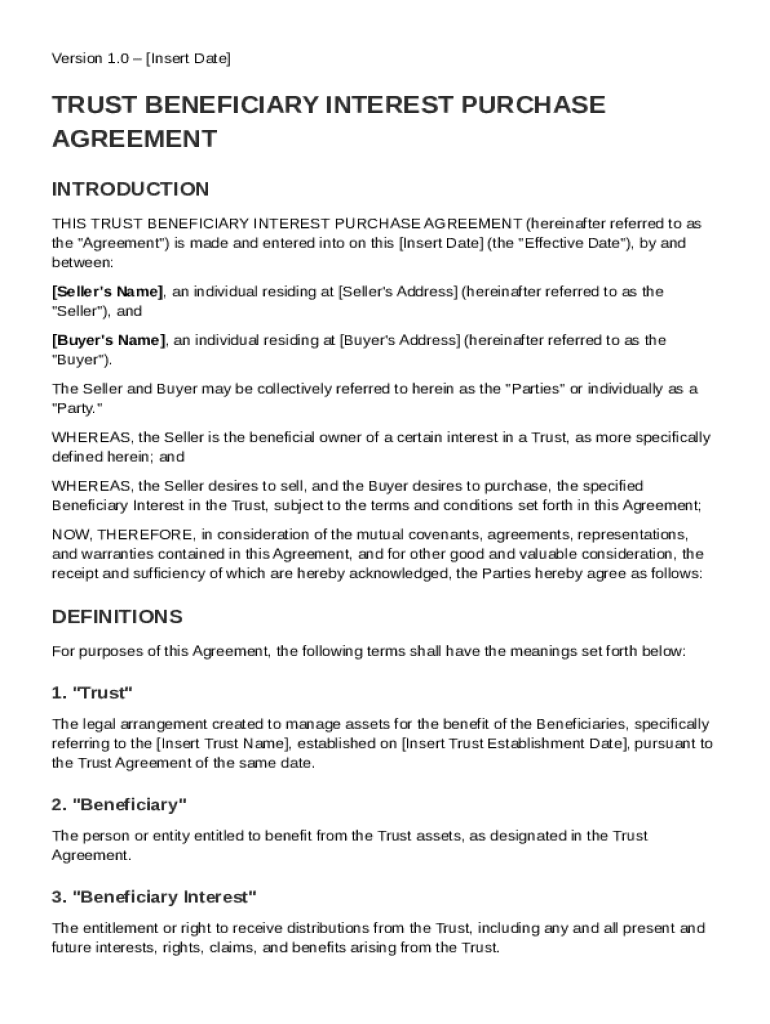
A Trust Beneficiary Interest Purchase Agreement Template is a legal document used to formalize the conditions under which a beneficiary interest in a trust is sold and purchased. This agreement delineates the responsibilities and rights of both the seller and buyer, providing a clear framework for transferring the beneficiary interest. It details essential elements such as the nature of the interest being transferred, the compensation involved, and the obligations of each party. The agreement serves as a safeguard, ensuring all parties are protected and their rights are clearly defined.
Key Components
- Parties Involved: Identifies the buyer and seller, including their legal names and contact information.
- Description of Interest: Clearly outlines the trust's beneficiary interest being sold.
- Payment Terms: Specifies the payment method, amount, and schedule.
- Representations and Warranties: Defines the assertions each party makes to maintain the agreement's validity.
- Termination Conditions: Lists the scenarios where the agreement may be voided, such as unmet conditions or breaches.
- General Provisions: Includes clauses relating to jurisdiction, dispute resolution, and amendment processes.
Key Elements of the Trust Beneficiary Interest Purchase Agreement Template
The template for a Trust Beneficiary Interest Purchase Agreement typically includes several crucial elements to ensure a legally sound and comprehensive agreement. These elements cover various aspects of the transaction, providing clarity and protection for all involved parties.
Principal Components
- Definitions: Provides clarity on terms used throughout the agreement, ensuring mutual understanding among parties.
- Transaction Details: Describes the beneficiary interest, including the nature of the trust and any specific conditions or restrictions.
- Legal Obligations: Details the legal duties and responsibilities each party must adhere to for compliance.
- Confidentiality Agreement: May include clauses to protect sensitive information related to the trust and its beneficiaries.
Sometimes Included
- Indemnification Clauses: Offer protection by compensating parties for certain losses or damages.
- Miscellaneous Provisions: Additional clauses that cover aspects like legal fees, notices, and assignments.
Steps to Complete the Trust Beneficiary Interest Purchase Agreement Template
Completing a Trust Beneficiary Interest Purchase Agreement requires attention to detail and a clear understanding of each section of the document. The following steps provide guidance on completing the template effectively.
Step-by-Step Guide
- Collect Information: Gather all relevant information about the trust, the interest being sold, and the parties involved.
- Fill Out Basic Details: Include the names and addresses of the buyer and seller, the date of the agreement, and the title of the document.
- Describe the Beneficiary Interest: Clearly articulate the interest being transferred, including any unique characteristics.
- Detail Payment Terms: Specify how and when the buyer will compensate the seller.
- Complete Legal Clauses: Ensure all representation, warranty, and termination conditions are completed accurately.
- Review General Provisions: Carefully check clauses related to dispute resolution, amendments, and jurisdiction.
- Finalize and Sign: Have all parties review the document before signing to validate its terms.
Who Typically Uses the Trust Beneficiary Interest Purchase Agreement Template
This template is primarily utilized by individuals and entities involved in the transfer of beneficiary interests within a trust. Understanding who typically uses this document can provide insight into its practical applications.


Typical Users
- Individual Beneficiaries: When personal interests in a family trust are being transferred to another beneficiary.
- Trust Administrators: Facilitating transfers of interest within managed trusts.
- Estate Attorneys: Legal professionals assisting clients in estate planning and management.
- Financial Advisors: Providing guidance on the investment and transfer of trust interests.
Beneficial for
- Trustees: Ensuring legal compliance during interest transfers.
- Estate Planners: Structuring seamless asset distribution within trusts.
- Property Managers: Handling transfers in real estate trusts where beneficiary interests need to be adjusted.
Why Use a Trust Beneficiary Interest Purchase Agreement Template
Utilizing a Trust Beneficiary Interest Purchase Agreement Template provides a structured and reliable means to document the transfer process. Here are important reasons for its use:
Advantages
- Legal Protection: The template provides a written record, enforceable by law, protecting all parties' interests.
- Structured Framework: Ensures that all necessary clauses and conditions are outlined clearly, avoiding misunderstandings.
- Time Efficiency: Streamlines creating an agreement from scratch, saving time and resources for legal professionals and involved parties.
Enhancements for Clarity
- Standardized Format: Offers a consistent layout, facilitating easier understanding and use.
- Customizable Sections: Allows modifications to tailor the agreement to specific circumstances or state requirements.
Legal Use of the Trust Beneficiary Interest Purchase Agreement Template
The legal framework surrounding the Trust Beneficiary Interest Purchase Agreement Template ensures the protection of all parties involved in the transfer. Understanding how the template aligns with legal requirements is crucial for compliance and enforceability.
Legal Considerations
- State Compliance: Ensure the agreement adheres to state-specific laws governing trust interests and their transfers.
- Validity: Requires all parties to enter into the agreement voluntarily and with a full understanding of its terms.
- Execution: Must be signed by all involved parties, possibly witnessed or notarized depending on jurisdictional requirements.
Consult Legal Expertise
- Legal Counsel Involvement: Beneficial to ensure that the agreement respects all legal obligations and includes any necessary state-specific language or clauses.
- Updates on Law Changes: Regularly revising the template to incorporate changes in law or regulations impacting trust agreements.
Who Issues the Trust Beneficiary Interest Purchase Agreement Template
The Trust Beneficiary Interest Purchase Agreement Template is not typically issued by a government agency, but instead, it is created and disseminated by legal professionals and institutions specializing in trust and estate law.
Common Issuers
- Law Firms: Specialized in estate and trust law, providing templates as part of their legal services.
- Online Legal Document Providers: Offering downloadable customizable templates for public use.
- Financial Institutions: Large firms managing extensive trust portfolios may develop and provide proprietary templates for their clients.
Examples of Using the Trust Beneficiary Interest Purchase Agreement Template
Real-world examples provide valuable context for understanding how the Trust Beneficiary Interest Purchase Agreement Template is used within various scenarios.
Practical Scenarios
- Family Trusts: A family member sells their beneficiary interest to another family member after a financial settlement.
- Business Trusts: Used when a business decides to restructure and sell a portion of its invested interests in a trust.
- Property Trusts: A beneficiary in a real estate trust sells their interest as part of a larger transaction with a real estate investment firm.
Diverse Applications
- Corporate Mergers and Acquisitions: Facilitating the transfer of interests within complex business structures.
- Charitable Trusts: Managing interests allocations during trustee or mission realignment.
- Retirement Planning: Individuals reallocating interests as part of their retirement strategy, either through transfer or sale.