
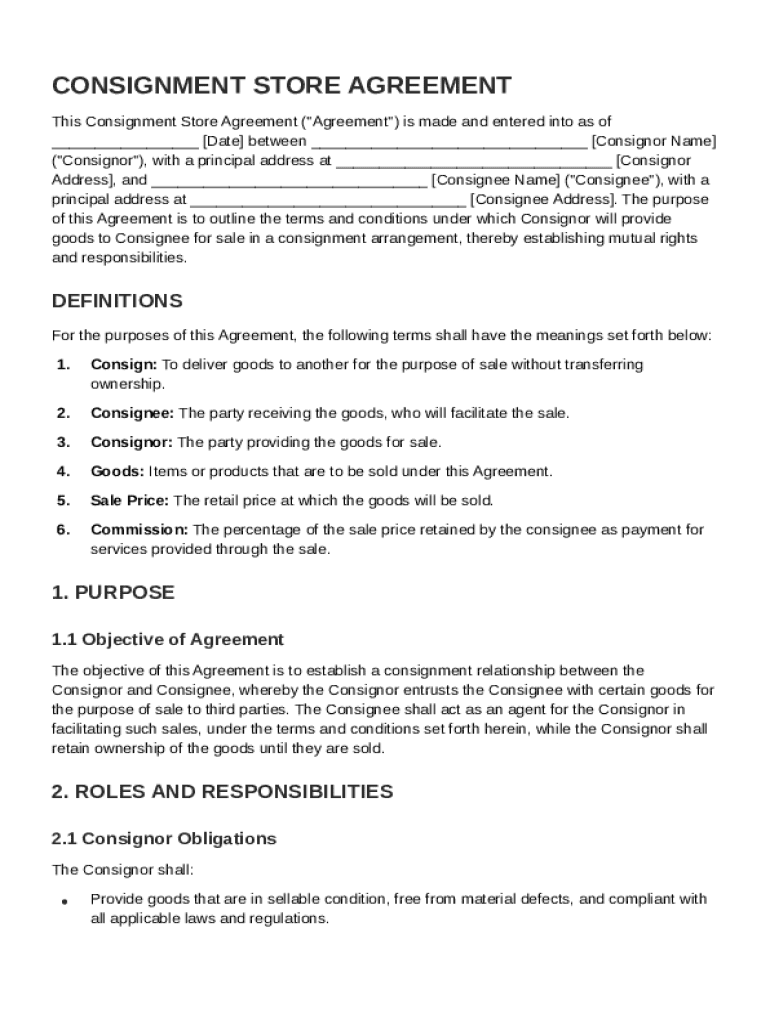







Definition and Meaning
The Consignment Store Agreement Template is a legally binding document used to outline the terms and conditions of a consignment relationship between a Consignor, who supplies goods, and a Consignee, who sells these goods on their behalf. This template ensures that both parties are clear about their roles, responsibilities, payment structures, and the ownership of goods. It is crucial for establishing a trustworthy partnership, as it delineates expectations and prevents potential disputes.
- Roles and Responsibilities: The Consignor retains ownership of the goods until sold, ensuring they have ultimate control over their products. The Consignee is in charge of displaying, marketing, and facilitating the sale of the goods, earning a commission on successful transactions.
- Payment Terms: This section specifies how and when payments are to be made. It includes details on commission percentages, payment schedules, and methods.
- Inventory Management: Proper inventory oversight by consignors and consignees is essential. This involves keeping an accurate record of items, tracking sales, and reporting damages or losses.
How to Use the Consignment Store Agreement Template
Using the Consignment Store Agreement Template involves several key steps to ensure a smooth and mutually beneficial relationship between parties.
- Customize the Template: Begin by downloading or accessing the template on a document platform like DocHub. Modify the sections to reflect details specific to the consignment arrangement, such as the goods involved, payment terms, and duration of the agreement.
- Input Relevant Details: Fill in the names and contact details of both the Consignor and Consignee. Add product descriptions, commission rates, and payment methods unique to your arrangement.
- Review and Revise: Both parties should meticulously review the template to ensure clarity and accuracy. It is advisable to consult with legal counsel to confirm that the terms are legally sound and fulfill local regulations.
Steps to Complete the Consignment Store Agreement Template
Completing the Consignment Store Agreement Template necessitates attention to detail and a methodical approach.
- Document Authorization: Both parties need to sign the agreement, confirming their understanding and acceptance of the outlined terms.
- Collect Supporting Documents: Attach any necessary documents that provide additional information, such as product listings, pricing sheets, and prior agreements.
- Implement Monitoring Systems: Establish protocols for regular communication and reporting to track sales, inventory levels, and payments effectively.
- Finalize the Agreement: Once all sections are reviewed and signed, store the original signed document securely, and distribute copies to all relevant parties.
Key Elements of the Consignment Store Agreement Template
The Consignment Store Agreement Template includes several fundamental elements essential for clarity and efficiency.
- Identification of Parties: Clearly lists the Consignor and Consignee, including addresses and contact information.
- Product Details: Emphasizes a detailed description of the goods, with SKU numbers or barcodes for accurate tracking.
- Commencement and Termination: Specifies the start date of the agreement and the conditions under which the agreement can be terminated.
- Liability and Risk Management: Clarifies who is responsible for damages and losses while the goods are in transit or on display. Consignees often bear the risk once they receive the goods.
Legal Use of the Consignment Store Agreement Template
The Consignment Store Agreement Template serves a vital legal function by offering a standardized yet customizable framework for consignment arrangements.
- Legally Binding: It comprises all legally necessary elements, like agreement clauses and mutual obligations, making it enforceable in a court of law.
- Compliance with Regulations: Ensures adherence to federal and state laws that govern consignment sales, protecting both parties from legal discrepancies.
- Insurance Provisions: Includes stipulations for any required insurance coverage, guaranteeing that the goods and business operations remain protected against unforeseen events.
Why Use a Consignment Store Agreement Template?
A Consignment Store Agreement Template offers numerous benefits to businesses seeking to streamline their operations and mitigate risks.
- Efficiency and Consistency: Using a standardized template saves time in drafting agreements and ensures consistent content across different consignment relationships.
- Risk Mitigation: Clearly outlines procedures and responsibilities, reducing the likelihood of disputes over issues like damage, payment, and sales shortfalls.
- Enhanced Trust: A well-constructed agreement fosters a sense of security and professionalism, enhancing the trust between consignors and consignees.
State-Specific Rules for the Consignment Store Agreement Template
State-specific regulations and rules can impact consignment agreements. It's crucial to be aware of these nuances to ensure full legal compliance.
- Unique Tax Obligations: Different states may have varying tax obligations related to consignment sales. It's essential to consult with a tax professional to handle sales taxes accurately.
- Consumer Protection Laws: Some states might have additional consumer protection laws that influence the eligibility and execution of consignment agreements.
- State-Specific Terms: Ensure the agreement complies with any significant legal terminologies and constraints specific to the state where the consignment occurs.
Important Terms Related to the Consignment Store Agreement Template
Understanding the terminology associated with consignment agreements is vital for effectively navigating the consignment process.
- Commission: A percentage of the sales price that the Consignee earns upon selling goods.
- Inventory: The collection of items that are being consigned for sale, managed by both parties to ensure accountability.
- Consignor and Consignee: Respectively, the owner of the goods provided for sale and the seller who facilitates the sale process.
- Sales Report: A documented account of items sold, typically provided by the Consignee at regular intervals, which outlines sales performance and inventory status.




