






Definition and Purpose
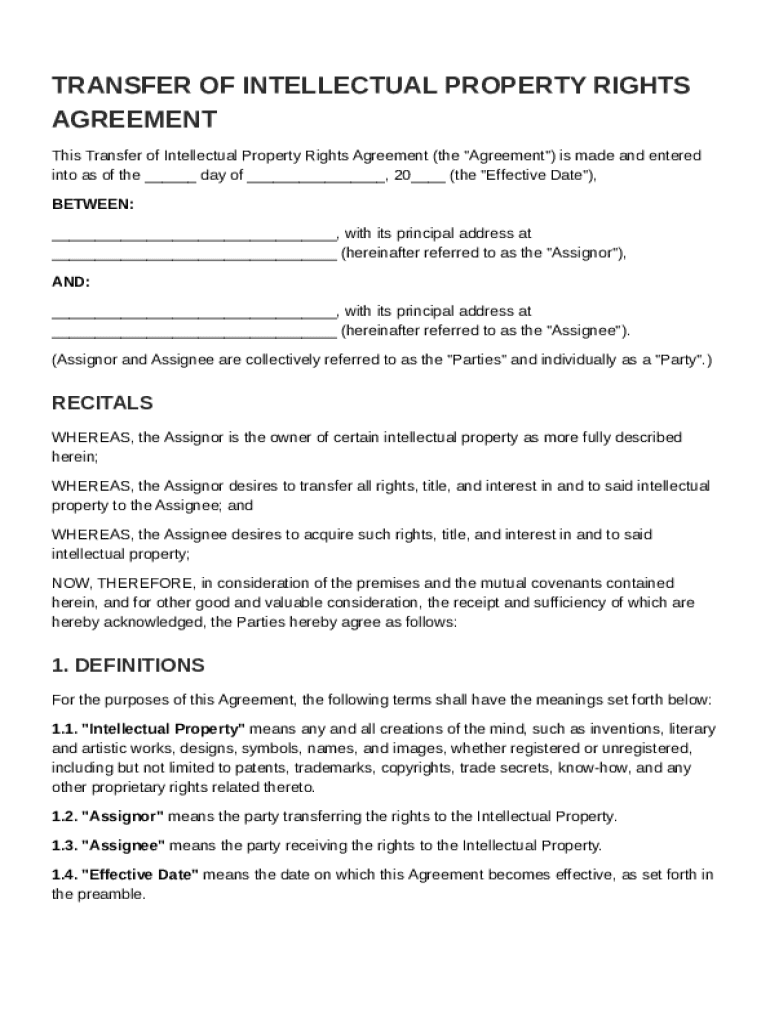
A Transfer of Intellectual Property Rights Agreement is a legal document that facilitates the transfer of intellectual property (IP) rights from one party (the Assignor) to another (the Assignee). This agreement is crucial for securing legal ownership of the IP, ensuring the Assignee gains full and exclusive rights over the intellectual property listed within the document. Such agreements often cover patents, trademarks, copyrights, and trade secrets. They ensure that all parties have a clear understanding of their roles, responsibilities, and the nature of the rights being transferred.
Key Elements of the Agreement
The agreement template typically includes several essential components:
- Definitions: Clear definitions of terms used throughout the agreement, such as "intellectual property," "assignor," and "assignee."
- Description of the IP: Detailed information about the intellectual property being transferred.
- Transfer Details: Specific terms regarding the transfer of rights, including any geographical or time limitations.
- Consideration: Compensation or payment terms agreed upon by both parties for the transfer of intellectual property rights.
How to Use the Template
Using a Transfer of Intellectual Property Rights Agreement Template involves several steps:
- Identify Parties Involved: Specify the assignor and assignee, including legal names and contact information.
- Fill in IP Details: Provide a thorough description of the intellectual property, including any registration numbers, where applicable.
- Customize Terms: Adjust any terms to fit specific needs, especially concerning the scope of the transfer, consideration, and governing law.
- Review and Revise: Check for accuracy and legal compliance, possibly with the assistance of a legal professional.
- Sign and Execute: Both parties must sign the agreement. If applying electronic signatures, ensure they are legally binding.
Legal Use and Compliance
Legal compliance is critical when utilizing intellectual property transfer agreements:
- Governing Law: The agreement should specify the governing law under which it is to be interpreted and enforced. This is usually the law of the state or country in which the intellectual property resides.
- Validity: Ensure the agreement aligns with current IP laws to be enforceable.
- Dispute Resolution: Include clauses on how disputes will be resolved, such as arbitration or mediation procedures.
Important Terms and Concepts
- Assignment: The transferring of ownership or interest from the assignor to the assignee.
- License: Sometimes included, allowing continued use of the IP by the assignor under specific terms.
- Warranties: Assurances provided by the assignor that they have the legal right to transfer the IP and that it is free of encumbrances.
- Indemnification: Agreement by one party to cover the costs that arise from potential legal actions.
Who Typically Uses This Agreement?
A variety of individuals and entities utilize Transfer of Intellectual Property Rights Agreements:
- Inventors and Entrepreneurs: Often when selling inventions or business ideas.
- Corporations and Businesses: During mergers, acquisitions or when outsourcing technology development.
- Legal Professionals: When drafting or reviewing terms of the transfer.
- Academic Institutions: For transferring patents or research outcomes to industry partners.
Steps to Complete the Agreement
Completion of the template requires methodical attention to detail:
- Gather Relevant Information: Collect all necessary details about the IP and involved parties.
- Draft Initial Agreement: Utilize the template to input all relevant information.
- Seek Legal Advice: Consult with legal counsel to ensure terms align with applicable laws.
- Final Review and Signatures: Ensure all terms are agreed upon and then obtain necessary signatures.
- Secure Copies: Retain copies for all parties for future reference.
Considerations for Specific Business Types
The use and implications of this agreement can vary based on business structure:
- LLCs and Corporations: May require board approval or shareholder notification.
- Partnerships: Need unanimous agreement if IP is among partnership assets.
- Sole Proprietorships: The process is straightforward but still requires legal clarity.
Examples and Scenarios of Use
To illustrate the utility, consider these scenarios:
- Technology Transfer: A tech startup sells its software patent to a large corporation.
- Academic Collaboration: A university researcher transfers a new pharmaceutical patent to a commercial lab for development.
- Trademark Acquisition: A growing company acquires trademark rights to expand its branding strategy.
Each of these areas highlights the flexibility and importance of properly documented IP rights transfers.