






Definition & Meaning
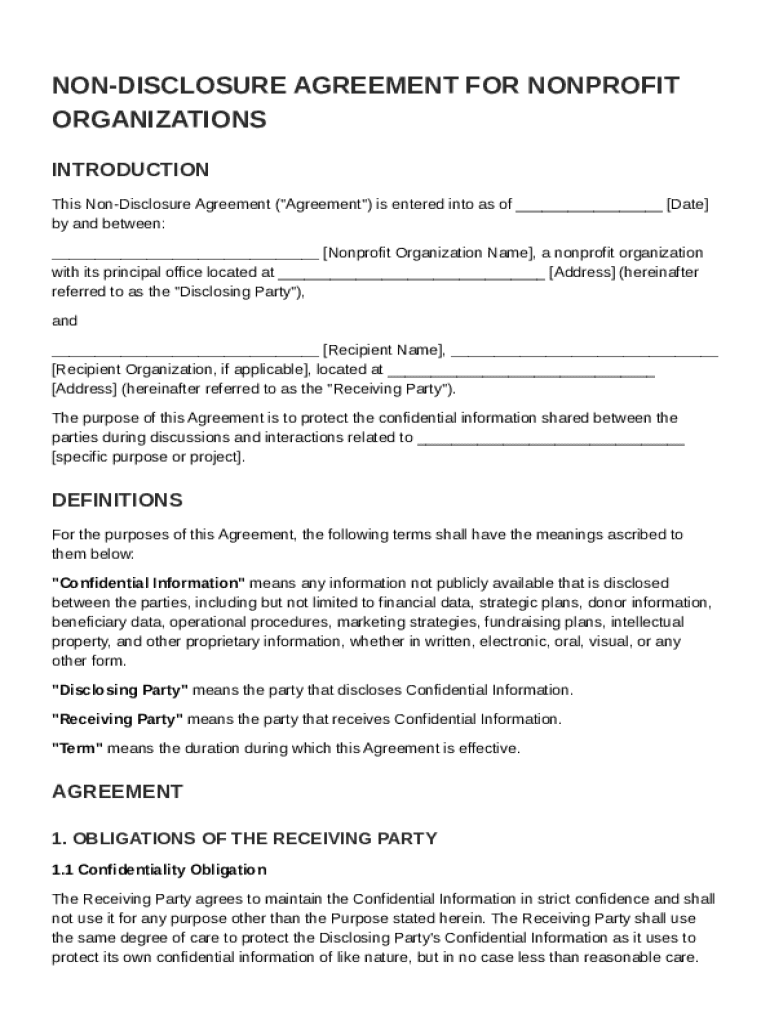
A Non-Disclosure Agreement (NDA) for nonprofit organizations is a legal document designed to protect confidential information shared between parties involved in discussions or projects. In the context of nonprofits, this agreement ensures that sensitive information such as donor details, internal strategies, or proprietary project data is not disclosed to unauthorized individuals or parties. The NDA outlines the responsibilities of the receiving party to maintain confidentiality, as well as specific exclusions and limitations on what constitutes confidential information. This type of agreement is crucial for safeguarding the nonprofit's interests and maintaining the trust of stakeholders.
How to Use the Non-Disclosure Agreement Template
Nonprofit organizations can utilize this template to customize their confidentiality agreements based on specific needs. The template provides a structured format that outlines sections such as parties involved, definition of confidential information, obligations of confidentiality, and terms of the agreement. To use the template effectively, organizations should:
- Identify the disclosing and receiving parties.
- Clearly define what is considered confidential information.
- Specify the obligations and responsibilities of the receiving party.
- State any exclusions to what is considered confidential information.
- Determine the duration of the confidentiality obligation.
- Include clauses for the return or destruction of confidential materials after the agreement ends.
This process ensures that all aspects of the agreement are tailored to the organization's specific circumstances, providing comprehensive protection for its confidential data.
Steps to Complete the Template
To complete the Non-Disclosure Agreement template for nonprofit organizations, follow these steps:
- Identify Parties: Clearly list the disclosing and receiving parties by name and title.
- Define Confidential Information: Specify what constitutes confidential information relevant to the agreement.
- Responsibilities and Obligations: Outline the duties of the receiving party to maintain confidentiality and restrict access to third parties.
- Exclusions: Detail any exceptions to the confidentiality obligations, such as information available in the public domain.
- Term and Duration: Establish how long the confidentiality agreement will remain in effect.
- Return of Materials: Include provisions for returning or destroying confidential information once the agreement terminates.
- Include Legal Clauses: Add legal provisions like governing law, dispute resolution, and possible remedies for breach of contract.
These steps help in creating a robust and enforceable NDA that aligns with nonprofit needs.
Key Elements of the Non-Disclosure Agreement Template
An effective NDA template for nonprofit organizations should include several critical elements, such as:
- Introduction: Identifies the purpose of the agreement and involved parties.
- Definition of Confidential Information: Clearly states what information needs protection.
- Obligations of Parties: Details duties to maintain secrecy and guidelines for handling disclosures.
- Exclusions: Lists the types of information not protected under the agreement.
- Duration: Specifies the time frame for which the agreement remains in effect.
- Return of Materials: Instructions for what happens to confidential data post-agreement.
- Legal Considerations: Incorporates applicable laws, rights, and dispute resolution mechanisms.
These components ensure the NDA is comprehensive and legally sound, protecting all involved parties.
Legal Use of the Non-Disclosure Agreement Template
The legal use of the Non-Disclosure Agreement template hinges on compliance with relevant laws and regulations. Nonprofit organizations must ensure that the template adheres to federal and state legal standards as NDAs can vary greatly in scope. The template should incorporate jurisdictional clauses to specify which state laws will govern the agreement. Moreover, the terms should be clear and articulated in plain language to avoid ambiguity or unenforceability in courts. Enforcing the NDA in legal matters usually requires demonstrating that the agreement was mutually understood and executed voluntarily by both parties.
Who Typically Uses the Non-Disclosure Agreement Template
Nonprofit organizations use this NDA template to protect sensitive information exchanged with employees, volunteers, contractors, sponsors, and partners. Key users include:
- Directors and Executives: Safeguard strategic decisions and donor information.
- Project Managers: Protect project-specific data during collaborative efforts.
- Consultants and Independent Contractors: Ensure proprietary research and methods remain confidential.
- Board Members and Advisors: Restrict access to financial strategies and internal discussions.
Each party plays a role in maintaining the integrity and confidentiality needed to support the nonprofit's mission.


Examples of Using the Non-Disclosure Agreement Template
Consider situations where a nonprofit organization wants to share a strategic plan with a consultancy firm. The NDA would ensure that confidential information is protected during discussions. Similarly, a nonprofit might use the agreement when collaborating with another organization on a joint event to secure donor and logistical data.
Real-world scenarios include research collaborations with universities where proprietary research needs safeguarding, or partnerships that require sharing sensitive funding data.
Important Terms Related to the Non-Disclosure Agreement Template
Understanding some of the legal and technical terms used in an NDA can help clarify the agreement's scope:
- Disclosing Party: The party sharing confidential information.
- Receiving Party: The party receiving and obligated to protect the confidential information.
- Confidential Information: Data or material that is protected under the NDA.
- Obligations of Confidentiality: Duties imposed on the receiving party not to disclose or misuse information.
- Exclusions: Information not protected under the NDA, such as publicly available data.
- Governing Law: The legal jurisdiction under which the NDA is recognized.
- Miscellaneous Provisions: Additional clauses covering amendments, assignment, and enforceability.
These terms provide clarity and structure to the NDA, guiding users through their responsibilities and rights.