






Definition and Meaning
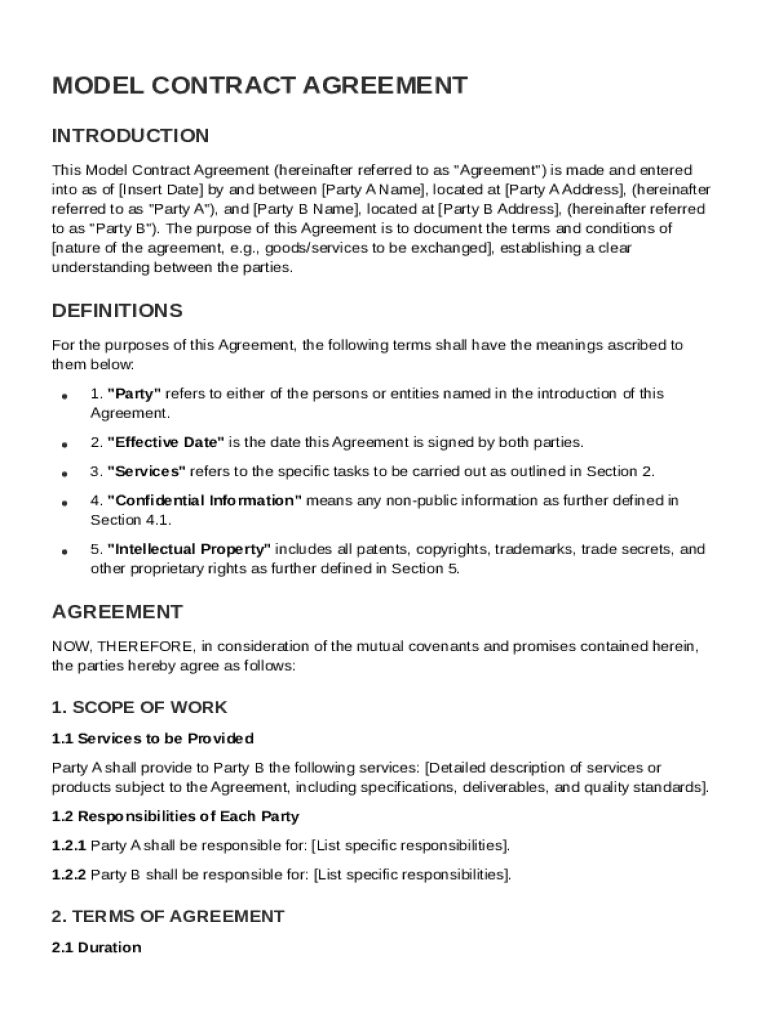
The Standard Model Contract Template is an essential legal document outlining the terms and conditions agreed upon by two parties—typically referred to as Party A and Party B—involved in an exchange of goods or services. This template is designed to establish a clear understanding and legal framework for the relationship, ensuring both parties are aligned on responsibilities and obligations. It covers critical areas such as the scope of work, payment terms, confidentiality obligations, and liability limitations, allowing for a comprehensive agreement that protects the interests of all involved.
Key Components of Definition
- Parties Involved: Clarifies who is included, usually Party A and Party B.
- Scope of Work: Defines the tasks, services, or products exchanged between the parties.
- Payment Terms: Outlines the compensation structure and payment schedule.
- Confidentiality: Ensures sensitive information is protected.
- Liability Limitations: Sets boundaries on what actions are covered by the agreement.
- Governing Law: Identifies the legal jurisdiction applicable to the contract.
How to Use the Standard Model Contract Template
Understanding the correct application of the Standard Model Contract Template is vital for ensuring that all aspects of a business transaction are legally protected. Here are some practical steps for using this versatile document:
-
Identify the Purpose: Determine the specific transaction or relationship that needs formal documentation.
-
Customize the Template: Adapt sections to suit the particular requirements of the transaction. This involves filling in details such as names, dates, and specific terms relevant to the exchange.
-
Review Legal Requirements: Consult legal advisers to ensure the contract complies with all applicable laws.
-
Negotiate Terms: Engage in discussions with the other party to agree on all terms, including scope, payments, and confidentiality.
-
Finalize and Sign: Once both parties are satisfied with the agreement, complete the process with legally binding signatures.
Practical Examples
- Service Agreements: When a freelancer offers services to a business, the model contract template can specify deliverables and deadlines.
- Sales Contracts: Used when a company sells goods to another business, detailing products, pricing, and shipment terms.
Steps to Complete the Standard Model Contract Template
The process of completing the Standard Model Contract Template involves several critical steps to ensure accuracy and compliance:
-
Gather Information: Collect all necessary details about the parties, including legal names, roles, and contact information.
-
Detail the Transaction: Clearly define what goods or services are involved, including quantities, schedules, and specific responsibilities.
-
Set Payment Conditions: Specify payment methods, amounts, and timings.
-
Establish Confidentiality Clauses: Include provisions to handle sensitive data appropriately.
-
Outline Dispute Resolution: Identify procedures for resolving any potential conflicts.
-
Consult a Legal Expert: Before finalizing, seek legal advice to ensure all contractual elements meet statutory regulations.
Key Elements of the Standard Model Contract Template
This contract is composed of several crucial elements that collectively form a complete agreement:
- Definitions and Interpretations: This section helps clarify specific terms to ensure mutual understanding.
- Responsibilities of Each Party: Details the obligations that each participant must fulfill.
- Compliance with Laws: States the necessity for adherence to relevant laws and regulations.
- Termination Clauses: Explains the conditions under which the agreement can be ended prematurely by either party.
- Miscellaneous Provisions: Includes any additional conditions or stipulations not covered elsewhere.
Legal Use of the Standard Model Contract Template
The Standard Model Contract Template is legally binding once both parties have agreed to the terms and affixed their signatures. Its primary legal functions include:
- Risk Mitigation: Protects against misunderstandings that might lead to disputes.
- Enforceability: Provides a clear legal framework that can be enforced in court if necessary.
- Compliancy Assurance: Demonstrates adherence to legal requirements and industry standards.
Examples of Legal Impact
- Intellectual Property Protections: Ensures any shared intellectual property remains protected under the outlined terms.
- Liability Management: Limits the extent of liability exposure for each party involved.
Examples of Using the Standard Model Contract Template
Real-world scenarios illustrate the versatile use of the Standard Model Contract Template:
- Vendor Agreements: Businesses can use the template to formalize arrangements with suppliers, ensuring the consistent delivery of goods.
- Partnership Deals: Helps solidify the terms under which two businesses collaborate on a joint project.
- Employment Contracts: Adapted to outline the employment terms between a company and an employee, clearly specifying roles, expectations, and remunerations.
Case Study
A medium-sized technology company leverages the Standard Model Contract Template to negotiate a twelve-month service agreement with an IT support provider. Through comprehensive documentation, both parties agree on service levels, response times, and escalation procedures, preventing potential conflicts.
State-Specific Rules for the Standard Model Contract Template
Contractual agreements may be subject to state-specific regulations which necessitate additions or alterations to the Standard Model Contract Template:
- Governing Law Clauses: These may vary to reflect the laws of the state where enforcement is sought.
- Regulatory Compliance: Certain industries may have specific regulations in certain states, which may require additional terms or clauses.
Example Variations
- Texas: Contracts with real estate implications may need additional disclosures under Texan law.
- California: Privacy laws in California may require more comprehensive data protection clauses.
Form Submission Methods (Online / Mail / In-Person)
Once the contract is completed, there are several methods by which it can be formalized and stored:
- Digital Submission: Fast becoming the standard, contracts can be emailed or uploaded to secure platforms like DocHub, supporting digital signatures.
- Mail: Paper copies sent via postal service remain a traditional option.
- In-Person: Parties may convene to sign and exchange paper copies directly, often used for significant or sensitive contracts.
Benefits of Digital Submission
- Efficiency: Faster turnaround and reduced paper use.
- Security: Enhanced through encryption and secure storage solutions.
The use of the Standard Model Contract Template in business dealings ensures comprehensive contractual relationships that are both reliable and legally sound, safeguarding the interests of all involved parties.