Definition and Meaning
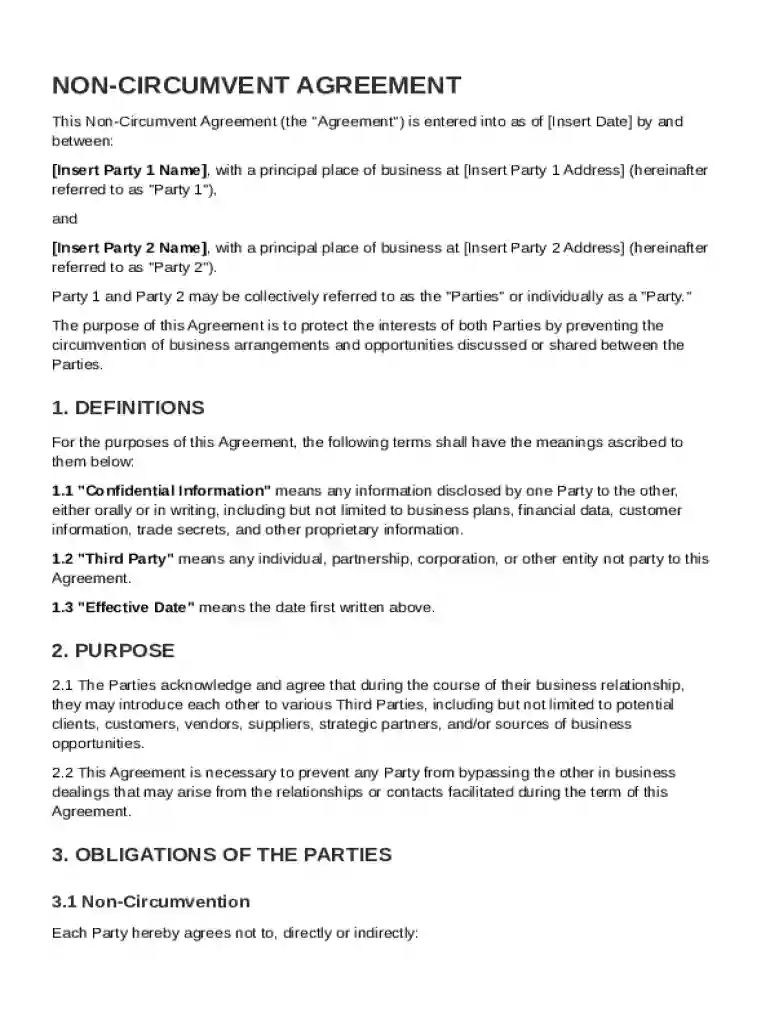
A Non-Circumvent Agreement is a legal document designed to protect parties engaged in business transactions from being bypassed by each other when dealing with third parties introduced during their collaboration. This agreement helps ensure that both parties benefit from potential business opportunities without one party attempting to exclude or circumvent the other to gain a competitive advantage. The Non-Circumvent Agreement typically includes confidentiality clauses to safeguard business secrets and protect each party's interests.
Key Elements of the Non-Circumvent Agreement Template
A well-crafted Non-Circumvent Agreement Template includes several key elements:
- Party Identification: Clearly identifies the parties involved in the agreement, ensuring that each party understands their role and responsibilities.
- Non-Circumvention Clause: Specifies the prohibitions against bypassing the other party, highlighting the consequences of such actions.
- Confidentiality Agreement: Ensures that any shared information is protected against unauthorized disclosure or use.
- Duration: Defines the length of time the agreement remains in effect, providing clarity on when obligations begin and end.
- Permitted Disclosures: Lists scenarios where information can be disclosed, such as under legal obligation or mutual agreement.
- Governing Law: Specifies the legal jurisdiction that will govern the agreement, important for resolving disputes.
Each element reinforces the agreement's intentions and ensures mutual protection and benefit for all parties involved.
How to Use the Non-Circumvent Agreement Template
Using a Non-Circumvent Agreement Template requires careful attention to detail:
- Identify Parties: Begin by listing the names and contact information of the parties involved.
- Fill in Agreement Details: Include the purpose of the agreement and the specific business arrangement it pertains to.
- Specify Obligations: Clearly outline the duties and responsibilities of each party to prevent misunderstandings.
- Set Terms and Duration: Establish how long the agreement will last and any conditions for its renewal or termination.
- Include Confidentiality Clauses: Ensure that any sensitive information shared between parties is protected.
- Review and Sign: Both parties should review the completed document thoroughly before signing to confirm mutual understanding and agreement.
Following these steps helps ensure the document is complete and enforceable, protecting the interests of all parties involved.
Legal Use of the Non-Circumvent Agreement Template
For a Non-Circumvent Agreement to be legally binding, it must comply with legal standards and best practices. This includes:
- Consent and Capacity: Both parties must enter the agreement voluntarily and be of legal capacity to do so.
- Legality of Purpose: The agreement must be for a legal purpose, as it cannot enforce illegal activities.
- Consideration: There must be something of value exchanged, such as services or resources, ensuring the agreement is fair and balanced.
Legal compliance helps ensure that all parties are protected under the agreement and that any potential legal disputes will be resolved under the agreed-upon governing law.
Important Terms Related to the Non-Circumvent Agreement Template
Understanding the terminology associated with Non-Circumvent Agreements is crucial for effective use:
- Third Parties: Refers to any individuals or organizations that are introduced and might engage in business transactions with the parties under the agreement.
- Circumvention: Act of bypassing one party to engage directly with third parties, violating the spirit of the agreement.
- Confidential Information: Any non-public, proprietary information shared between the parties and covered under the confidentiality clause.
These terms form the foundation of the agreement, ensuring both parties are aware of their definitions and implications.
Examples of Using the Non-Circumvent Agreement Template
Non-Circumvent Agreements are widely applicable and can be used in various scenarios:
- Business Introductions: When one party introduces a new vendor or client, the agreement prevents them from being sidelined in future dealings.
- Partnerships and Joint Ventures: Protects partners in collaborative ventures from engaging directly with each other's clients or vendors without consent.
- Consulting Arrangements: Ensures that consultants who introduce potential clients or collaborators are not bypassed once the introduction is made.
These examples demonstrate the value of such agreements in maintaining trust and fairness in professional relationships.
Who Typically Uses the Non-Circumvent Agreement Template
Various entities utilize Non-Circumvent Agreements to protect their business interests:
- Entrepreneurs and Startups: Often use these agreements to protect innovative ideas and connections.
- Consultants and Brokers: Utilize them to safeguard their business introductions and commissions.
- Small and Medium Enterprises (SMEs): Use agreements to secure their business partnerships and client relationships.
- Corporate Entities: Engage these templates to protect complex business dealings involving multiple parties.
These users rely on the agreement to facilitate smooth business operations and protect their networking efforts.

Business Types That Benefit Most from Non-Circumvent Agreement Template
Certain businesses particularly benefit from implementing Non-Circumvent Agreements:
- Real Estate Firms: Guard against partners circumventing them in property dealings.
- Investment Companies: Protect investor relations and strategic partnerships.
- Tech Development Firms: Ensure software partners do not direct business elsewhere.
Having a Non-Circumvent Agreement in place provides security and fosters a more trusting business environment, encouraging open and productive collaboration.