Definition and Meaning of a Title Loan Agreement Template
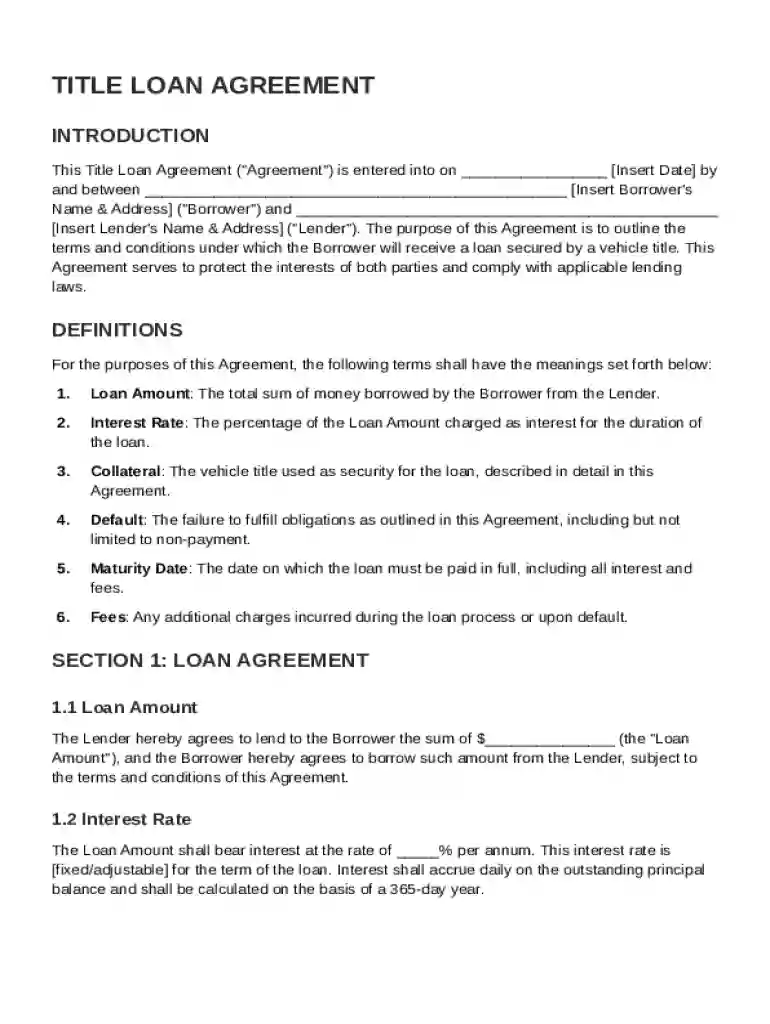
The Title Loan Agreement Template is a standardized document used to formalize the borrowing terms between a lender and a borrower, where the loan is secured by the borrower's vehicle title. This agreement provides a comprehensive outline of the loan's conditions, ensuring both parties have a clear understanding of their obligations. It includes critical components such as the loan amount, interest rates, repayment plans, and details about the collateral, which in this case is the vehicle.
- Loan Amount and Interest Rate: Clearly specifies the principal amount borrowed and the interest rate applied, which can be fixed or variable.
- Repayment Schedule: Outlines how and when the borrower is required to make payments.
- Collateral Description: Details of the vehicle used as collateral, including make, model, year, and VIN.
- Default Conditions and Remedies: Provides scenarios under which the borrower might default and describes lender rights in such events.
- Representations and Warranties: Lists commitments from both parties regarding the legality and condition of the vehicle.
This template acts as a safeguard, ensuring that the borrower understands the risks, such as losing possession of the vehicle in case of default, while providing the lender with a legal framework to enforce repayment.
Steps to Complete the Title Loan Agreement Template
To ensure accuracy and compliance in filling out the Title Loan Agreement Template, follow these essential steps:
- Gather Necessary Information: Before starting, collect all required information, including borrower identification, vehicle details, loan amount, and terms.
- Fill in Borrower Details: Enter the borrower's full name, address, and contact information accurately.
- Describe the Loan Terms: Specify the loan amount, interest rate, and repayment schedule. Double-check figures to prevent errors.
- Detail Collateral Information: Provide comprehensive details about the vehicle, such as VIN, year, make, model, and condition reports if available.
- Outline Default Scenarios: Clearly define the conditions that constitute a default and the subsequent remedies available to the lender.
- Include Signatures: Both lender and borrower must review the completed document, sign, and date it to confirm their agreement to the terms.
Each step ensures both parties understand their responsibilities, reducing the likelihood of disputes and reinforcing the contract's enforceability.
Legal Use of the Title Loan Agreement Template
The legal application of the Title Loan Agreement Template is critical to protect both parties involved in the transaction. The agreement must comply with state laws that govern title loans, as these regulations vary significantly.
- State Law Compliance: Verify that the agreement adheres to specific state laws regarding maximum loan amounts, permissible interest rates, and other applicable lending regulations.
- Legal Binding Nature: Ensure both parties understand that the signed agreement is a legally binding contract once executed.
- Consumer Protection Features: States often require disclosures to protect consumers, including the total cost of the loan and potential risks involved.
- Remedies in Case of Default: The agreement should outline lawful procedures the lender can take if a borrower defaults, such as repossession or legal proceedings.
By following state-specific guidelines, both lender and borrower can ensure legal compliance and protect their rights and interests.
Key Elements of the Title Loan Agreement Template
Several fundamental components must be included within the Title Loan Agreement Template to ensure its effectiveness and compliance:
- Loan Details: Specifies the principal amount, interest rate, and any additional fees or charges.
- Payment Terms: Includes information about payment frequency, method of payment, and due dates.
- Vehicle as Collateral: Clearly indicates the borrower's vehicle as collateral, with specifics like VIN, make, and model.
- Default and Remedies: Describes default conditions and actions the lender is entitled to take.
- Signatures: Both parties' signatures to confirm acceptance of all terms.
Highlighting these key elements ensures that the agreement is comprehensive and legally sound.
State-Specific Rules for Title Loan Agreements
Title loan agreements are subject to state-specific regulations, which can affect the terms and enforceability:
- Interest Rate Caps: Some states impose limits on the interest rates that can be charged on title loans.
- Repossession Guidelines: State laws dictate the procedures lenders must follow when repossessing a vehicle.
- Notification Requirements: Legal requisites often include specific notices that must be provided to borrowers before taking action for default.
- Loan Term Limitations: Certain states restrict the term length of title loans to protect borrowers from long-term debt cycles.
Understanding and incorporating these state-specific rules into the agreement can prevent legal challenges and ensure it complies with local laws.
Examples of Using the Title Loan Agreement Template
Practical scenarios demonstrate how the Title Loan Agreement Template can be utilized effectively:
- Short-Term Emergency Financing: A borrower needs quick cash for an unexpected medical bill and uses their car title to secure a loan with an affordable repayment plan.
- Small Business Needs: An entrepreneur requires funds to cover inventory costs and chooses a title loan as a quick financing option while securing better terms than unsecured loans.
These examples show the template’s adaptability for various financial needs while ensuring legal compliance and mutual understanding.
Important Terms Related to the Title Loan Agreement Template
Familiarity with specific legal and financial terminology enhances understanding of the Title Loan Agreement Template:
- Principal: The initial amount borrowed, excluding interest and fees.
- APR (Annual Percentage Rate): Represents the yearly interest cost over the loan term, including fees.
- Lien: A legal right or claim against a vehicle used as collateral.
- Default: Failure to meet the legal obligations of the loan agreement.
- Repossession: The lender's right to take possession of the collateral when a borrower defaults.
Recognizing these terms aids users in grasping the nuances of the agreement and their implications.
Who Typically Uses the Title Loan Agreement Template
The Title Loan Agreement Template is commonly used by various parties looking to secure short-term financing against their vehicle:
- Individuals in Need of Urgent Cash: Utilize the agreement for quick loans without traditional credit checks.
- Small Business Owners: Access funds to cover short-term operational expenses using personal or commercial vehicles as collateral.
- Lenders and Financial Institutions: Implement the template to standardize loan offerings for borrowers seeking collateralized loans.
These users leverage the agreement's structured format for efficient, reliable lending transactions.