




Definition & Meaning
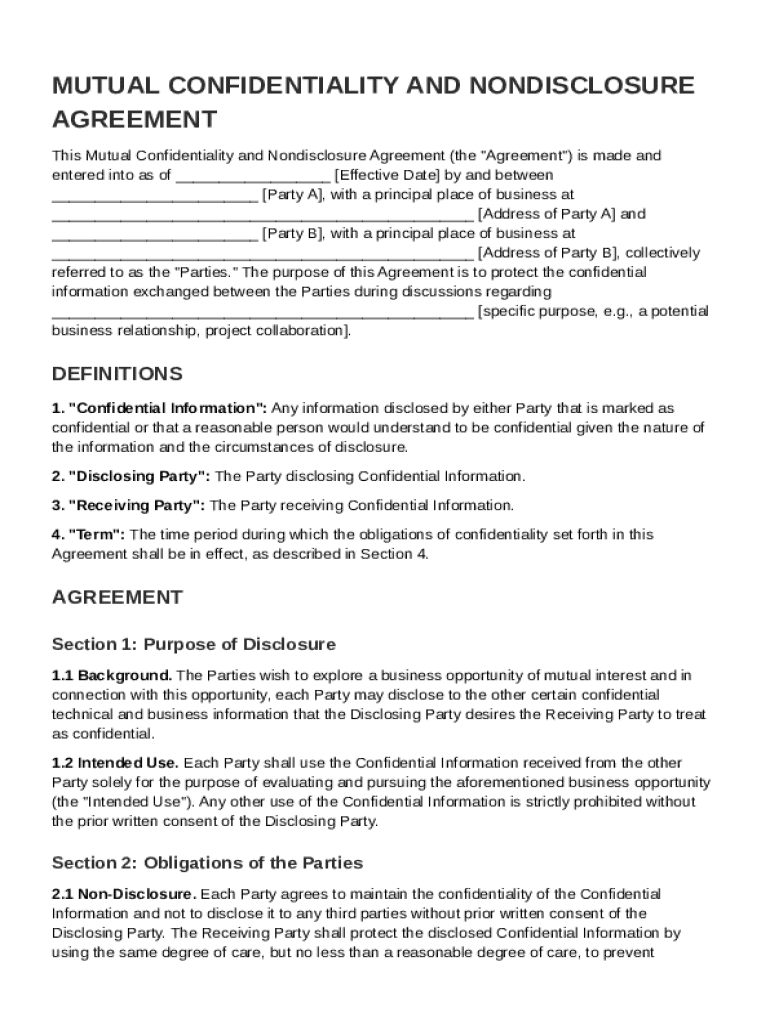
A Mutual Confidentiality and Nondisclosure Agreement Template is a legal document used to protect sensitive information exchanged between two parties considering a business relationship. This template offers predefined clauses that outline the nature of shared confidential information, the obligations of both parties to safeguard this information, and the exclusions from confidentiality. The agreement sets clear parameters for the handling, use, and protection of proprietary data, providing a framework to prevent unauthorized disclosure.
Key Elements of the Mutual Confidentiality and Nondisclosure Agreement Template
The primary components of the template include:
- Parties Involved: Clearly identifies the parties entering the agreement.
- Definition of Confidential Information: Specifies what constitutes confidential information.
- Obligations of the Receiving Party: Outlines the responsibilities of the party receiving the information, including restrictions on usage and requirements for protection.
- Exceptions: Lists circumstances where confidentiality does not apply, such as information already in the public domain.
- Term and Termination: Defines the duration of the agreement and conditions under which it can be terminated.
- Miscellaneous Provisions: Includes clauses on governing law, amendments, and remedies for breach.
How to Use the Mutual Confidentiality and Nondisclosure Agreement Template
Utilizing the template involves a series of steps to ensure effective application:
- Download the Template: Obtain the document from a reliable source like DocHub.
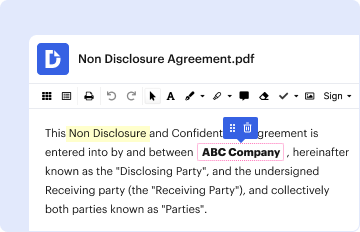
- Customize the Clauses: Tailor the standard clauses to fit the specific needs of your agreement.
- Identify the Parties: Insert the names and contact information of all parties involved.
- Define Confidential Information: Specify what information will be protected under the agreement.
Important Terms Related to Mutual Confidentiality and Nondisclosure Agreement Template
Understanding key terminology is crucial:
- Confidential Information: Any proprietary or sensitive data shared between parties.
- Receiving Party: The party that receives confidential information from the disclosing party.
- Disclosing Party: The party that shares confidential information with the receiving party.
- Breach: Violation of the terms set within the agreement.
Steps to Complete the Mutual Confidentiality and Nondisclosure Agreement Template
- Review the Template: Ensure all sections are applicable to your situation.
- Fill Out the Template: Complete the required fields, inserting specific details where necessary.
- Review for Consistency: Check for any inconsistencies or omitted details.
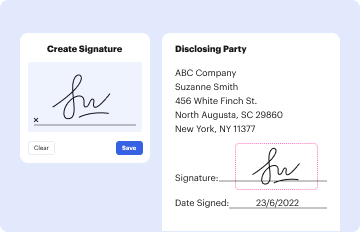
- Sign the Agreement: Use DocHub's electronic signature feature for legally binding e-signatures.
Examples of Using the Mutual Confidentiality and Nondisclosure Agreement Template
The template finds broad application in various scenarios:
- Business Collaborations: Two companies discussing potential joint ventures.
- Employee Contracts: Protecting sensitive information shared with new employees.
- Vendor Agreements: Safeguarding proprietary information shared with contractors.
Who Typically Uses the Mutual Confidentiality and Nondisclosure Agreement Template
This document is commonly utilized by:
- Businesses: To protect trade secrets during partnerships or acquisitions.
- Startups: When sharing innovative concepts with investors or developers.
- Inventors: To protect intellectual property during preliminary discussions with manufacturers.

Legal Use of the Mutual Confidentiality and Nondisclosure Agreement Template
The document is designed to be legally binding, aligning with U.S. legal standards:
- Governing Law: Typically specifies which state’s laws will apply in case of disputes.
- Enforcement: Sets out remedies available in the event of a breach, including possible legal actions.
- Amendments and Modifications: Allows for changes to the agreement through mutual consent.
State-Specific Rules for the Mutual Confidentiality and Nondisclosure Agreement Template
While the template is generally applicable, state laws might influence specific clauses:
- Governing Law Clause: This clause might need customization depending on the state jurisdiction.
- Intellectual Property: States may have varying rules regarding the protection of intellectual property.
Understanding these nuances ensures that the agreement remains enforceable across different legal contexts in the U.S.