







Definition & Meaning
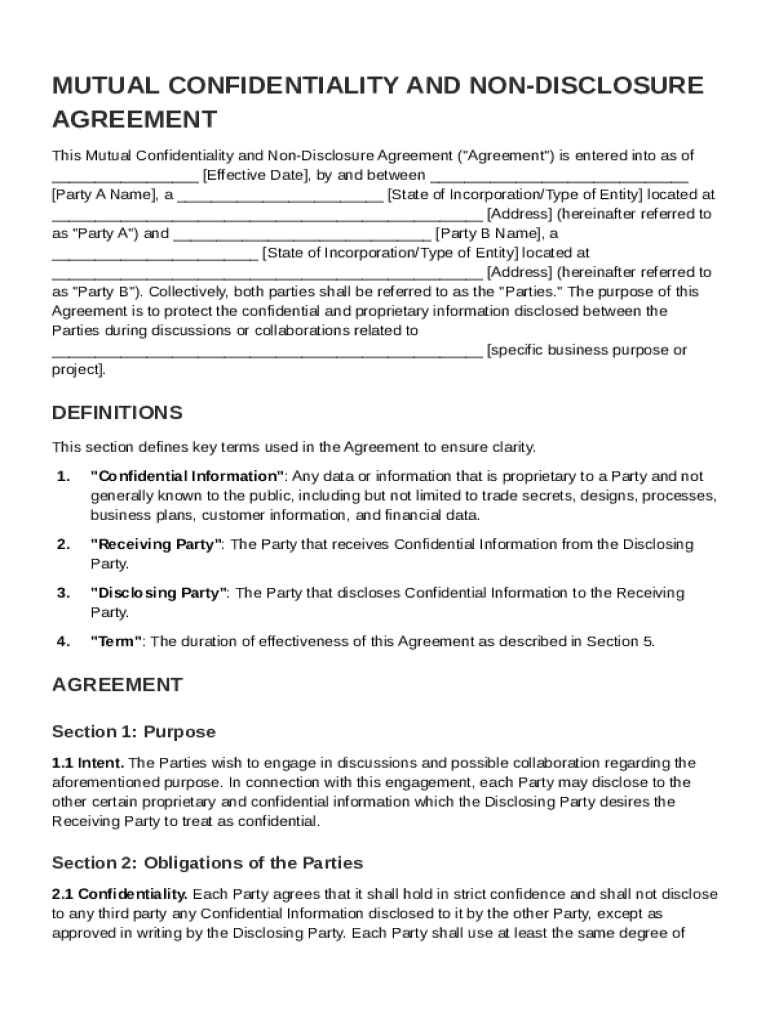
A Mutual Confidentiality and Non-Disclosure Agreement, often abbreviated as NDA, is a legal contract between two parties to safeguard any confidential and proprietary information that is disclosed during mutual discussions or collaborations. The template sets clear definitions of key terms such as "Confidential Information," "Receiving Party," and "Disclosing Party." Confidential Information is typically any data or information shared that is not public and is protected from unauthorized access by the agreement. The "Receiving Party" is the entity that gains access to this information, whereas the "Disclosing Party" is the one sharing the information. This template serves to protect trade secrets, business plans, proprietary formulas, and any other sensitive data by ensuring legal accountability if the terms are breached.
Key Elements of the Agreement
To ensure comprehensive protection, the Mutual Confidentiality and Non-Disclosure Agreement template includes several critical elements. These are:
- Obligations of the Parties: Both parties agree not to use the confidential information for any purpose other than the one intended and not to disclose it to any unauthorized third parties.
- Exclusions from Confidentiality: This section details what does not count as confidential, such as information already known to the receiving party before the agreement was signed or information made public through no fault of the receiving party.
- Term of Confidentiality: This outlines the duration for which the confidentiality obligations remain in effect. Commonly, this term extends even after the conclusion of the business relationship.
- Permitted Disclosures: This part covers any circumstances under which the information may be disclosed, such as legal obligations or disclosures made with prior consent in writing.
- Return or Destruction of Information: It mandates the return or destruction of all confidential materials once the purpose of the communication is fulfilled or upon termination of the agreement.
Steps to Complete the Agreement
To successfully complete the Mutual Confidentiality and Non-Disclosure Agreement template, follow these steps:
- Identify the Parties: Clearly define both the disclosing and receiving parties, including any subsidiary entities involved.
- Describe the Purpose: Specify the purpose for which the information is being shared.
- Detail Confidential Information: List the types of information to be deemed confidential under the agreement.
- Set Obligations: Outline the obligations around secrecy and intended use of the information for both parties.
- Discuss Exclusions: Explicitly state any exclusions from confidential treatment to prevent misunderstandings.
- Establish Terms and Duration: Define how long the agreement lasts and what happens after its expiration.
- Outline Legal Considerations: Include clauses about governing laws and resolution of disputes.
- Signatures: Ensure that both parties sign the document to make it legally binding.
Important Terms Related to the Agreement
Familiarity with key legal and contractual terms enhances the understanding and effectiveness of the NDA. Important terms often include:
- Governing Law: Refers to the jurisdiction whose laws will be applied in the case of a dispute.
- Breach: The act of breaking the terms of the agreement, which could potentially lead to legal consequences.
- Liability: Specifies the potential damages or penalties for which each party may be responsible if they fail to comply with the agreement.
- Non-Use Clause: Ensures that the receiving party cannot use the confidential information for any purpose other than what is outlined in the agreement.
Legal Use of the Agreement Template
The Mutual Confidentiality and Non-Disclosure Agreement template is designed to be legally enforceable within the United States. It complies with relevant U.S. laws concerning contractual obligations and confidentiality. By signing, both parties are acknowledging the enforceability of the agreement under these laws. Legal advisors often recommend using these templates for business transactions, strategic collaborations, mergers, and other scenarios where sensitive information is exchanged. Ensure that any template utilized is customized to reflect the specific legal requirements and obligations pertinent to your state or locale.
Who Typically Uses the Agreement
This template is widely used across various sectors and businesses that deal with sensitive information. Common users include:
- Businesses and Corporations: Typically used in mergers, acquisitions, and partnerships to protect business secrets.
- Entrepreneurs and Start-ups: Often used when pitching ideas to investors or partners.
- Legal and Financial Institutions: Utilize NDAs to safeguard client and financial information during audits or investigations.
- Research and Development Companies: Protects intellectual property and innovative processes shared with collaborators.


Examples of Using the Agreement
Several practical scenarios demonstrate the application of the NDA:
- Technical Disclosures: A technology company shares its proprietary software code with a potential partner for joint development.
- Business Alliances: Two companies exploring a collaborative venture exchange strategic plans and market analysis to assess compatibility.
- Employee Contracts: Employees handling sensitive data may be required to sign NDAs as part of their employment agreements to prevent leakage of critical information.
Software Compatibility and Document Management
The Mutual Confidentiality and Non-Disclosure Agreement Template is compatible with various document management solutions, including DocHub. Users can conveniently import, edit, and sign these agreements using DocHub's suite of online tools. These tools help streamline the document workflow by eliminating unnecessary steps such as file conversion, providing a seamless experience across multiple platforms and devices. Users can securely manage their NDAs by utilizing features such as:
- Import and Export: Compatible with Google Drive, Dropbox, and OneDrive for document transfers.
- Real-time Editing and Annotation: Allows collaborative input while keeping track of changes.
- Legal Compliance Tools: Offers electronic signatures compliant with the ESIGN Act, ensuring agreements remain legally binding.
State-Specific Rules and Considerations
Given the federal nature of U.S. law, it is important to consider any state-specific regulations that might impact the enforcement of NDAs. Certain states, like California, have specific laws governing non-disclosure agreements, especially regarding employment and trade secrets. Always tailor the NDA to align with local legal standards, and consult with legal counsel to understand any implications particular to your state. This customization enhances the enforceability and effectiveness of the agreement across different legal landscapes.




