






Definition & Meaning
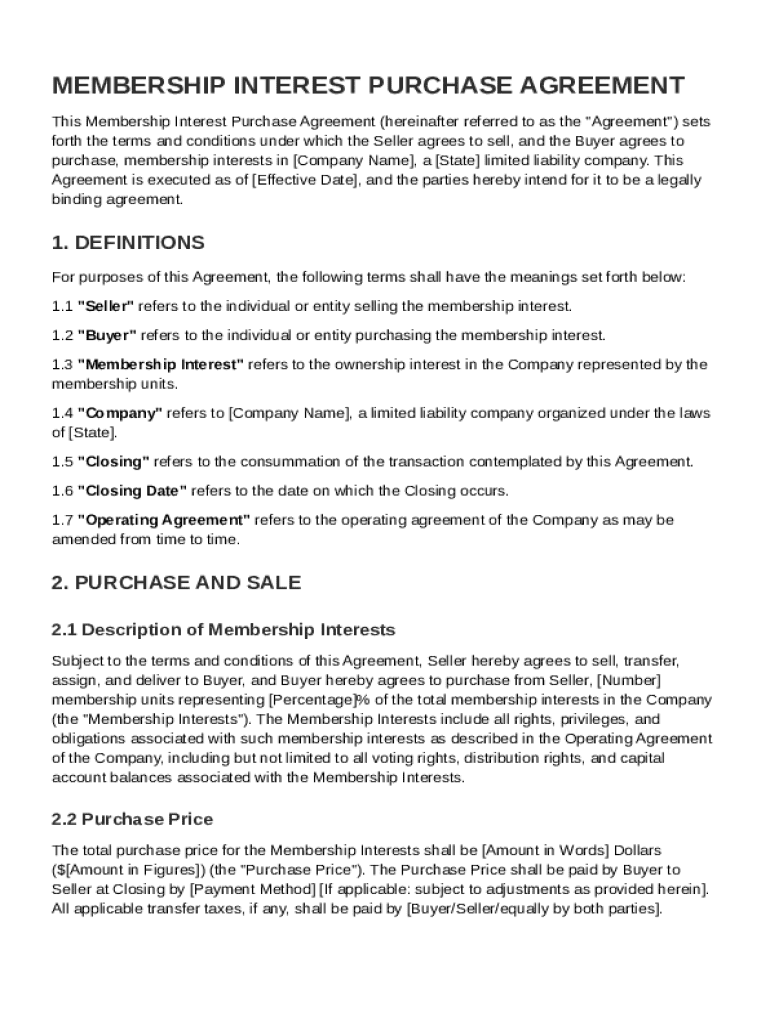
A Membership Interest Purchase Agreement (MIPA) is a legal contract that outlines the sale of membership interests in a limited liability company (LLC) from a seller to a buyer. This agreement is crucial for transferring ownership interests, specifying the terms, conditions, rights, and obligations of each party involved in the transaction. It ensures that both parties are legally bound to fulfill their commitments, mitigates risks, and provides clarity to prevent potential disputes. While it shares similarities with stock purchase agreements, MIPAs specifically address the unique structures and operational aspects of an LLC.
How to Use the Membership Interest Purchase Agreement Template
The template serves as a standardized instrument to facilitate the drafting process of a MIPA. Begin by filling in the essential details of both parties, including names, addresses, and contact information. Specify the membership interests being sold, along with purchase price terms and payment methods. Ensure each section is tailored to reflect the particulars of your transaction. For example, incorporate specific warranties or covenants suitable for your industry or jurisdiction. Utilize annotation tools available on DocHub to add comments, make adjustments, and ensure thorough documentation. This comprehensive and interactive process helps in adapting the template to meet the unique aspects of each deal.
Key Elements of the Membership Interest Purchase Agreement Template
This template includes several critical elements for ensuring a comprehensive deal. Some of the main components are:
- Definitions: Clarifies key terms used throughout the agreement.
- Purchase and Sale Details: Outlines the specifics of the transaction, such as the membership interests being transferred and the purchase price.
- Representations and Warranties: Both parties must declare any known issues affecting the transaction.
- Covenants: Sets forth actions or obligations parties must abide by before and after the closing of the transaction.
- Indemnification Clauses: Provides protection against losses due to breaches or misrepresentations.
- Closing Conditions: Lists conditions that must be met before the transaction can be successfully completed.
- Miscellaneous Provisions: Covers aspects like jurisdiction, dispute resolution, and amendment procedures.
Each element is crucial for safeguarding both parties' interests and ensuring transaction clarity.
Steps to Complete the Membership Interest Purchase Agreement Template
- General Information: Fill in the company name, address, and contact details of both seller and buyer.
- Agreement Terms: Specify the precise membership interests being sold, including any fractional portions if applicable.
- Financial Terms: Clearly state the purchase price, any deposits, and the method of payment.
- Due Diligence: Allow the buyer an inspection period to review financials, legal standings, and potential liabilities.
- Closing Procedures: Outline the steps for finalizing the transfer, including dates, signing locations, and involved parties.
- Signatures: Ensure that both parties, along with witnesses if necessary, sign the document to make it legally binding.
Utilizing each step with careful attention to detail helps in preventing future contentions.
Important Terms Related to the Membership Interest Purchase Agreement Template
Understanding the fundamental terms associated with MIPAs is vital for comprehending and executing the agreement:
- Membership Interest: The seller's share of ownership in the LLC.
- Limited Liability Company (LLC): A business structure providing limited liability protection for owners.
- Indemnity: A promise to compensate the other party for potential losses.
- Covenant: A formal promise or agreement within the contract terms.
- Warranty: A guarantee from the seller about specific facts or conditions.
- Escrow: A financial arrangement where the third party holds and regulates payment of funds required for the buyers and sellers involved.
Familiarizing with these terms enhances an understanding of the MIPA content and ensures accurate completion.
Legal Use of the Membership Interest Purchase Agreement Template
To ensure legal compliance while using the template:
- Customize for Compliance: Adapt the document according to federal and state-specific regulations, especially concerning business sales and tax implications.
- Consult Legal Professionals: Utilize attorneys experienced with business transactions to review the agreement for validity and enforceability.
- Secure Electronic Signatures: Implement DocHub's legally compliant e-signature tools, which align with the ESIGN Act, to finalize the document electronically.
Taking these precautions guarantees that the agreement adheres to applicable laws and is enforceable in a court of law.
Business Entity Types Benefitting Most from Membership Interest Purchase Agreement Template
Primarily, LLCs derive extensive advantages from using a MIPA, but other business entities can also find value:
- Multi-member LLCs: Facilitate the transfer of interests among multiple members.
- Single-member LLCs: Simplify ownership adjustments, especially when converting to a multi-member LLC.
- Joint Ventures: Allow partners to reallocate shares quickly.
- Professional Practices: Useful for businesses like law or accounting firms transitioning ownership stakes.
Adapting the agreement according to business structure and transaction type addresses specific operational needs.
Examples of Using the Membership Interest Purchase Agreement Template
Consider these practical scenarios where using a MIPA is beneficial:
- A tech startup is transitioning ownership from the founding team to a venture capital firm looking for specific shareholder rights.
- Family-owned businesses utilize a MIPA to formalize the transition of control to the next generation.
- Two partners in a small retail business decide to adjust their ownership stakes, assisted by the clear layout of responsibilities and indemnities in the agreement.
These examples reveal the template's adaptability across various business contexts, ensuring a smooth transition of ownership rights.