Definition and Meaning of a Meeting Confidentiality Agreement
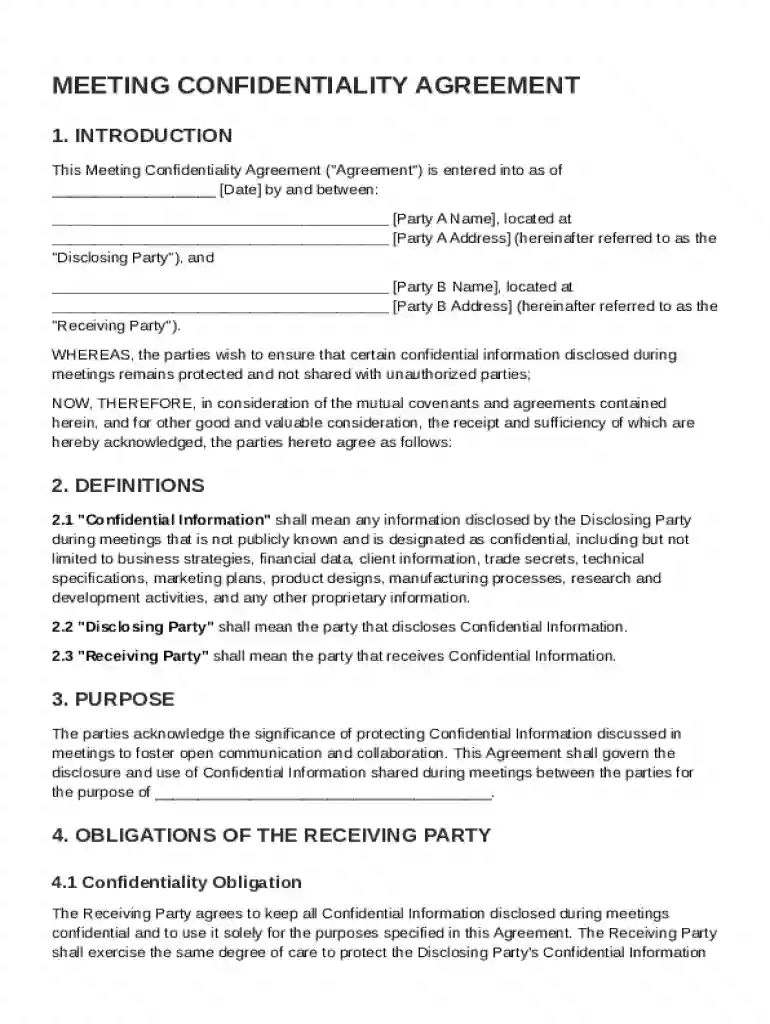
A Meeting Confidentiality Agreement is a legal tool designed to protect any confidential or proprietary information shared between parties during meetings. This agreement plays a vital role in specifying what constitutes Confidential Information and outlines the responsibilities of the Receiving Party, ensuring they comply with confidentiality standards. The document also highlights any exceptions under which certain information might not be considered confidential. Such agreements are integral in safeguarding sensitive data shared in business meetings, fostering an environment of trust and security.
Key Elements of the Meeting Confidentiality Agreement Template
This template includes several crucial elements that make up the agreement:
- Confidential Information Definition: Clearly defines what type of information is considered confidential.
- Obligations of the Receiving Party: Details the responsibilities for maintaining confidentiality and any limitations on the use of the information.
- Exceptions: Describes scenarios where the confidentiality obligations might not apply.
- Duration of Confidentiality: Specifies how long the information must be kept confidential.
- Return or Destruction Procedures: Outlines procedures for returning or destroying confidential information after the termination of the agreement.
- Rights Clarification: Ensures no transfer of ownership or rights in the confidential information is implied or granted to the Receiving Party.
How to Use the Meeting Confidentiality Agreement Template
To effectively use the Meeting Confidentiality Agreement Template, follow these steps:
- Review the Template: Ensure that the template’s terms align with your specific needs and legal requirements.
- Customize the Content: Tailor the document by filling in party names, specific definitions of confidential information, and other relevant details.
- Legal Consultation: Consult with a legal professional to verify that all necessary terms and considerations are included.
- Execution: Both parties should review and sign the agreement, acknowledging their understanding and acceptance of the terms.
- Document Storage: Securely store signed copies for future reference in case of disputes or audits.
Legal Use of the Meeting Confidentiality Agreement Template
The Meeting Confidentiality Agreement Template is a legally binding document when properly executed. It provides a legal framework to protect confidential information shared between parties. The agreement should comply with applicable laws in the U.S., including federal and state regulations. Always consult with a legal professional to ensure compliance with specific jurisdictional requirements and legal standards.
Who Typically Uses the Meeting Confidentiality Agreement Template
This template is widely used by:
- Businesses and Corporations: To protect proprietary information shared during negotiations, strategic meetings, or partnerships.
- Entrepreneurs and Startups: When seeking investments or partnerships, ensuring their innovations and business plans remain undisclosed.
- Consultants and Contractors: When collaborating with businesses that require access to sensitive data.
- Educational Institutions: In collaborations involving research and proprietary technology.
Steps to Complete the Meeting Confidentiality Agreement Template
- Initial Provision Review: Carefully read through each provision to understand the implications and requirements.
- Tailor Definitions and Obligations: Customize the definitions of what constitutes confidential information and specify the obligations of all parties involved.
- Input Specific Details: Include the names of the parties, date of the agreement, and any specific terms needed.
- Legal Review: Engage a legal expert to ensure the document’s comprehensiveness and enforceability.
- Execute the Agreement: Have all parties sign the document to make it legally binding.
Important Terms Related to the Meeting Confidentiality Agreement
- Confidential Information: Any data or details not meant for public disclosure.
- Receiving Party: The entity that receives or may receive confidential information.
- Disclosing Party: The originator of the confidential information.
- Non-Disclosure Period: The length of time during which confidentiality must be maintained.
- Breach of Agreement: Failing to comply with the terms, resulting in potential legal consequences.
Examples of Using the Meeting Confidentiality Agreement Template
Consider the following scenarios where this agreement template might be utilized:
- Corporate Mergers: Ensuring due diligence information remains confidential during merger negotiations.
- Product Development: Safeguarding design and technical specifications during product launch planning meetings.
- Business Partnerships: Protecting sensitive financial or strategic information shared during partnership discussions.
- Investor Meetings: Securing business plans and financial details shared during investment proposal meetings.
Software Compatibility with the Meeting Confidentiality Agreement Template
The template can be easily managed and integrated using document management tools like DocHub which support editing and signing in various formats such as PDF, DOC, and more. This compatibility with platforms like Google Workspace ensures efficient handling and sharing of the agreement online without any conversion issues.