Definition & Meaning
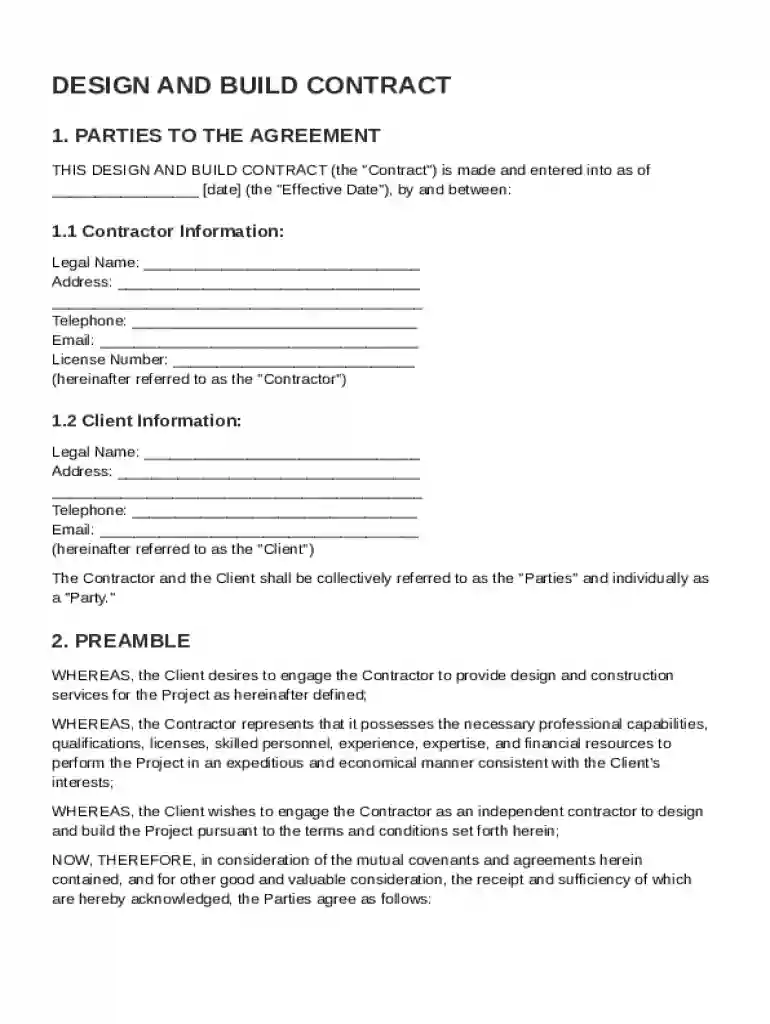
The Design And Build Contract Template is a standardized document that outlines the agreement between a contractor and a client for both designing and constructing a project. This type of contract integrates the design and construction phases into a single contract with a single point of responsibility, typically the contractor. This approach aims to streamline project delivery by merging what are traditionally separate roles, which can lead to increased efficiency in time and costs.
Design-Build: An Integrated Approach
- Combines design and construction into a single contract.
- Contractor manages all aspects of the project, delivering a unified service.
- Reduces the likelihood of design disputes by having one party responsible.
Benefits of Design-Build Contracts
- Efficiency: Merging roles can reduce timelines and eliminate overlapping responsibilities.
- Cost-effective: Single contract usually results in fewer change orders.
- Accountability: With one entity responsible, accountability is clearer, potentially reducing miscommunications.
Key Elements of the Design And Build Contract Template
An effective Design And Build Contract Template includes several vital components that both parties must consider. These elements ensure clarity and reduce the chances of disputes during the project lifecycle.
Major Components
- Scope of Work: Clearly defines what is to be designed and constructed, including specifications and expectations.
- Project Schedule: Outlines deadlines and milestones for completion, ensuring both parties are aligned on project timing.
- Payment Terms: Details how and when payments will be made, including any conditions for payments.
- Liability and Insurance: Specifies responsibilities for risks and required insurance coverage, protecting both parties against unforeseen events.
- Dispute Resolution: Sets out the procedures for handling disagreements, often including mediation or arbitration clauses.
- Termination Conditions: Lists grounds upon which either party can terminate the contract.
Examples
- Detailed Drawings: Designs should be accompanied by detailed drawings to avoid misinterpretation.
- Material Specifications: Lists materials to be used, ensuring quality standards are met.
Steps to Complete the Design And Build Contract Template
Filling out the Design And Build Contract Template requires careful attention to ensure all details are correctly captured. Follow these steps to complete the template:
- Review Project Requirements: Understand what the client expects in terms of scope, materials, and timeline.
- Draft Scope of Work: Write a detailed description of the services to be provided.
- Establish a Schedule: Determine project phases and document expected completion dates.
- Negotiate Payment Terms: Agree on the payment structure, ensuring it aligns with project milestones.
- Define Responsibilities: Clarify roles in design, construction, and risk management.
- Address Legal Elements: Incorporate clauses related to insurance, liability, and dispute resolution.
Common Mistakes
- Vague Descriptions: Avoid using ambiguous or unclear terms, which can lead to misunderstandings.
- Omitting Deadlines: Ensure that all critical dates and deadlines are prominently featured and agreed upon.
Legal Use of the Design And Build Contract Template
Using a Design And Build Contract Template appropriately involves understanding the legal requirements and implications associated with this type of contract.
U.S. Legal Framework
- Compliant Language: Ensure the contract complies with U.S. contract law, focusing on states where the project occurs.
- Binding Agreements: Make sure all signatures are legally binding by using electronic signing platforms compliant with the ESIGN Act.
Important Legal Aspects
- Jurisdiction: Establish which state’s laws will govern the contract.
- Amendments: Define how contractual changes will be documented and agreed upon.
Primary Users
- General Contractors: Use to manage both design and construction aspects in-house.
- Property Developers: Utilize for expedited project timelines and reduced management complexity.
Real-World Scenarios
- Commercial Real Estate: Used by developers to quickly bring a project from concept to completion.
- Residential Projects: Homebuilders employ these contracts to ensure seamless communication between design and construction efforts.
Important Terms Related to the Design And Build Contract Template
Understanding key terms assists both parties in navigating the nuances of the Design And Build Contract Template.
Key Terminology
- Design-Build: A project delivery system where design and construction services are contracted by a single entity.
- Single Point of Responsibility: The defining feature of a design-build contract, emphasizing one entity’s accountability.
Clarifications
- Bid-Build: Different from design-build; involves separate contracts for design and construction.
- Turnkey: The contractor delivers the project ready for immediate use, not just overseeing its construction.
Examples of Using the Design And Build Contract Template
Understanding practical applications of a Design And Build Contract Template helps in grasping its utility.
Practical Applications
- Large-Scale Infrastructure Projects: Bridges or highways where integrating design and construction phases can significantly enhance efficiency.
- School Buildings: Quick turnaround-needed projects where building operations need to commence without delays.
Case Studies
- Urban Development: City quarters developed through design-build contracts to minimize disruption and speed up delivery.
- Tech Campuses: Fast-paced construction needs of technology sector office spaces.
State-Specific Rules for the Design And Build Contract Template
While the Design And Build Contract Template is generally standardized, state-specific regulations can affect how these contracts are structured.
Key Variations by State
- Regulatory Requirements: Licensing and certification requirements for contractors may vary.
- Permit Approvals: Local laws will dictate the speed and process of obtaining necessary permits, impacting project timelines.
Notable Differences
- California: Stringent environmental and labor regulations can affect contract terms.
- Texas: May have different energy efficiency requirements impacting material choices.