01. Edit your form online
Type text, add images, blackout confidential details, add comments, highlights and more.

Type text, add images, blackout confidential details, add comments, highlights and more.

Draw your signature, type it, upload its image, or use your mobile device as a signature pad.

Send it via email, link, or fax. You can also download it, export it or print it out.
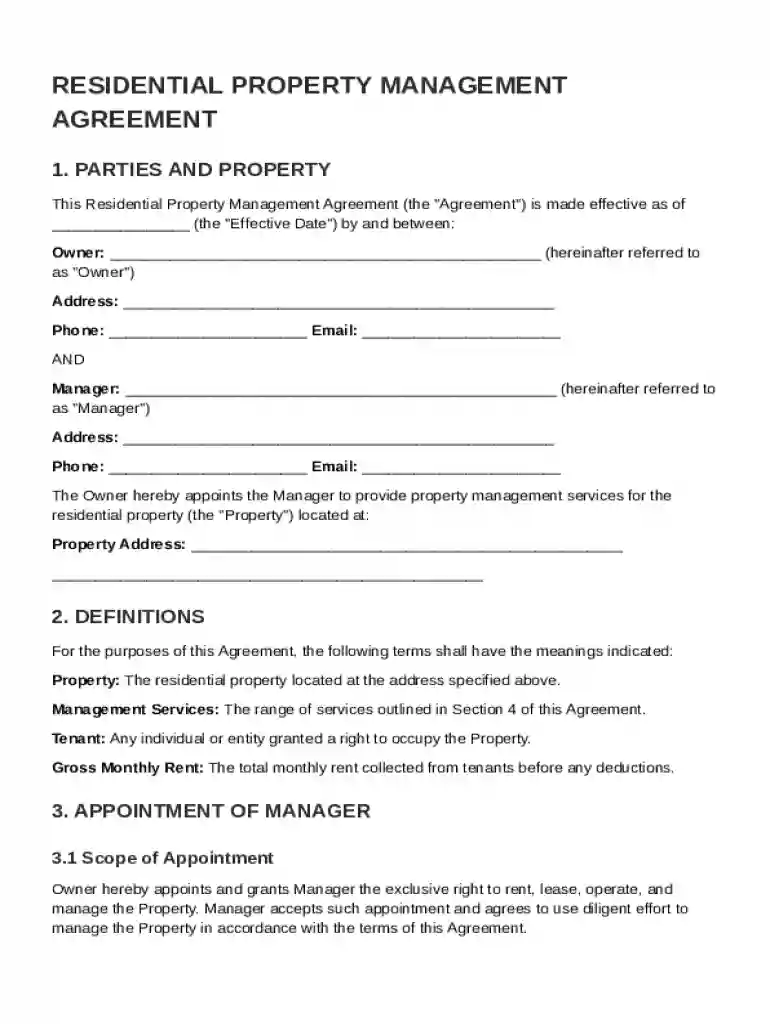
A Residential Property Management Contract Template is a formal agreement used to outline the specific responsibilities and obligations between a property owner and a property manager. The contract delineates the terms under which the manager will oversee the property, addressing key tasks such as rent collection, tenant management, and maintenance. This document acts as a legal framework to ensure both parties understand their roles, reducing potential disputes. As a comprehensive guide, it provides clarity on how the management relationship should function, fostering a productive and professional partnership.
To effectively utilize the Residential Property Management Contract Template, begin by customizing the document to reflect the unique details of your property and management needs. Ensure that the introductory section includes the full names and contact information of both the owner and manager, setting a solid foundation for the agreement. Clearly define the specific responsibilities assigned to the property manager, such as rent collection, repairing facilities, and handling tenant complaints. Next, specify the terms of compensation for the property manager, including any base fees or percentage of collected rent. This section is crucial for avoiding misunderstandings regarding payment. Finally, both parties should review the completed document for accuracy, making sure all sections are thoroughly covered before signing to acknowledge their agreement to the outlined terms.
The template includes several key components essential for a comprehensive management agreement.
Duties and Responsibilities: This section lays out the tasks the manager is expected to perform, such as marketing the property, vetting potential tenants, and maintaining property condition.
Compensation Structure: Clearly defines how the manager will be compensated, whether through a flat fee, commission, or a hybrid model.
Owner's Obligations: Details what is expected from the property owner in terms of providing funds for maintenance or tenant-related expenses.
Contract Term, Termination, and Renewal: Specifies the contract duration and the conditions under which it can be terminated or renewed.
Insurance and Liability: Outlines the insurance requirements for both parties and limits liability in case of disputes, thereby protecting against unforeseen issues.
Completing the Residential Property Management Contract Template involves a series of well-defined steps to ensure the document's integrity.
Gather Information: Collect essential information about the property, owner, and manager.
Detail Responsibilities and Duties: Specify tasks for which the manager is accountable, ensuring no duties are left ambiguously defined.
Define Compensation: Clearly state the manager's fee structure, so both parties know the financial expectations.
Review Legal Requirements: Ensure the contract complies with local laws and regulations, potentially consulting legal expertise.
Final Review and Signatures: Before finalizing, both parties should carefully review terms to confirm mutual understanding and agreement before signing.
Using the Residential Property Management Contract Template legally requires adherence to local and state laws. This includes ensuring all statements within the contract comply with fair housing laws, tenant rights regulations, and property management standards. The contract should be accessible for review by both parties before signing, to ensure transparency and consent. Once signed, it acts as a legally binding document, providing a basis for resolving disputes. Both parties should retain a copy for their records, safeguarding against potential disagreements or legal challenges.
While the core components of a residential property management contract remain consistent, state-specific regulations may influence certain provisions. These differences can include landlord-tenant laws, state licensing requirements for property managers, and specific mandates regarding rent control or housing standards. Property owners and managers should research their state's rules or consult with legal professionals to ensure the contract adheres to regional legislative nuances. By adapting the template to meet state-specific requirements, both parties ensure the contract's enforceability and legal standing.
Understanding certain legal and technical terms can help effectively navigate the Residential Property Management Contract Template.
Tenant Management: Refers to handling tenant communications, resolving issues, and managing leases.
Financial Reporting: The process of providing detailed financial statements regarding property income and expenditures.
Compensation Clause: Part of the agreement detailing the payment method and schedule for the manager's services.
Termination Clause: Outlines the conditions under which the contract can be ended prematurely by either party.
Understanding these terms ensures clear communication and efficient contract negotiation, contributing to a successful property management arrangement.
At DocHub, your data security is our priority. We follow HIPAA, SOC2, GDPR, and other standards, so you can work on your documents with confidence.