






Definition and Meaning of the Lock Out Agreement Template
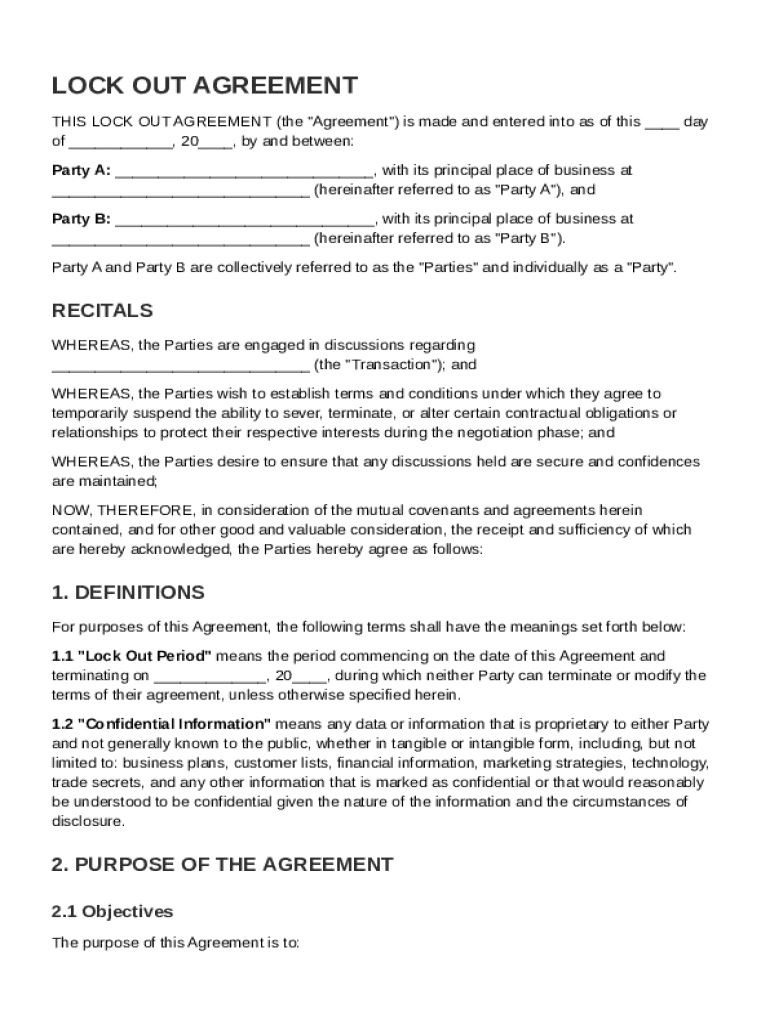
The Lock Out Agreement Template is a vital legal instrument that facilitates negotiations between two parties, referred to as Party A and Party B, by temporarily suspending their ability to alter or terminate specific contractual obligations. This template outlines the precise duration of the lockout period, confidentiality duties, mutual responsibilities, and the terms under which early termination may occur. Its primary purpose is to safeguard proprietary information and encourage negotiations conducted in good faith, while simultaneously preventing either party from engaging with third parties concerning the transaction.
How to Use the Lock Out Agreement Template
-
Analyze the Transaction Needs: Determine the specific transaction where the lockout period is necessary. Identify the contractual obligations needing suspension to protect the negotiation process.
-
Customize the Template: Tailor the template to suit the particular requirements of the parties involved. Adjust the duration of the lockout, confidentiality clauses, and any other necessary conditions that are relevant to the negotiation.
-
Review Legal Implications: Consult with legal professionals to ensure that terms are clearly defined and that the agreement aligns with all applicable federal and state laws.
-
Execute the Agreement: Have both parties sign and date the document. Ensure that all sections of the agreement are mutually agreed upon before execution.
-
Maintain Copies for Records: Store signed copies in a secure manner for future reference, ensuring that both parties have access to the document if needed.
Key Elements of the Lock Out Agreement Template
- Duration of the Lockout: Specifies the time frame during which the lockout conditions apply, vital for legal clarity and contractual adherence.
- Confidentiality Obligations: Details of how proprietary information and transaction details must be handled to prevent unauthorized disclosure.
- Mutual Responsibilities: Outlines the duties each party agrees to fulfill during the lockout period to encourage productive negotiation.
- Conditions for Early Termination: Circumstances under which the lockout period may be ended prior to the originally agreed-upon termination date.
Steps to Complete the Lock Out Agreement Template
- Identify Parties Involved: Clearly list Party A and Party B, including relevant contact information and legal standings.
- Define Obligations and Responsibilities: Enumerate the contractual obligations and responsibilities that will be frozen during the lockout period.
- Set Confidentiality Clauses: Establish the confidentiality requirements to maintain the integrity of sensitive information.
- Outline Early Termination Conditions: Describe the situations under which the lockout can be terminated before the designated timeline.
- Review and Finalize the Agreement: Collaborate with legal advisors to review the terms, ensuring they meet statutory requirements.
Legal Use of the Lock Out Agreement Template
The Lock Out Agreement Template serves a legal framework ensuring that parties stay focused on negotiations without interference from external sources. It also provides a structured approach to handling proprietary information. Legal use involves confirming compliance with federal laws such as the Uniform Commercial Code (UCC) and ensuring state-specific statutes are respected. By meeting these requirements, the agreement provides robust protection for parties looking to engage in serious contract negotiations.
Important Terms Related to Lock Out Agreement Template
- Lockout Period: The specific time span during which terms of the contract cannot be altered or terminated.
- Proprietary Information: Data or details that possess confidential status and are protected against unauthorized dissemination.
- Third-Party Engagement: Refers to the involvement of external entities in negotiating processes, which this agreement specifically aims to restrict.
State-Specific Rules for the Lock Out Agreement Template
Different states may have variant rules and statutes impacting lockout agreements. It's essential to research the local laws, as certain jurisdictions may impose additional requirements or restrictions not commonly found elsewhere. For example, states like California emphasize strict data privacy laws that could affect how confidentiality obligations are structured.
Examples of Using the Lock Out Agreement Template
- Corporate Mergers: Companies undergoing negotiations for mergers often employ lockout agreements to prevent information leaks and ensure concentrated efforts on reaching a mutually beneficial deal.
- Real Estate Transactions: These agreements can be applied to protect unique property details when multiple parties are assessing a high-value real estate transaction.
- Intellectual Property Deals: In scenarios involving the exchange of intellectual property rights, a lockout agreement serves to protect sensitive designs or information during negotiations.
Digital vs. Paper Version of the Lock Out Agreement Template
Using a digital version of the Lock Out Agreement Template provides advantages such as ease of access, editing capability, and efficient sharing between parties via platforms like DocHub. However, some parties may prefer or require a signed paper version for archival or compliance reasons. Whichever medium is utilized, it's critical that the format chosen aligns with organizational requirements and legal standards for document retention and validity.