





Definition & Meaning
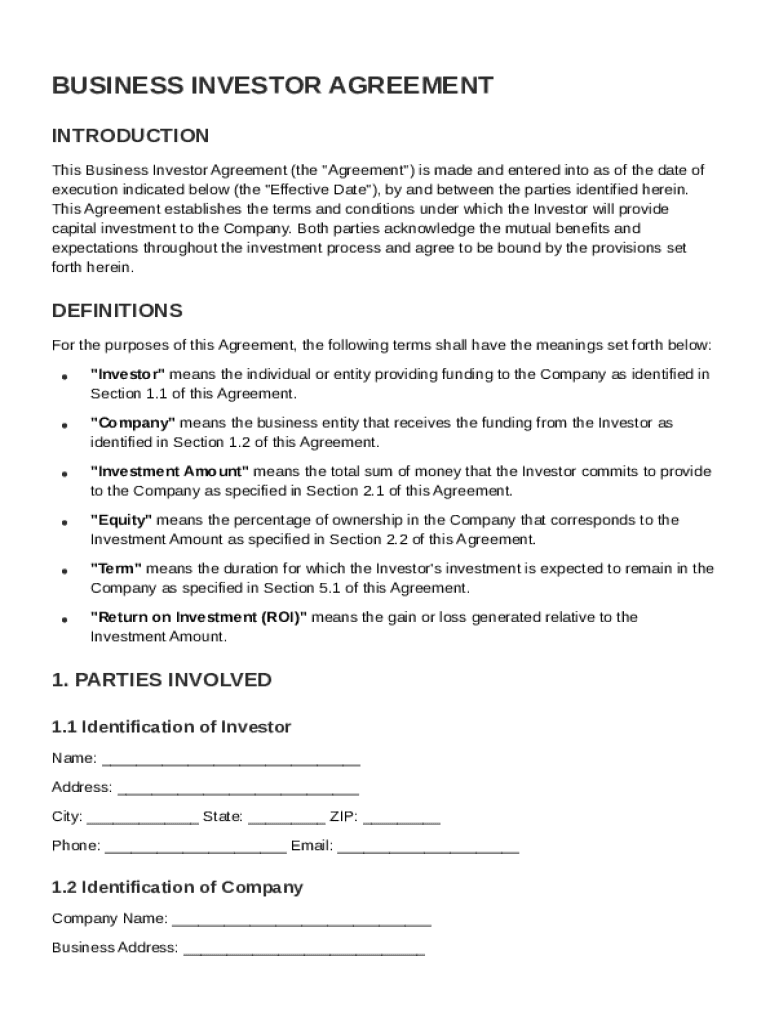
The Business Investor Agreement Template is a pivotal legal document outlining the terms and conditions under which an investor provides capital to a company. This template serves as a foundational framework, stipulating the roles and responsibilities of the involved parties and safeguarding the interests of both investors and companies. Key terms include the 'Investor', 'Company', 'Investment Amount', and 'Equity'. These definitions clarify each party's role, ensuring that the agreement is unambiguous and enforceable. The document further details the specifics of the investment, aligning expectations regarding the equity stake and payment structures.
Key Elements of the Business Investor Agreement Template
To ensure a comprehensive understanding of the Business Investor Agreement Template, it is essential to consider its key elements, which provide a holistic view of the investment dynamics:
- Investment Terms: These outline the agreed-upon amount and schedule of the investment, ensuring both parties have clear expectations.
- Equity Stake: Details concerning the percentage of company ownership the investor will receive.
- Payment Schedule: This element specifies when and how funds will be transferred, establishing a clear financial timeline.
- Use of Funds: Clarity on how the investment will be used within the company, often tied to strategic goals or specific projects.
- Rights and Responsibilities: Defines what each party is obliged to do, fostering a smooth partnership by mitigating potential disputes.
- Confidentiality and Non-Disclosure: Agreements to protect proprietary and sensitive information from unauthorized sharing.
Steps to Complete the Business Investor Agreement Template
Completing a Business Investor Agreement Template involves several structured steps to ensure accuracy and completeness:
- Review Investment Details: Gather all relevant information about the investment, including amounts, timelines, and equity stakes.
- Define Parties Involved: Clearly identify and provide details of all parties involved in the agreement, such as investors and company representatives.
- Specify Terms and Conditions: Accurately outline the terms like payment schedules, rights, and responsibilities as agreed upon by parties.
- Confirmation of Use of Funds: Document the intended use of investment funds within company operations.
- Legal Review: Engage legal counsel to review the template to ensure compliance with applicable laws and regulations.
- Sign and Execute: All parties must sign the document, establishing it as legally binding.
How to Use the Business Investor Agreement Template
Understanding how to effectively utilize the Business Investor Agreement Template is crucial:
- Customization: Adapt the template to fit specific business situations, ensuring that all unique details are accurately captured.
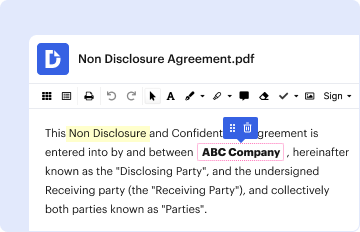
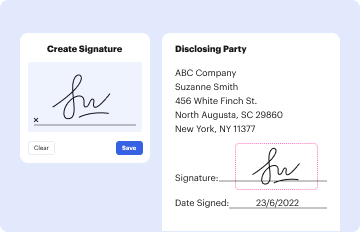
- Digital Tools Integration: Utilize platforms like DocHub to streamline the filling, signing, and sharing processes, facilitating efficient collaboration.
Who Typically Uses the Business Investor Agreement Template
This template is commonly used by various stakeholders in the investment ecosystem:
- Venture Capitalists: Those providing capital at the early stages of a company's lifecycle.
- Angel Investors: Individuals investing in startups or small businesses in exchange for ownership equity or convertible debt.
- Entrepreneurs and Startups: Companies seeking capital injection for growth or expansion.
- Private Equity Firms: Engaging in investments that involve the acquisition of significant stakes in companies.

Legal Use of the Business Investor Agreement Template
Ensuring legal compliance when using a Business Investor Agreement Template is paramount:
- Adherence to the ESIGN Act: Ensures that electronic signatures collected via DocHub are legally binding.
- Confidentiality Clauses: Keep sensitive business information secure, mitigating potential legal risks.
Important Terms Related to Business Investor Agreement Template
Familiarity with important legal and financial terms enhances understanding and application of the template:
- Indemnification: A contractual guarantee to compensate for any potential losses or damages incurred during the investment.
- Warranties and Representations: Statements confirming the authenticity and accuracy of the information provided by either party.
State-Specific Rules for the Business Investor Agreement Template
Recognize that the application of the Business Investor Agreement Template may vary based on state laws:
- State Securities Regulations: Each state may have specific securities laws impacting the terms and enforcement of the agreement.
- Business Entity Registration Requirements: Depending on the state, investor agreements may need to comply with different business formation and registration processes.
By understanding these detailed aspects of the Business Investor Agreement Template, parties involved can ensure a well-structured, legally sound, and mutually beneficial investment relationship.