
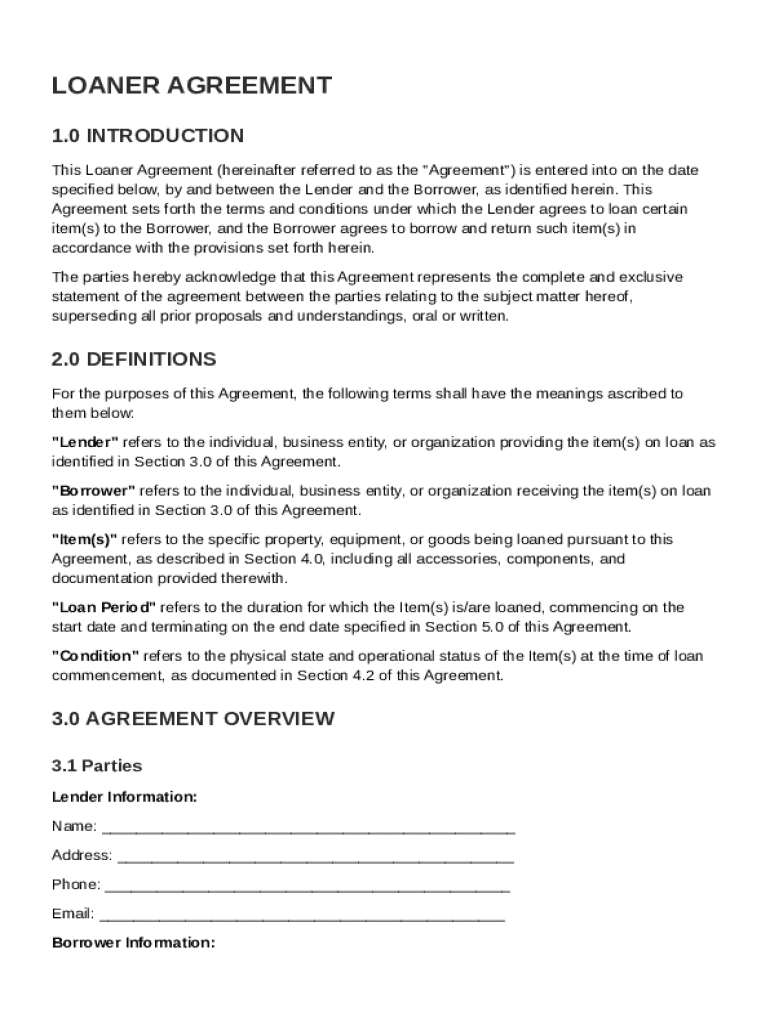







Definition & Meaning
A Loaner Agreement Template is a structured document that defines the parameters under which a Lender temporarily provides items to a Borrower. This document is crucial in clarifying the rights and responsibilities of all parties involved, ensuring that both the Lender and Borrower understand and agree to their obligations. It typically includes details such as loan fees, security deposits, duration, and conditions for the care and return of the items. By establishing these terms upfront, the agreement minimizes potential disputes and facilitates a smoother transaction process between the two parties.
Key Elements of the Loaner Agreement Template
The Loaner Agreement Template includes several critical components to ensure comprehensive coverage of the transaction:
- Identification of Parties: Clearly specifies the Lender and Borrower, including personal details such as names and contact information.
- Description of Loaned Items: Detailed descriptions of the items being lent, including serial numbers or unique identifiers, to avoid any confusion.
- Loan Duration: Specifies the period during which the borrower is entitled to use the loaned items, including start and return dates.
- Fees and Security Deposits: Outlines any costs associated with the loan, including one-time or recurring fees, along with conditions for the security deposit and its potential forfeiture or return.
- Use and Maintenance Obligations: Delineates the Borrower’s responsibilities in maintaining the condition of the borrowed items, along with any usage restrictions.
- Termination Conditions: Provides conditions under which the agreement may be terminated prematurely, including breach conditions and penalties.
How to Use the Loaner Agreement Template
Using the Loaner Agreement Template involves several straightforward steps:
- Select the Template: Choose the appropriate loan type and format that fits your transaction needs.
- Customize the Details: Fill in the template with relevant information about the Lender and Borrower, item descriptions, and loan terms.
- Review Legal Terms: Carefully go over the standard legal terms provided in the template to ensure compliance with governing laws.
- Negotiate and Finalize: Engage with the other party to discuss any modifications or additional terms, ensuring mutual agreement before finalizing the document.
- Sign and Distribute: Both parties should sign the agreement, with copies distributed to each for record-keeping.
Legal Use of the Loaner Agreement Template
The Loaner Agreement Template serves a crucial legal function by establishing a formal, binding contract between the Lender and Borrower. It protects both parties by detailing obligations and recourse options if terms are breached. It's vital to ensure that the template adheres to local state laws where the agreement is executed, as provisions like usury laws, liability limitations, and jurisdictional mandates can vary. Consulting with a legal professional may be advised to ensure full compliance and enforcement.
Examples of Using the Loaner Agreement Template
This template can be applied in various contexts across different sectors:
- Corporate Equipment Loans: Businesses loaning technology such as laptops or cameras to employees or contractors for projects.
- Art Galleries: Lenders allow museums or galleries temporary possession of art pieces for exhibitions.
- Personal Property Loans: Friends or family lending expensive items like musical instruments or tools for short-term use.
In each scenario, the Loaner Agreement Template protects involved parties by outlining terms clearly and preventing misunderstandings.
Steps to Complete the Loaner Agreement Template
Completing the Loaner Agreement Template is a straightforward process:
- Gather Information: Collect all necessary details about the parties and the items to be loaned.
- Download and Open the Template: Access the template from a reliable source like DocHub and open it using an appropriate editing tool.
- Fill in Sections: Populate fields with relevant information, ensuring accuracy and completeness.
- Review the Document: Make sure all details, especially legal terms, are correct and agreed upon.
- Sign the Agreement: Utilize DocHub's electronic signature tools to authenticate the document digitally.
Who Typically Uses the Loaner Agreement Template
Various individuals and entities find value in using the Loaner Agreement Template:
- Small Business Owners: Facilitate equipment sharing or temporary loans within collaborative networks.
- Educational Institutions: Manage loans of textbooks or technology to students and staff.
- Non-profits: Engage in asset-sharing agreements for community-enhancing projects.
By using this template, these parties can safeguard their interests and ensure a clear understanding of terms with the Borrower.


Important Terms Related to Loaner Agreement Template
Familiarity with the critical terms associated with the Loaner Agreement Template ensures clarity:
- Lender/Borrower: The party providing the item and the party receiving temporary possession.
- Loan Item: The property or asset being loaned under the agreement.
- Governing Law: Legal requirements pertinent to the jurisdiction overseeing the agreement.
- Indemnity: Security or protection against potential financial liability from the agreement.
- Breach: Violation of any stated terms within the agreement which might result in penalties.
These terms are foundational to understanding and executing a successful loan agreement.




