






Definition and Purpose of the Loan With Collateral Contract Template
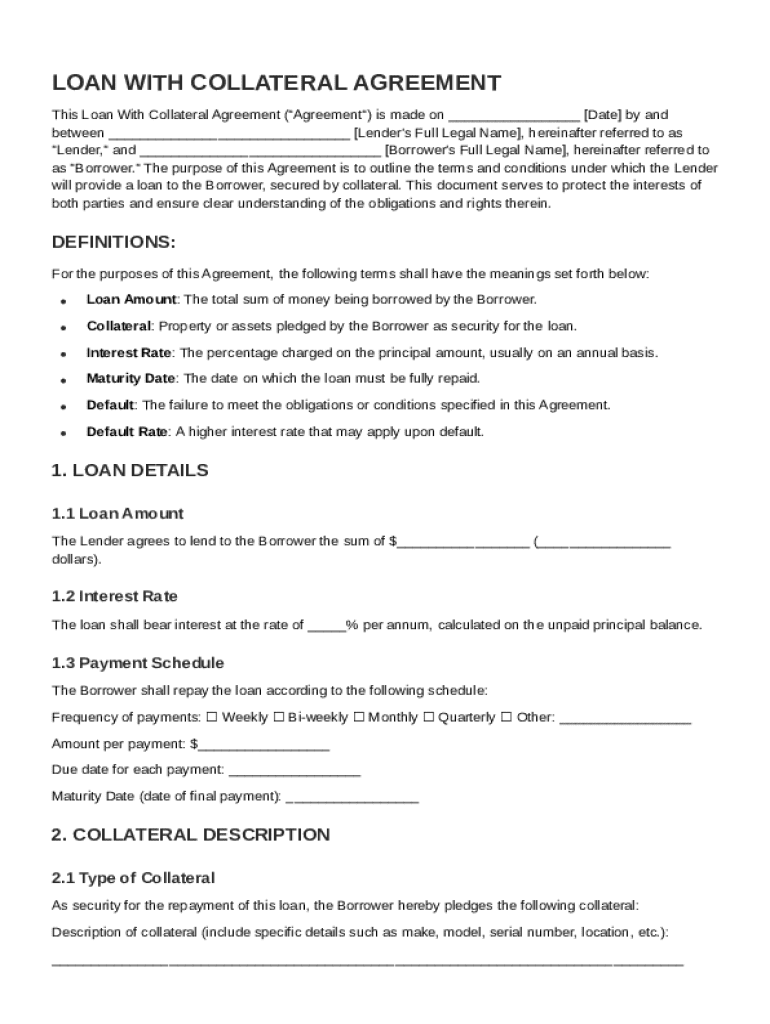
A Loan With Collateral Contract Template serves as a legal document between a lender and a borrower, specifying the terms under which the borrower receives a loan secured by collateral. This agreement provides clarity on responsibilities and rights, offering protection and assurance to both parties. Key features include definitions of key terms, loan amount, interest rate, and repayment schedule. This section will dive deep into the components, demonstrating how they collectively define the working structure of such an agreement.
- Loan Amount and Interest Rate: This specifies the principal amount borrowed and the interest rate applied, outlining financial obligations of the borrower.
- Collateral Description: Details of assets pledged to secure the loan are meticulously documented to ensure the lender’s security interest is protected.
- Repayment Terms: The schedule for payment installments, including the frequency and amount, is clearly defined.
Steps to Complete the Loan With Collateral Contract Template
Completing a Loan With Collateral Contract Template involves a series of precise actions to ensure that all parties understand their commitments.
- Gather Required Information: Assemble all necessary personal and financial information from both parties involved.
- Complete the Template: Enter the loan amount, collateral details, and terms of the agreement.
- Review Legal Terms: Ensure both parties comprehend the legal language and obligations like covenants and events of default.
- Seek Legal Advice: Consult with legal professionals for clarity and to verify compliance with legal standards.
Key Elements of the Loan With Collateral Contract Template
Understanding the critical components of the loan document is essential for effective utilization.
- Representations and Warranties: Both parties make assurances regarding their legal capacity and the validity of information provided.
- Conditions Precedent: These outline pre-conditions that must be satisfied before the loan funds are disbursed.
- Default and Remedies: Specific events that constitute default and the corresponding remedies available to the lender are clearly outlined.
Who Typically Uses the Loan With Collateral Contract Template
This template is primarily used by individuals and businesses looking to secure loans with the reassurance of collateral.
- Small Business Owners: Often use this as a strategy to secure funds for operational needs while offering business assets as collateral.
- Individuals: Particularly those seeking personal loans who can offer tangible assets, such as property, to back their loan.


Legal Use of the Loan With Collateral Contract Template
The Loan With Collateral Contract Template must adhere to specific legal stipulations to remain enforceable.
- Conforms to the ESIGN Act: Ensuring electronic signatures are legally binding.
- State Laws Compliance: Must reflect regulations pertinent to the state of execution to avoid nullification.
- Confidentiality and Data Protection: Adherence to privacy laws that protect involved parties’ sensitive information.
Important Terms Related to Loan With Collateral Contract Template
Grasping the terminology is pivotal for the effective execution of this agreement.
- Security Interest: The lender’s legal right to the collateral if the borrower defaults.
- Covenant: Obligations imposed on the borrower to uphold the agreement terms.
- Guarantor: An entity that guarantees the loan payment if the borrower defaults.
Examples of Using the Loan With Collateral Contract Template
Real-world applications highlight the document’s versatility and utility.
- Business Expansion Loans: A company borrows against equipment to expand operations.
- Mortgage Agreements: Individuals secure home loans by offering the property as collateral.
- Personal Asset Loans: Using a vehicle title as security for a personal loan.
State-specific Rules for the Loan With Collateral Contract Template
These contracts often have nuances depending on their geographical application to ensure they are legally binding.
- Interest Rate Caps: Some states mandate maximum allowable rates which affect loan agreements.
- Collateral Regulations: Varies by state, affecting what can be legally accepted as collateral.
- Default Procedures: Differing state laws dictate how defaults are processed and enforced.
State-by-State Differences
Variances in state laws can significantly influence the execution and enforcement of these agreements.
- Foreclosure Protocols: States have varying processes that affect the lender's ability to seize collateral.
- Homestead Exemptions: Special provisions that may exempt certain assets from being used as collateral.
Software Compatibility
Effective execution of a Loan With Collateral Contract Template can be facilitated by modern software.
- DocHub: Platform integration for seamless digital management, ensuring secure e-signatures and efficient document handling.
- Google Workspace: For compatibility and ease of collaboration with teammates within shared document environments.
Each aspect of the Loan With Collateral Contract Template demands careful consideration and meticulous execution to ensure the agreement is sound, enforceable, and reflective of the interests of both the lender and borrower.