
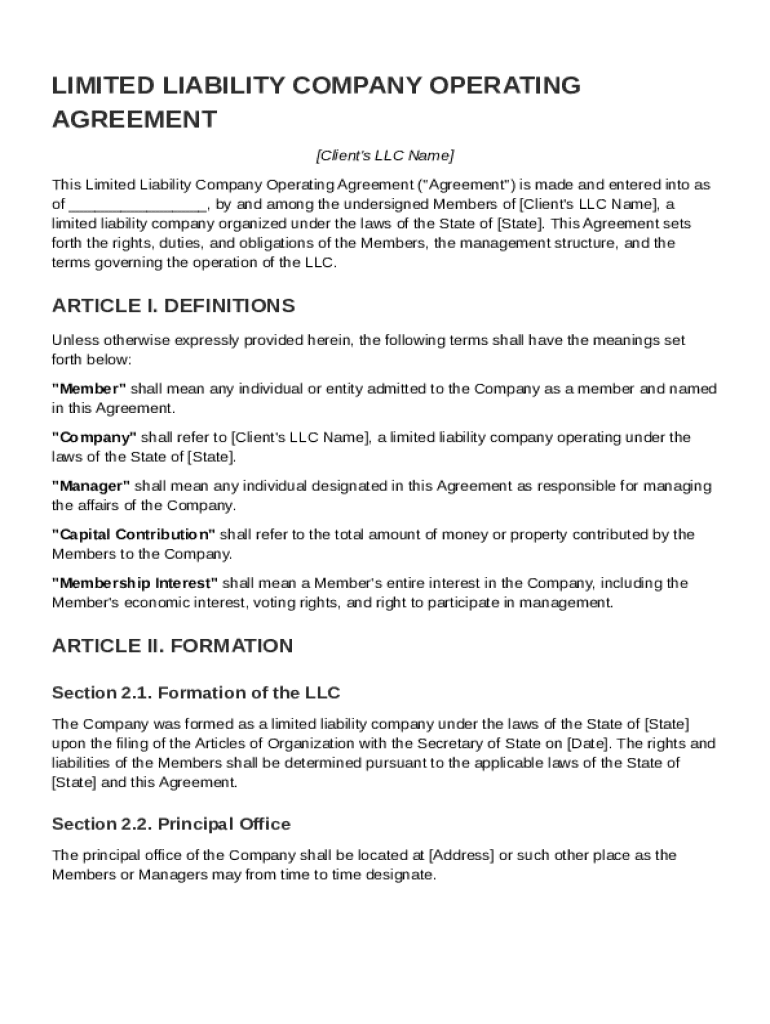







Definition and Purpose of a Limited Liability Company Agreement
A Limited Liability Company (LLC) Agreement is a formal document that outlines the operating structure of an LLC. It defines the rights, responsibilities, and obligations of its members, ensuring clear governance and operational clarity. The agreement serves as a roadmap for the LLC's management, addressing important aspects like voting procedures, profit distribution, and decision-making processes. This helps in minimizing disputes by providing a structured approach to handling business operations.
Key Components of the Agreement
- Member Details: The agreement specifies who the members are and their respective ownership percentages.
- Management Structure: It describes whether the LLC is member-managed or manager-managed, detailing the roles and powers of each.
- Profit and Loss Distribution: The document establishes how profits and losses will be shared among members.
- Voting Rights: It provides guidelines on how votes are cast and decisions are made within the LLC.
- Amendment Procedures: It outlines the process for making changes to the agreement as needed.
How to Use the Limited Liability Company Agreement Template
This template serves as a foundational document to customize based on the specific needs of your LLC. It includes sections that require filling out with pertinent details about your company and its members.
Step-by-Step Utilization
- Insert Basic Information: Begin by adding the LLC name, principal place of business, and formation date.
- Define Member Contributions: Clearly specify what each member contributes to the company, be it capital, property, or services.
- Outline Operational Procedures: Customize sections covering day-to-day operations, voting mechanisms, and member meetings.
- Develop Distribution Rules: Set out guidelines for distributing profits and losses according to the members' agreement.
- Establish Rules for Amendment: Clearly define how amendments to the agreement can be proposed and approved.
Critical Terms in a Limited Liability Company Agreement
Understanding the terminology used in an LLC Agreement is crucial for proper compliance and operation. These terms form the basis of the document's legal structure.
Essential Definitions
- Member: An individual or entity owning a part of the LLC.
- Manager: Person(s) responsible for running the LLC's daily operations, where applicable.
- Capital Contribution: The assets, funds, or services that a member contributes to the LLC.
- Distributions: Payments made to members from the LLC’s earnings.
Legal Importance of Using the Agreement
An LLC Agreement is not merely a formality. Its significance extends into legal protection and enhanced organizational structure, especially in multi-member LLCs.
Key Legal Implications
- Limited Liability: Clearly establishing the separation between personal and business liabilities for members.
- Conflict Resolution: Offering a predefined method for resolving member disputes.
- Legal Recognition: Courts often view the agreement as a primary document for settling disputes and interpreting the company's operation.
Steps to Complete the Limited Liability Company Agreement Template
Completing an LLC Agreement involves careful consideration and attention to detail. Following a structured approach ensures all necessary components are addressed.
Completion Process
- Review Template: Begin by thoroughly reading through the template to understand each section.
- Gather Information: Compile all necessary information, such as member details and contributions.
- Tailor the Document: Customize the sections to fit the specific needs and agreements of your LLC.
- Consult Legal Expertise: Consider having a legal professional review the document for compliance and completeness.
- Finalize and Sign: Once verified, ensure that all members sign to confirm their agreement with the terms.
Key Elements to Include in the Agreement
A well-crafted LLC Agreement incorporates several critical elements that are vital for both legal compliance and functional operation.
Important Inclusions
- Formation Details: Specify the state of formation and provide a legal basis for the LLC's existence.
- Duration: Indicate if the LLC is perpetual or for a specific purpose and time.
- Indemnification Provisions: Protect members and managers against specific liabilities incurred while performing their duties.
- Transfer Restrictions: Define any limitations on how membership interests can be transferred.
Variations and Alternatives to the Agreement Template
While the basic structure of an LLC Agreement remains constant, variations may be necessary based on the business’s nature and jurisdictional requirements.
Potential Modifications
- Single-member vs. Multi-member Agreements: Tailor clauses differently based on the number of members involved.
- Industry-specific Needs: Customize clauses according to specific industry standards or requirements.
State-Specific Rules for Limited Liability Company Agreements
Different states have varying regulations concerning LLC operations, which can influence the content and stipulations of an LLC Agreement.
Examples of State Variations
- Formation Requirements: States may have differing requirements for LLC formation, affecting the agreement’s initial sections.
- Member Rights: Some states may impose minimum standards for member rights and duties, necessitating specific inclusion in the agreement.
By fully understanding and implementing the structure, terminology, and legal context outlined in the Limited Liability Company Agreement, LLC members can ensure effective governance and legal compliance.




