






Definition & Meaning
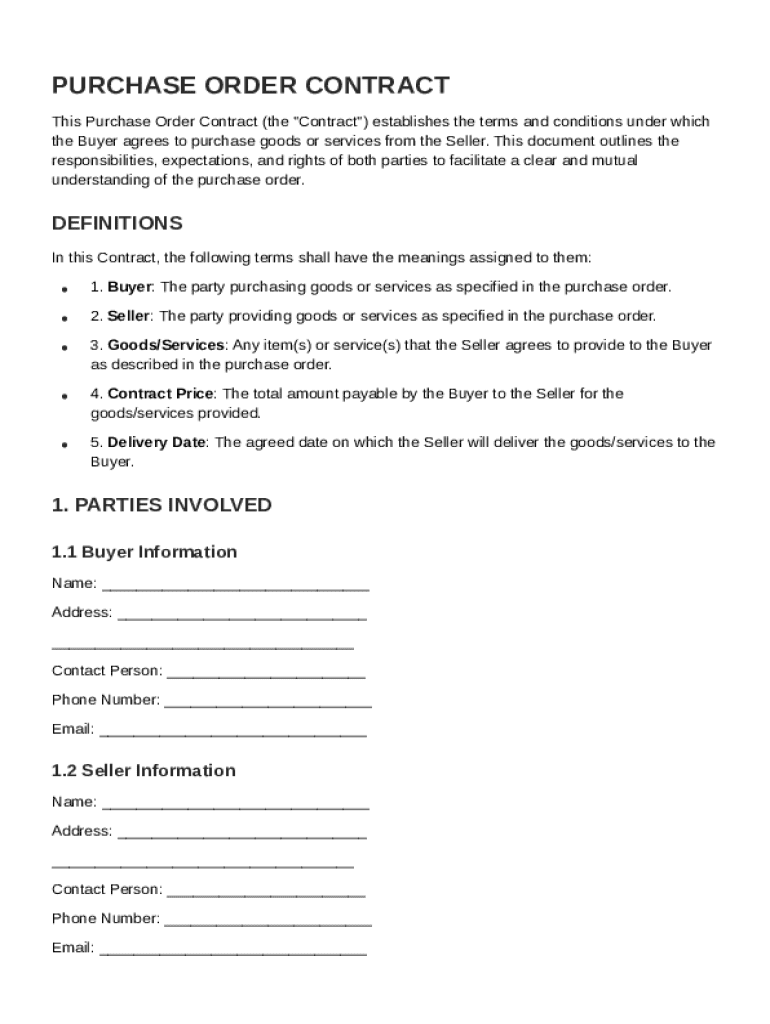
A Purchase Order Contract Template is a standardized document that outlines the terms and conditions for transactions between a buyer and a seller. This template serves as a legal agreement detailing the purchase of goods or services, including important aspects such as the pricing, delivery timeline, and payment terms. The primary function of this template is to provide a written record of the agreement, reducing the potential for misunderstandings and disputes between the parties involved.
Key Features
- Definitions: Clarifies specific terms used within the contract to ensure mutual understanding.
- Parties Involved: Identifies the buyer and seller, along with related contact information.
- Scope of Work: Details the goods or services being purchased, including quality specifications and any related services.
- Pricing and Payment Terms: Outlines the cost of goods or services and specifies payment schedules and methods.
- Delivery Terms: Describes how and when the goods or services will be delivered to the buyer.
How to Use the Purchase Order Contract Template
Utilizing a Purchase Order Contract Template is straightforward, yet requires attention to detail to ensure all aspects of the transaction are accurately captured. Here’s how you can effectively use this template:
- Download the Template: Obtain the document from a reputable source such as DocHub, ensuring it meets your specific needs.
- Customize the Template: Enter relevant details including contact information, descriptions of goods or services, pricing, and deadlines.
- Review Legal Terms: Carefully read through all terms and conditions to understand your rights and obligations.
- Consult Legal Experts: For complex transactions, consider seeking legal advice to verify the contract's compliance with applicable laws.
- Share with Relevant Parties: Distribute the draft to all parties involved for review and feedback.
- Finalize and Sign: Once all parties agree, finalize the document and obtain signatures to make the contract legally binding.
Steps to Complete the Purchase Order Contract Template
Completing a Purchase Order Contract Template involves a sequential process to ensure thoroughness and accuracy. Below are the essential steps:
- Identify the Parties: Clearly define the buyer and seller, ensuring accurate representation of entities involved.
- Specify the Goods/Services: Provide detailed descriptions, including quantities and specifications.
- Set the Price and Payment Details: Include total cost, payment terms, and schedule.
- Define Delivery Terms: Specify expected delivery dates, locations, and methods.
- Outline Warranties and Liabilities: Clarify any guarantees, warranties, and accountability for damages or defects.
- Include Termination Clauses: State conditions under which the contract can be terminated by either party.
- Proofread and Review: Thoroughly review the completed template for errors or omissions.
- Signatures and Dates: All parties must sign and date the document to signify agreement.
Legal Use of the Purchase Order Contract Template
The Purchase Order Contract Template is an essential legal document used to formalize business transactions. It is crafted to ensure compliance with legal standards, protecting the interests of all parties involved. Here’s what to consider legally:
Legal Considerations
- Governing Law: The contract should specify which jurisdiction’s laws will govern the agreement.
- Compliance: Ensure the contract complies with industry regulations and standards.
- Dispute Resolution: Include procedures for resolving disagreements, such as arbitration or mediation.
- Confidentiality Clauses: Protect sensitive information shared during the transaction.
Real-World Example
A small technology company in California uses a Purchase Order Contract Template for bulk hardware purchases. By outlining terms like delivery schedules and payment conditions, the company ensures that it can maintain adequate inventory levels without unexpected disruptions, all while adhering to state-specific legal requirements.
Key Elements of the Purchase Order Contract Template
A comprehensive Purchase Order Contract Template contains several pivotal components, each serving a critical role in defining the commercial relationship:
- Terms and Conditions: Encompasses all contractual obligations and protections.
- Contact Information: Details of both parties including addresses, names, and communication channels.
- Delivery Instructions: Provides details regarding shipment, handling, and timelines.
- Terms of Cancellation: Conditions under which the contract may be voided.
- Legal Jurisdiction and Governing Law: Specifies the applicable state or country's laws.
Important Terms Related to Purchase Order Contract Template
Familiarity with specific terms can enhance understanding when using the Purchase Order Contract Template.
- Purchase Price: Total amount agreed upon by both parties for the transaction.
- Buyer and Seller: The parties entering into the contract, typically a business and its vendor.
- Confidential Information: Any proprietary information that should not be disclosed to third parties.
- Force Majeure: Circumstances outside of control that may impact contract fulfillment, such as natural disasters.
Business Types that Benefit Most from Purchase Order Contract Template
Different types of businesses can leverage the Purchase Order Contract Template effectively, tailored to their operational needs:
- Retailers: Manage large volumes of inventory through structured purchase agreements.
- Manufacturers: Coordinate procurement of raw materials and components.
- Service Providers: Formalize agreements for contracted services.
- E-commerce Platforms: Streamline vendor transactions and minimize supply chain interruptions.
Software Compatibility
Modern businesses often integrate technology into their documentation processes, and the Purchase Order Contract Template is no exception. Making use of compatible platforms ensures efficiency in drafting, signing, and storing these documents.
Supported Platforms
- DocHub: Offers comprehensive editing, signing, and storage functionalities.
- QuickBooks: Financial integration for tracking purchase orders.
- Microsoft Word and Excel: Versatile tools for creating and customizing contracts.
- Google Workspace: Facilitates real-time collaboration and easy sharing with team members.
By leveraging these platforms, businesses can streamline contract management, enhancing both efficiency and productivity.