






Definition and Overview of the Billing Agreement Template
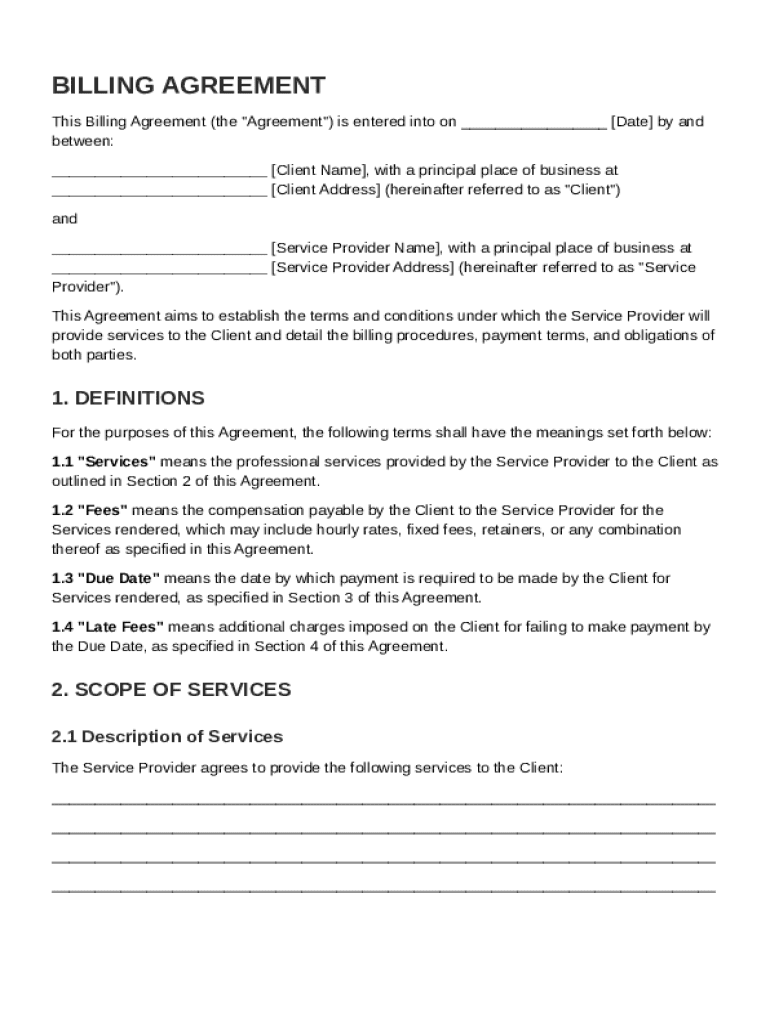
A Billing Agreement Template is a formal document used to outline the specific terms and conditions between a client and a service provider regarding the provision of services. This template serves as a contractual framework that clearly defines the responsibilities and billing procedures each party must follow. Typical elements included in this document are the scope of services provided, fee structures, payment schedules, and the processes for handling late payments and disputes. It also typically includes key legal terms such as termination clauses, which outline the conditions under which either party can end the agreement. This transparency helps prevent misunderstandings and disputes by setting clear expectations for both parties.
How to Use the Billing Agreement Template
Using the Billing Agreement Template involves several steps to customize it for the specific needs of a transaction. First, both the client and service provider should review and agree upon the services outlined. Carefully review the default sections, such as fee structures and payment terms, to ensure they accurately reflect your agreement. After customizing sections to include necessary details, such as deadlines and specific deliverables, both parties should verify that all included terms align with their understanding. Once satisfied, the document should be signed using electronic signature options provided by platforms like DocHub, ensuring the agreement is legally binding.
Steps to Complete the Billing Agreement Template
-
Review Default Terms: Read through the default sections of the template, which will include common terms and conditions associated with billing agreements.
-
Customize Content: Modify sections as needed. This could involve updating service descriptions, changing the fee structures, or altering timelines to match your situation.
-
Add Specific Clauses: Include any additional clauses necessary for your engagement, such as confidentiality agreements or unique dispute resolution processes.
-
Legal Verification: If necessary, consult with legal professionals to ensure all terms meet applicable laws and regulations.
-
Finalize Details: Confirm that all parties have reviewed the revised document and that it meets the contractual elements needed for the relationship.
-
Sign and Distribute: Use electronic signature capabilities to sign the document, ensuring it is legally binding, and distribute copies to all relevant stakeholders.
Important Terms Related to Billing Agreement Template
Several important terms are typically found within a Billing Agreement Template:
- Scope of Services: Defines the range and breadth of work to be completed.
- Fee Structure: Outlines how charges will be calculated and paid.
- Payment Terms: Specifies timing, payment methods, and due dates for payments.
- Late Payment Penalties: Details any fees or penalties incurred for late payments.
- Dispute Resolution: Establishes processes for handling disagreements that may arise.
- Termination Clause: Outlines how the agreement can be ended by either party.
Understanding these terms is critical to ensure all parties have a clear understanding of their obligations.
Key Elements of the Billing Agreement Template
Crucial elements that form the foundation of a Billing Agreement Template include:
-
Identification of Parties: Clearly names and identifies all entities involved in the agreement.
-
Service Descriptions: Detailed descriptions of each service provided, often including an expected timeline for delivery.
-
Pricing Details: Comprehensive breakdown of cost, including any variable fees or expenses.
-
Payment Channels: Details on how payments will be processed, including preferred methods and any platforms used for transferring funds.
-
Legal Provisions: Ensures that relevant legal language is included to protect the interests of both the client and service provider.
Why You Should Use a Billing Agreement Template
Implementing a Billing Agreement Template is beneficial for several reasons:
-
Clarity and Transparency: Provides clear expectations and responsibilities for both parties involved.
-
Dispute Reduction: Reduces the likelihood of misunderstandings and disagreements by providing a clear legal context.
-
Time-Saving: Streamlines the contract development process by using predefined sections that can be quickly customized.
-
Professionalism: Enhances credibility and professionalism by providing a structured and detailed document that reflects an organized approach to business transactions.
Who Typically Uses the Billing Agreement Template
Billing Agreement Templates are used by a variety of individuals and organizations, including:
-
Freelancers and Consultants: Often utilize these templates to formalize engagement terms with clients.
-
Service Providers: Companies providing services like digital marketing, IT, and maintenance who need structured billing agreements.
-
Small to Medium-Sized Enterprises (SMEs): Employ these templates to manage vendor relationships and service contracts efficiently.
-
Corporate Clients: Larger organizations often standardize these templates to ensure compliance and consistency in service engagements.

Examples of Using the Billing Agreement Template
To illustrate the practical application of a Billing Agreement Template, consider these examples:
-
IT Services Firm: An IT services company customizing the template to include specific software development milestones and testing phases.
-
Marketing Agency: A digital marketing agency outlines deliverables such as reports and campaigns, complete with deadlines and associated fees.
-
Consultancy Engagement: A business consultant modifies the template to reflect periodic review sessions and performance-based compensation adjustments.
Each example demonstrates the template’s flexibility in adapting to varied business needs, which helps establish clear, enforceable agreements tailored to the unique arrangements of each relationship.