



Definition and Meaning
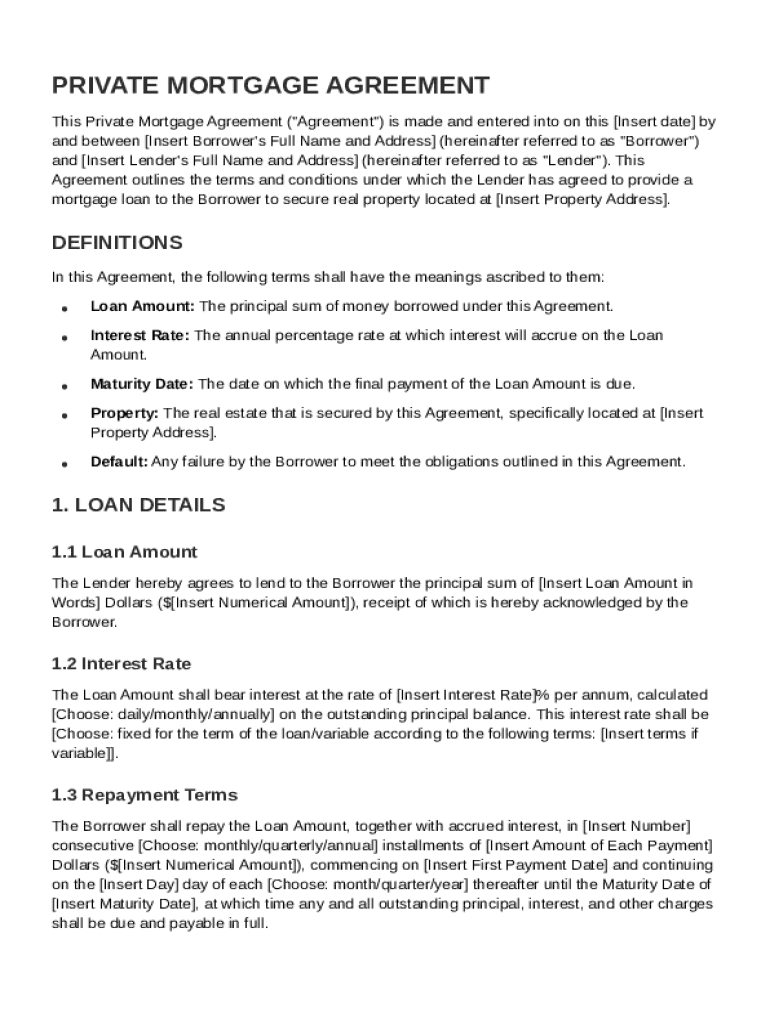
A Private Mortgage Contract Template is a legal document that formalizes a mortgage agreement between a Borrower and a Lender that is not a traditional financial institution, such as a bank. This document is used when the Lender is an individual or a private entity providing a loan secured by real property. The template outlines the essential terms and conditions of the loan, which include the loan amount, interest rate, repayment schedule, and the specific obligations of both parties. By clearly defining these terms, the template safeguards the interests of both the Borrower and the Lender, ensuring mutual understanding and legal compliance.
How to Use the Private Mortgage Contract Template
Using the Private Mortgage Contract Template involves several key steps to ensure that all necessary details are captured accurately. First, both parties should thoroughly review the template to understand the information required. The template should be completed with specifics such as the Borrower's and Lender's names, contact details, and the property's legal description. It's essential to detail the loan amount, interest rate, and repayment terms clearly. Once all information is inputted, both parties should review the document once more for accuracy before signing. A notary public may also need to acknowledge the contract to validate its legitimacy and execution.
Benefits of Using the Template
- Streamlined Process: Simplifies creating legally sound mortgage contracts.
- Customization: Flexibility to tailor terms to suit specific agreements between parties.
- Legal Assurance: Ensures all required details are documented, reducing potential legal disputes.
Who Typically Uses the Private Mortgage Contract Template
This template is often utilized by private individuals or companies who decide to lend money for real estate purchases outside of traditional lending frameworks. It is also beneficial for real estate investors and developers who enter into partnerships where one party finances another's property acquisition. Additionally, family members or friends may use the template to formalize a loan for buying a home, making it a versatile tool for both professional and personal transactions.

Key Elements of the Private Mortgage Contract Template
The template comprises several essential elements that must be addressed for a comprehensive agreement:
- Loan Details: Includes the principal amount, interest rate, payment frequency, and amortization schedule.
- Security: The pledged real estate property as collateral for the mortgage.
- Default Terms: Conditions under which the Borrower is deemed to be in default, along with potential remedies for the Lender.
- Amendment Clause: Procedures for altering the agreement, requiring mutual consent from both parties.
- Severability Provision: Ensures that if any part of the contract is invalidated, the remainder remains enforceable.
Important Terms Related to the Private Mortgage Contract Template
Understanding specific terms pertinent to a Private Mortgage Contract Template enhances clarity for all parties involved:
- Amortization: The process of paying off debt over time through regular payments.
- Balloon Payment: A large payment due at the end of a loan term after smaller periodic payments.
- Lien: A legal right or interest that a Lender has in the Borrower's property, granted until the debt obligation is satisfied.
- Escrow Account: An account where funds are held in trust while two or more parties complete a transaction, often used for property tax or insurance payments.
Legal Use of the Private Mortgage Contract Template
The use of this contract template must comply with federal and state laws to ensure its validity. The document should specify which state's law governs the agreement, as real estate laws can vary significantly. Furthermore, the template must adhere to the U.S. ESIGN Act if signed electronically, ensuring that all parties consent to and agree on the use of electronic signatures.
Consideration for Legal Counsel
- Contract Review: Consultation with an attorney can help verify its legality and relevance to specific state laws.
- Dispute Resolution: Legal advice may be beneficial in preemptively addressing potential conflict resolution measures.
State-Specific Rules for the Private Mortgage Contract Template
Rules and statutes regarding private mortgages can vary by state, necessitating that the template be adjusted to comply with local regulations. For instance, some states may have unique requirements for documenting a private loan's terms or specific foreclosure proceedings. It is crucial for parties involved to research state-specific guidelines or seek professional advice to ensure adherence to applicable laws.
Examples of Using the Private Mortgage Contract Template
To illustrate the utility and adaptability of the Private Mortgage Contract Template, consider these scenarios:
- Family Financing: A parent loans money to their child to purchase a home. They utilize the template to formalize the terms and protect both parties legally.
- Real Estate Investment: An investor finances a portion of another investor’s property acquisition, choosing to negotiate custom terms that the typical bank loan does not offer.
- Partnership Agreements: Real estate developers seeking to diversify risk by having private individuals fund part of the project utilize the template to outline the funding conditions.
These examples demonstrate the template’s versatility in different lending contexts, emphasizing the importance of a structured and reliable document in private lending scenarios.