






Definition & Meaning
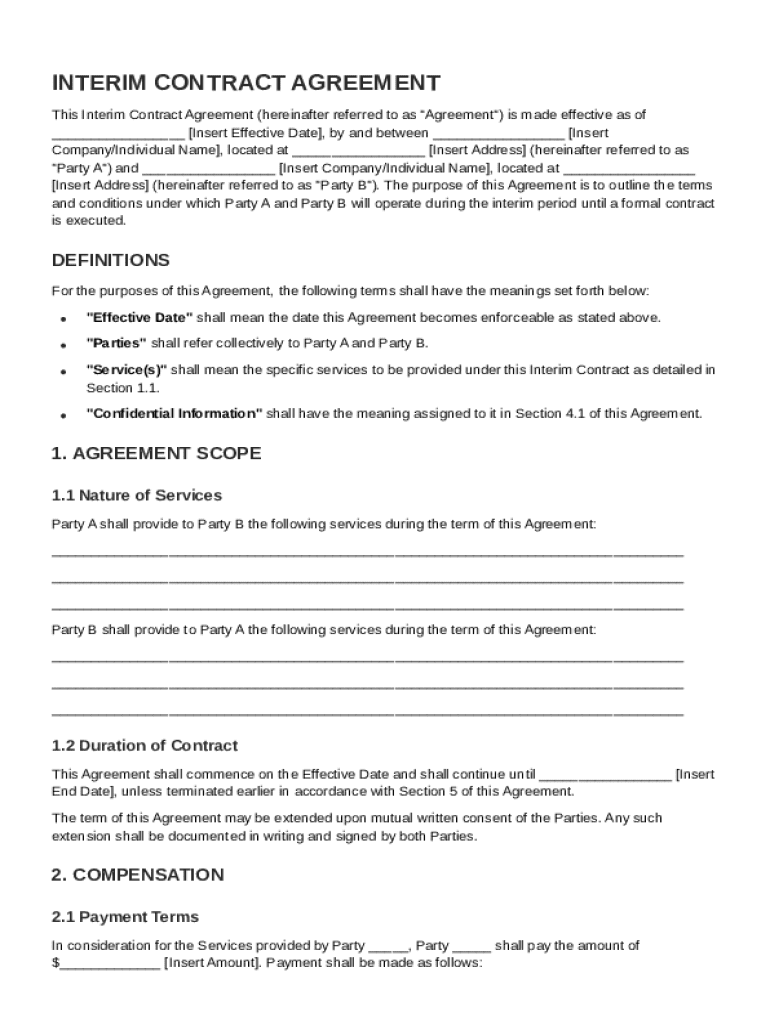
An Interim Contract Template serves as a preliminary agreement between two parties, Party A and Party B, to outline the terms and conditions for services rendered during a transitional period before a comprehensive contract is finalized. It acts as a stopgap agreement, ensuring clarity and mutual understanding of responsibilities, payments, and other critical factors during this interim phase. This kind of contract is crucial in situations where immediate collaboration is necessary, but a full contract cannot yet be executed.
The document typically covers a range of essential elements, such as the scope of services, payment terms, and confidentiality obligations. It also includes clauses relating to termination grounds, dispute resolution procedures, and governing law. By defining these aspects, the Interim Contract Template ensures that both parties are legally protected and that their business relationship proceeds smoothly until a more detailed agreement is established.
How to Use the Interim Contract Template
Using the Interim Contract Template involves several key steps to ensure that it meets the needs of both parties involved. The first step is assessing the specific requirements of the interim period, which will dictate the terms to be included in the template. After defining these terms, parties can collaboratively fill in the relevant sections of the template, ensuring that all necessary details, such as party names, dates, and scope of work, are specified clearly.
To enhance efficiency, DocHub allows you to import the template directly from your computer or cloud storage, facilitating easy editing and annotation. You can utilize the platform's comprehensive tools to add text, insert images, or highlight important sections of the contract. Once the edits are complete, parties can review the terms together to ensure mutual agreement before signing.
Steps to Complete the Interim Contract Template
Completing the Interim Contract Template requires a methodical approach to ensure all aspects are covered accurately.
-
Identify Parties Involved: Clearly state the names and contact information of both parties.
-
Outline the Services: Define what services are to be provided, including specific deliverables and time frames.
-
Agree on Payment Terms: Specify the payment structure, including amounts, schedules, and methods of payment.
-
Specify Responsibilities: Detail the responsibilities of each party to avoid any confusion and potential disputes.
-
Include Confidentiality Clauses: Ensure confidentiality obligations are clear to protect sensitive information.
-
Define Termination Conditions: Establish what conditions will allow either party to terminate the agreement.
-
Detail Dispute Resolution: Include procedures for handling any disputes that may arise.
-
State Governing Law: Specify which jurisdiction's laws will govern the contract.
Lastly, both parties need to thoroughly review and sign the contract, which can be efficiently managed through DocHub’s electronic signature capabilities.
Key Elements of the Interim Contract Template
The Interim Contract Template is built on several key components that ensure clarity and legal security:
- Scope of Work: Clearly delineates the tasks and responsibilities of each party.
- Duration of Agreement: Specifies the term of the interim arrangement and any possible extensions.
- Payment Details: Includes the salary/payment rate, payment schedule, and any bonuses or penalties.
- Termination Clause: Details conditions under which the contract can be terminated.
- Confidentiality Agreement: Protects sensitive information from unauthorized disclosure.
- Dispute Resolution: Outlines methods for resolving any conflicts that arise during the contract period.
- Governing Law: Determines which legal jurisdiction will adjudicate disputes related to the contract.
These elements form the backbone of the interim agreement, providing a structured and efficient way to manage short-term relationships.
Who Typically Uses the Interim Contract Template
Interim Contract Templates are utilized by a multitude of professionals and industries requiring temporary arrangements. They are particularly favored by businesses engaging independent contractors, freelancers, or temporary workers for short-term projects.
Professional sectors like consulting firms, creative agencies, and IT companies often use this template to formalize engagements while working on time-sensitive or project-based tasks. Small businesses may also employ these templates when hiring temporary staff during peak periods, ensuring that both parties understand the commitment and expectations without delving immediately into complex negotiations.


Legally Binding Electronic Signatures
The Interim Contract Template can be signed electronically within DocHub's platform, ensuring that the agreement is both secure and legally binding. Signatures captured electronically adhere to the standards set by the ESIGN Act, providing the same legal standing as handwritten signatures.
DocHub offers flexibility in signature creation, allowing users to draw, type, or upload their signatures. Once established, these signatures can be saved for future use, streamlining the process for subsequent agreements. Furthermore, sign requests facilitate the collection of signatures by specifying signer orders and sending automated reminders, thus maintaining the momentum of the contract's execution.
State-Specific Rules for the Interim Contract Template
While the Interim Contract Template provides a standardized framework, users in the United States should be aware of state-specific legal requirements that may influence the terms and enforceability of their contract. Each state may have unique rules regarding employment laws, confidentiality provisions, and dispute resolution mechanisms, which require careful consideration when drafting the agreement.
Particularly, states may have varied interpretations of contractual obligations, impacting elements like payment schedules or termination conditions. Compliance with local laws not only ensures legal protection but also fosters trust and accountability between contracting parties. Consulting legal advice for these state-specific nuances is recommended to ensure the contract remains robust and enforceable.
Examples of Using the Interim Contract Template
There are numerous practical scenarios illustrating the utility of the Interim Contract Template. For instance:
- Consulting Firms: Engage freelance analysts for short-term projects pending full-scale client contracts.
- Tech Startups: Hire temporary software developers to expedite product launches during transitional phases.
- Creative Agencies: Collaborate with external designers to complete specific campaigns before committing to longer-term contracts.
- Retail Businesses: Employ seasonal staff during peak periods like holidays, with clearly outlined roles and payment plans.
These examples demonstrate how the template accommodates diverse needs by providing a flexible yet structured framework for temporary engagements.