






Definition and Meaning of a Separation Agreement Template
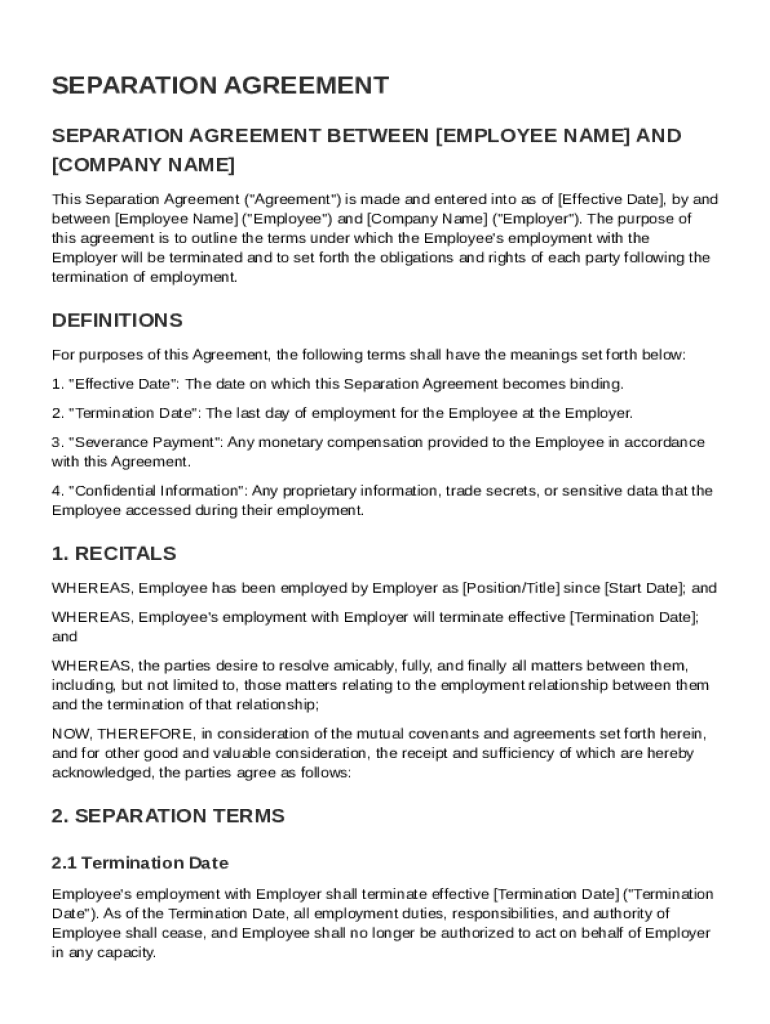
A Separation Agreement Template outlines the critical terms involved when an employee and employer decide to terminate their employment relationship. This document is a crucial tool in ensuring a legal and amicable separation by detailing aspects like severance pay, confidentiality obligations, and the effective date of termination. It also includes clauses for mutual releases of claims, emphasizing the importance of entering into the agreement freely without threats or coercion.
Separation agreements serve to protect both parties involved by clearly articulating the terms and conditions of separation. This ensures that all expectations are managed and lays a foundation for the employee to transition smoothly out of the organization.
Key Elements of the Separation Agreement Template
The Separation Agreement Template is composed of several critical elements that provide structure and clarity:
-
Severance Payment: Details the monetary compensation the departing employee will receive, often tied to years of service or previous salary.
-
Continuation of Benefits: Specifies any ongoing employee benefits, such as healthcare or pension plans, and the duration for which these benefits remain after the employment ends.
-
Confidentiality Obligations: Outlines the requirement for the employee to keep company information and proprietary details confidential post-employment.
-
Non-Disparagement Clause: This clause prevents both parties from making negative statements about each other publicly, essential for maintaining reputations.
-
Governing Law: Indicates which state law will apply in interpreting the agreement, which is crucial in a country with diverse legal frameworks.
-
Entire Agreement: Ensures that the separation agreement represents the full understanding between the parties, nullifying prior verbal or written agreements.
Steps to Complete the Separation Agreement Template
Completing a Separation Agreement Template involves several critical steps:
-
Collect Necessary Information: Gather all personal and employment-related details relevant to the separation.
-
Review Agreement Terms: Carefully review all clauses related to severance, benefits, and obligations to ensure they align with your understanding.
-
Negotiate Terms: If needed, engage in negotiations to amend disagreeable terms, focusing especially on severance amounts and confidentiality conditions.
-
Legal Review: Have an attorney review the agreement—not just for legal jargon, but to ensure compliance with applicable laws.
-
Sign the Agreement: Both parties should sign the agreement, ideally in each other’s presence or with proper witnesses, to ensure legality.
-
Retain Copies: Each party should keep a signed copy for their records, ensuring accessibility if future disputes arise.
Legal Use of the Separation Agreement Template
When using a Separation Agreement Template, it is imperative to recognize its legal purpose and constraints:
-
Enforceability: A robust separation agreement must comply with state and federal laws, such as the Age Discrimination in Employment Act (ADEA) and the Older Workers Benefit Protection Act (OWBPA).
-
Voluntary Agreement: Legal use mandates that both parties enter into the agreement willingly, without any duress or misrepresentation.
-
Release of Claims: The agreement often includes a release where the employee waives rights to sue the employer on various claims, underscoring the need for careful legal consideration during negotiations.
Important Terms Related to the Separation Agreement Template
Here are some important terms to know:
-
Severance Clause: Section related to payment processing and calculation based on employment length.
-
Waiver of Claims: Legal provision where the employee agrees not to pursue further legal action related to their employment or termination.
-
Non-Compete and Non-Solicitation: Terms where employees agree not to compete with the former employer or solicit clients for a specified time.
Understanding these terms is critical as they're often binding legal clauses that can have a significant impact on an employee's post-employment actions.
Who Typically Uses the Separation Agreement Template
This template is predominantly used by:
-
Human Resources Departments: Responsible for preparing and managing employee exits.
-
Legal Teams: Providing guidance to ensure agreements comply with labor laws and institutional policies.
-
Business Owners and Executives: Seeking to formalize the separation terms to protect the organization’s interests.
-
Departing Employees: Who require clear terms before disengaging from their employer.
This diverse range of users highlights the template's adaptability in facilitating comprehensive, fair separations.


Examples of Using the Separation Agreement Template
Consider scenarios where this template might be applied:
-
Redundancy Situations: When a company restructures, and workers are dismissed due to their roles no longer being necessary.
-
Termination for Cause: Used when formalizing the exit route for an employee terminated due to misconduct.
-
Voluntary Resignation Negotiations: Applicable when an employee wishes to resign but seeks severance or continuation of benefits as part of their departure.
These scenarios showcase the template's flexibility, catering to various employment contexts while maintaining clarity.
State-Specific Rules for the Separation Agreement Template
Each U.S. state may impose different rules:
-
California: Enforces strict employee protection laws, disallowing non-compete agreements, necessitating specialized clauses in separation agreements.
-
New York: Has stringent requirements for release clauses, particularly focusing on age discrimination disclaimers to protect older workers.
-
Texas: Preference for plain language in legal agreements, making it essential to clearly define terms like severance and claims waiver.
These state-specific nuances mean that while the general template provisions may seem standard, the application and enforceability can vary significantly across different jurisdictions. The organization should always consult with a legal expert to tailor the agreement to state laws while ensuring compliance and enforceability.