






Definition & Meaning
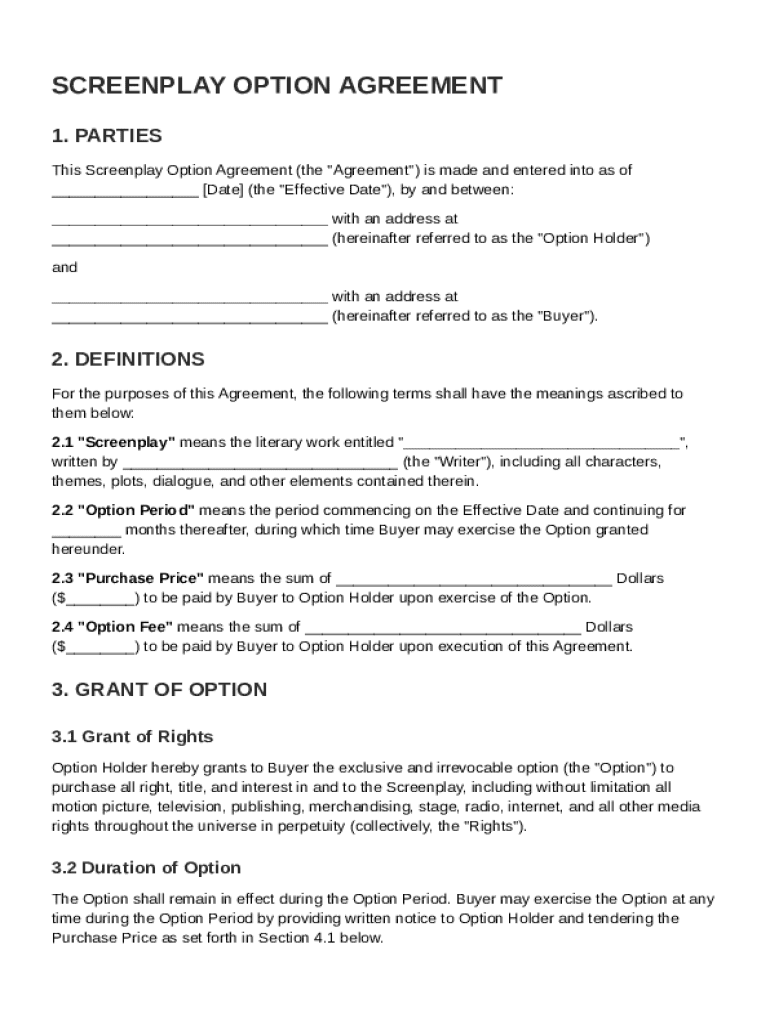
A Screenplay Option Agreement is a legal contract between an Option Holder, typically a producer or studio, and a Writer, granting the right to purchase the exclusive rights to a screenplay for a specified period. This agreement provides a structure for negotiations, detailing conditions under which the Buyer may purchase all media rights to the screenplay. Crucial terms include the Option Period, Option Fee, and Purchase Price. The Option Period allows the Option Holder to develop, package, and finance the project without the risk of losing the rights during this time.
Key Elements of the Screenplay Option Agreement Template
Understanding the key components of this agreement is essential for both parties involved. These elements ensure clarity and mutual understanding:
- Screenplay Definition: The agreement should clearly outline the specific screenplay being optioned, including its title and any relevant descriptions.
- Option Period: Specifies the duration in which the Buyer can exercise the option to purchase the screenplay. This period can range from several months to a few years.
- Option Fee: A non-refundable payment made to the Writer for granting the option, generally a small percentage of the eventual purchase price.
- Purchase Price: The agreed amount the Buyer will pay if they choose to buy the screenplay rights outright.
- Termination Clauses: Conditions under which the agreement can be terminated by either party.
- Confidentiality Provisions: Obligations to keep the terms and screenplay under wraps during the option period.
Steps to Complete the Screenplay Option Agreement Template
Filling out the Screenplay Option Agreement Template requires attention to detail and an understanding of the specific terms:
- Identify Parties: Clearly state the legal names and contact details of both the Buyer and the Option Holder.
- Specify the Screenplay: Include details such as title, authorship, and any existing registration numbers.
- Set Option Fee and Purchase Price: Negotiate and finalize the amounts to be paid respectively for the option and purchase.
- Detail the Option Period: Establish specific start and end dates during which the Buyer can choose to proceed with the purchase.
- Outline Additional Terms: Clearly state any additional agreements, including production milestones or roles.
- Finalize and Sign: Both parties must sign and date the agreement to make it legally binding.
Important Terms Related to Screenplay Option Agreement Template
Familiarity with the terminology in these agreements helps ensure mutual understanding and compliance:
- Media Rights: Rights that encompass the use of the screenplay across various platforms and formats, including film, television, and digital mediums.
- Force Majeure: Clauses that address unforeseen events preventing contract fulfillment, such as natural disasters.
- Representations and Warranties: Assurances provided by both parties about undertakings and information within the agreement.
- Governing Law: Indicates which state or jurisdiction's laws will oversee the agreement. This is especially important if parties are in different locations.
Legal Use of the Screenplay Option Agreement Template
The legality of these agreements is of utmost importance:
- Compliance with Legal Norms: Adherence to laws and regulations regarding intellectual property and contract formations.
- Binding Nature: Once signed, these agreements are legally binding, unless voided by a clause or through mutual agreement.
- Enforceability: Parties need to ensure that the terms are enforceable in the jurisdiction specified.
- Amendments: Any changes to the agreement need to be mutually agreed upon in writing.
State-Specific Rules for the Screenplay Option Agreement Template
While the Screenplay Option Agreement is broadly applicable across the United States, certain state-specific nuances should be considered:
- California: Known for its entertainment industry laws, California often incorporates additional regulations, such as guild obligations.
- New York: Often involves more detailed financial disclosures and considerations, reflecting its significant publishing and media sectors.
- Differences in Contract Enforceability: States have varying thresholds for what constitutes breach of contract and remedies available.
Examples of Using the Screenplay Option Agreement Template
Practical applications and scenarios provide insights into how these agreements operate:
- Independent Producer: An indie producer might use this agreement to secure rights to a promising screenplay while seeking funding and distribution partners.
- Studio Acquisition: A film studio may option multiple screenplays to explore different projects before committing to full purchases.
- Writers' Guild Compliance: Writers ensuring their contracts align with guild guidelines to protect their rights and revenues.
Who Typically Uses the Screenplay Option Agreement Template
Identifying the primary users of these agreements highlights their value and scope:
- Producers and Studios: Utilize these agreements to develop a pipeline of potential projects.
- Screenwriters: Engage in these contracts to monetize their work and gain industry visibility.
- Legal Professionals: Provide guidance and ensure compliance with contractual laws, easing negotiations and dispute resolution.


Software Compatibility for Screenplay Option Agreements
The DocHub platform allows for seamless use of the template across various operating environments and software solutions:
- Import Capabilities: You can upload templates from your device or directly import them from cloud services such as Google Drive and Dropbox.
- Document Editing Tools: Edit, highlight, and annotate the agreement directly in your web browser without the need for specialized software.
- Compatibility with Multiple Formats: Whether in PDF, DOC, or another format, DocHub facilitates easy conversion and management of screenplay option agreements.
These carefully selected blocks ensure a comprehensive understanding of the essential elements of the Screenplay Option Agreement Template, providing a robust resource for users navigating the complexities of entertainment legality.