Definition and Meaning
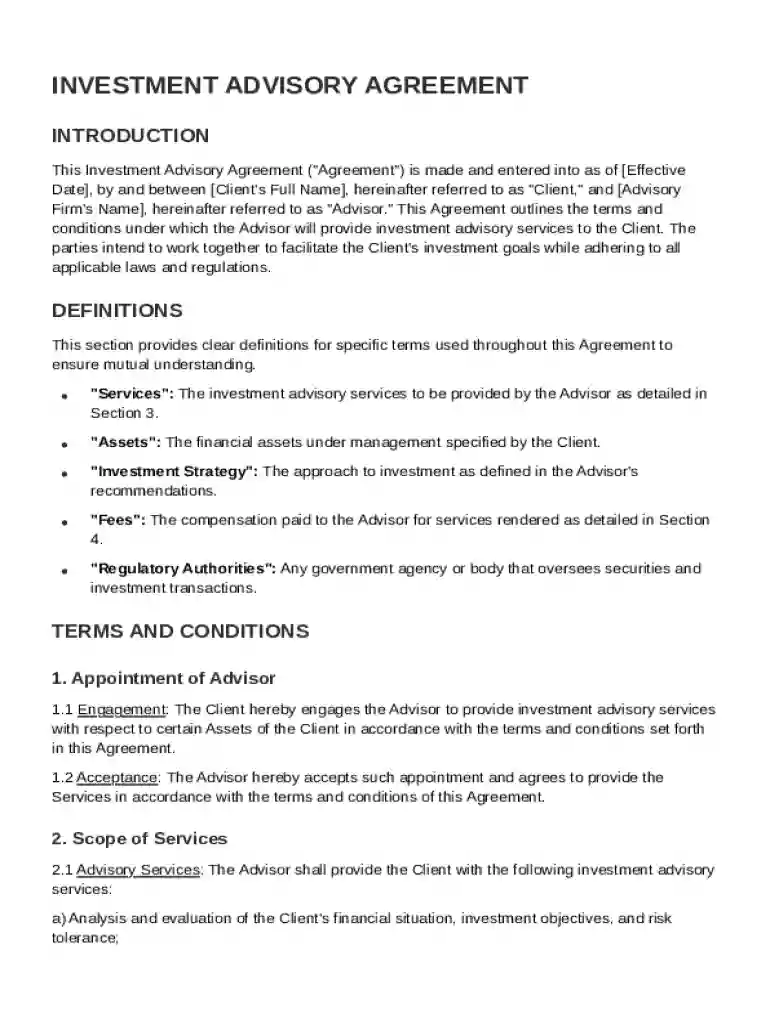
The Investment Advisory Agreement Template is a critical document that defines the relationship between an investment advisor and their client. It sets out the specific terms and conditions under which advisory services are rendered. This agreement includes essential terms such as the advisor's responsibilities, the client's investment objectives, and the scope of the services provided. By outlining these terms, the document ensures that both parties clearly understand their roles and obligations, which aids in maintaining a professional and compliant relationship.
Key Components
- Advisor Responsibilities: Enumerates the duties of the advisor, including research, investment plan development, and regular performance reviews.
- Client Objectives: Details the client’s specific investment goals, which guide the advisor's recommendations.
- Scope of Services: Clearly defines what services the advisor will provide, such as portfolio management or financial planning.
Key Elements of the Investment Advisory Agreement Template
The Investment Advisory Agreement Template is composed of several key elements that collectively ensure comprehensive service delivery and legal compliance. These elements help mitigate risks and outline necessary steps for effective investment management.
Essential Clauses
- Fee Structure: Describes how the advisor will be compensated, whether through a flat fee, percentage of assets, or a combination thereof. This ensures transparency and prevents future disputes.
- Termination Rights: Outlines the conditions under which either party can terminate the agreement, ensuring flexibility and protection for both the advisor and the client.
- Confidentiality Obligations: Ensures that both parties protect sensitive information, aligning with legal and ethical standards of confidentiality.
Important Terms Related to the Investment Advisory Agreement Template
Understanding the terminology in an Investment Advisory Agreement Template is crucial for both clients and advisors. These terms often hold specific legal and financial implications and are standard across the advisory industry.
Frequently Used Terms
- Fiduciary Duty: The obligation of the advisor to act in the best interest of the client, prioritizing their financial goals.
- Portfolio Management: Involves managing a client's investments to maximize returns according to their risk tolerance and financial objectives.
- Discretionary Authority: Allows the advisor to make investment decisions without prior client approval, necessitating clear guidelines within the agreement.
Legal Use of the Investment Advisory Agreement Template
As a legally binding document, the Investment Advisory Agreement Template must comply with relevant federal and state laws. This ensures that the agreement is enforceable and protects both parties from legal disputes.
Compliance Considerations
- Regulatory Requirements: Advisors must comply with laws such as the Investment Advisers Act of 1940, which governs the practices of investment advisors in the United States.
- State-Specific Laws: Different states may have additional requirements or regulations affecting advisory agreements; advisors should consult local legal resources to ensure compliance.
- Amendments and Audits: Regular reviews and updates of the agreement ensure ongoing compliance with evolving legal standards and client needs.
Steps to Complete the Investment Advisory Agreement Template
Completing the Investment Advisory Agreement Template involves several steps that confirm all necessary details are included and both parties have a mutual understanding of the terms.
Process Overview
- Initial Consultation: Meet with the client to understand their financial goals and investment preferences.
- Draft Agreement: Outline the scope of services, fees, and specific terms tailored to the client's needs.
- Review and Revise: Allow the client to review the draft agreement and suggest revisions for accuracy and clarity.
- Finalize and Execute: Both parties sign the agreement to formalize their understanding and commitments.
Who Typically Uses the Investment Advisory Agreement Template
The Investment Advisory Agreement Template is used by a diverse range of client types, each with unique financial needs and goals. Understanding who typically engages with this template can help tailor its provisions more effectively.

Common Users
- Individual Investors: Utilize advisory agreements for personalized portfolio management and investment strategy development.
- Corporate Clients: Engage advisors for managing corporate funds or retirement plans and ensuring compliance with financial regulations.
- Institutional Clients: Require comprehensive advisory services for substantial investment portfolios or endowments.
State-Specific Rules for the Investment Advisory Agreement Template
Investment Advisory Agreements may need adjustments to comply with specific state laws. Advisors must be aware of these distinctions to draft agreements that meet all legal requirements.
Variations Across States
- Licensing Requirements: Some states require specific advisor licenses or registrations for legal agreements.
- Fee Structures: State regulations may mandate different fee disclosure practices, impacting how advisors structure their agreements.
- Consumer Protection Laws: States may implement additional consumer protection laws affecting advisory services, necessitating specific clauses in the agreement.
Examples of Using the Investment Advisory Agreement Template
Real-world scenarios help illustrate how the Investment Advisory Agreement Template is applied in practice, showcasing the versatility and necessity of this document.
Practical Applications
- Small Business Owner: Engages an advisor to grow a personal investment with explicit terms regarding risk tolerance and expected returns.
- Retiree: Utilizes an advisory agreement to manage retirement funds, with a focus on stability and fixed-income investments.
- Tech Startup: Hires an advisor to allocate excess cash reserves, balancing aggressive growth with capital preservation aims.