






Understanding the Amended and Restated Agreement Template
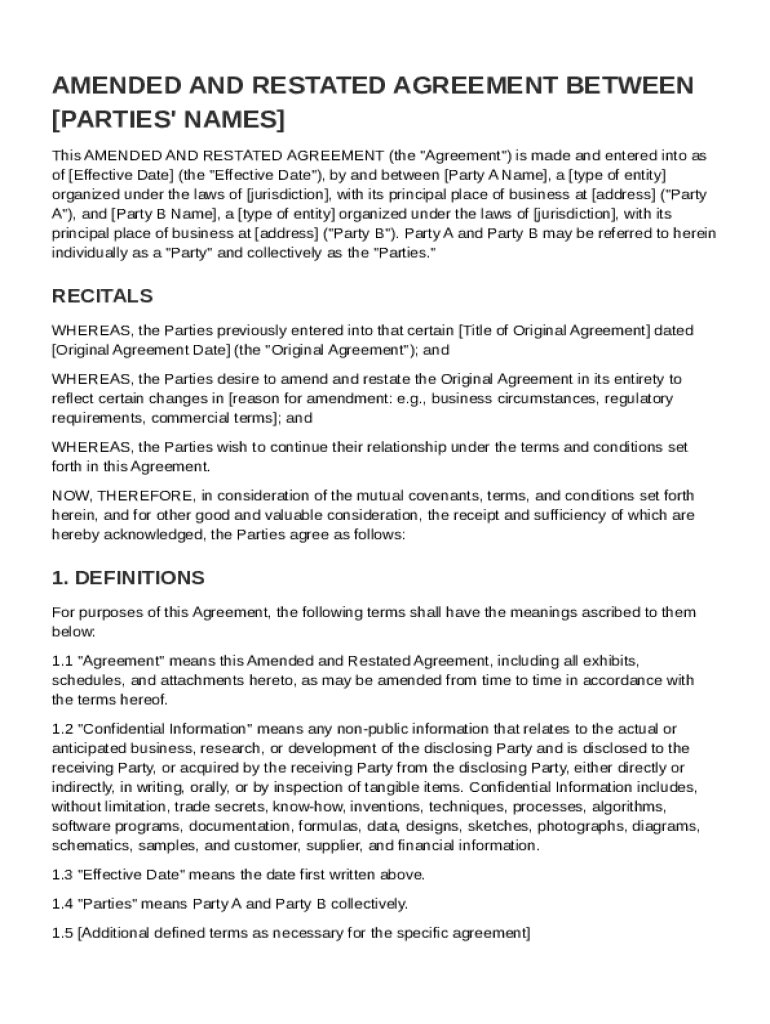
An "Amended and Restated Agreement Template" is a legal document utilized to update and replace an existing agreement between two parties, typically due to changes in business circumstances or regulatory requirements. This template acts as a comprehensive model to redefine terms, responsibilities, and conditions, allowing the involved parties to adapt to new legal or organizational contexts while ensuring clarity and mutual understanding.
How to Use the Amended and Restated Agreement Template
- Review Existing Agreement: Begin by carefully examining the current agreement to identify sections requiring updates or changes.
- Identify Amendments: Highlight specific terms and clauses that need modification based on the new circumstances or agreements between the parties.
- Customize Template: Utilize the template to incorporate the identified amendments, ensuring all sections reflect the current intentions and understandings.
- Legal Review: It is crucial to have the amended agreement reviewed by a legal professional to ensure compliance with applicable laws and regulations.
- Finalization and Signing: Once all parties agree on the modifications, proceed with the signing process. The agreement becomes effective upon final execution by the involved parties.
Key Elements of the Amended and Restated Agreement Template
- Definitions: Detailed specifications of terms used throughout the agreement to ensure consistent understanding.
- Amendments: Specific changes to existing clauses or the introduction of new clauses reflecting the updated terms.
- Representations and Warranties: Assurance statements from both parties about factual information relevant to the agreement.
- Covenants: Commitments by each party to act or refrain from certain actions during the agreement's term.
- Term and Termination: Length of the agreement and conditions under which it may be terminated.
- Governing Law: Jurisdiction under which the agreement will be interpreted and disputes will be resolved.
- Miscellaneous Provisions: Additional terms addressing various aspects like notices, assignments, and force majeure.
Legal Use of the Amended and Restated Agreement Template
The Amended and Restated Agreement Template serves as a legally binding tool that allows parties to modify existing contractual relationships. Its use is prevalent in corporate, partnership, and commercial agreements where initial terms require adaptation due to evolving operational or legal needs. Adherence to laws, such as those governing contract modifications within the applicable jurisdiction, is crucial to ensure enforceability.
Steps to Complete the Amended and Restated Agreement Template
- Initiate with Background Information: Start by filling in the basic information about the parties involved and the purpose of the amendment.
- Detail Amendments: Specify the sections to be amended, providing clear explanations and rationale for changes.
- Incorporate New Terms: Introduce any new clauses that are pivotal to the restructured agreement.
- Review for Errors and Omissions: Carefully examine the completed document for accuracy and completeness.
- Obtain Signatures: Once the document is finalized, all parties should sign to acknowledge their acceptance.
Important Terms Related to Amended and Restated Agreement Template
- Amendment: A formal change or addition proposed or made to a document.
- Restatement: The rewriting of an agreement in order to reflect modifications in its entirety.
- Counterparty: The other party involved in the agreement.
- Material Changes: Modifications that substantively alter the rights or obligations of the parties.
Who Typically Uses the Amended and Restated Agreement Template
This type of agreement is commonly used by businesses, legal departments, and professionals involved in contractual management. Corporations undergoing mergers, acquisitions, or restructuring frequently employ these templates to ensure alignment with new strategic directions or regulatory frameworks. Additionally, partnerships and joint ventures may use them to adapt to new contributions or stakeholder dynamics.


Variations or Alternatives to the Amended and Restated Agreement Template
While each organization's needs dictate specific adjustments, variations generally include simple amendments for less complex agreements or entirely new contracts when the relationship has fundamentally changed. Alternatives may involve using separate standalone addendums, if only parts of the original agreement need modification, without integrating changes into a single restated document.