






Definition and Purpose of the Partner Contract Template
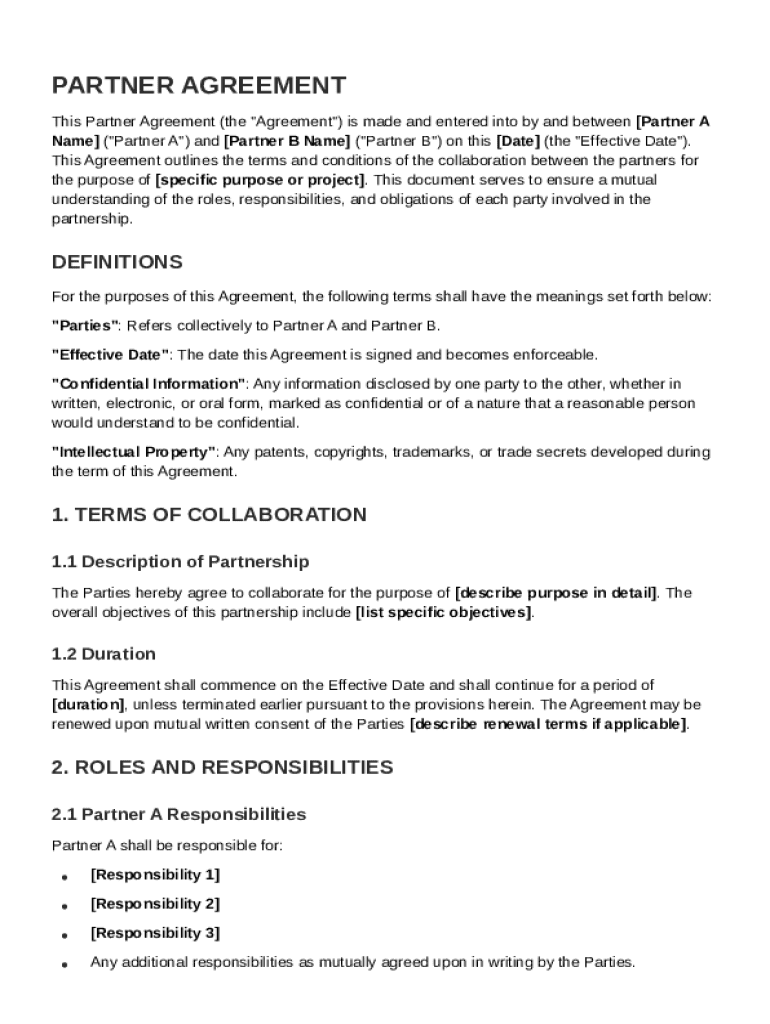
A Partner Contract Template serves as a foundational document outlining the terms and conditions for collaboration between two or more entities, often referred to as partners. This template helps clearly define the roles, responsibilities, and expectations of each party involved, providing a structured format to capture essential information. By using a Partner Contract Template, businesses can ensure that there is mutual understanding and agreement on crucial aspects such as financial arrangements, confidentiality obligations, and intellectual property rights. Having a well-drafted contract is vital to prevent misunderstandings or disputes and establish a harmonious working relationship.
Key Elements of the Partner Contract Template
A robust Partner Contract Template typically includes several critical components to safeguard the interests of all parties involved:
- Roles and Responsibilities: Clearly defined duties and functions of Partner A and Partner B to avoid overlap and confusion.
- Financial Arrangements: Details on profit sharing, investment contributions, and financial obligations.
- Confidentiality Clauses: Agreement on the protection and sharing of sensitive information.
- Intellectual Property Rights: Specified ownership and rights to creations or inventions arising from the partnership.
- Termination Conditions: Terms governing the exit of a partner or dissolution of the partnership.
- Dispute Resolution: Procedures for resolving disagreements, including arbitration or mediation methods.
- Governing Law: The jurisdiction under which the contract is enforced to ensure legal compliance.
Each element is crucial for defining the scope and boundaries of the partnership, ensuring all parties are on the same page.
How to Use the Partner Contract Template
Utilizing a Partner Contract Template involves several methodical steps to ensure it fits the specific needs of the partnership:
- Customization: Tailor the template to include specific partnership details and modify any standard clauses that do not apply.
- Consultation: Engage with legal professionals to review and suggest necessary adjustments to align with business and legal requirements.
- Review and Approval: Ensure both partners review the contract thoroughly and agree to the terms.
- Signatures and Execution: Once satisfied with the details, each party should sign the document, signifying consent and readiness to adhere to the terms.
By following these steps, partners can create a legally sound and mutually beneficial agreement.
Who Typically Uses the Partner Contract Template
Various business entities and individuals engage in partnerships requiring such templates. Typical users include:
- Small Businesses: Looking to expand capabilities or market reach by collaborating with other firms.
- Entrepreneurs: Establishing joint ventures with partners to share risks and rewards.
- Corporations: Forming strategic alliances with other companies for mutual benefits.
- Non-Profits: Partnering with other organizations for projects or initiatives with shared goals.
- Freelancers and Consultants: Engaging in co-working agreements or collaborations with other professionals.
All these users rely on the template to create clear and structured agreements aligned with specific partnership objectives.


Legal Use of the Partner Contract Template
Adhering to legal standards is crucial when preparing any contract, including partner agreements. In the United States, the legal enforceability of such agreements often depends on several factors:
- Compliance with State Laws: Ensuring the contract meets the legal requirements of the state where the partnership operates.
- Clear Language: Using precise and unambiguous language to minimize misinterpretations.
- Consideration and Offer: Including details of mutual consideration, often a requirement for enforceability.
- Documentation and Signatures: Keeping a signed and documented record of the contract for legal validity.
A legally valid template can mitigate risks and protect against potential litigation by addressing these legal requirements.
State-Specific Rules for the Partner Contract Template
Different states in the U.S. have varied regulations that may affect partnership agreements:
- Registration Requirements: Some states require partnerships to register for operational legitimacy.
- Naming Conventions: State-specific guidelines on naming conventions for partnerships.
- Tax Obligations: Varied tax implications and filing requirements depending on the state.
- Duration and Renewal: State laws may influence the duration clauses and renewal terms for partnerships.
Understanding these differences is crucial for ensuring that the Partner Contract Template complies with state-specific mandates.
Examples of Using the Partner Contract Template
Real-world scenarios highlight the utility and versatility of the Partner Contract Template:
- Tech Startups: Two tech companies collaborating on a new software development project could use the template to outline funding responsibilities and profit-sharing structures.
- Art Collectives: Artists pooling resources for a joint exhibition might employ the template to define contribution levels and revenue distribution from sales.
- Product Development: Manufacturers partnering with designers could rely on the template for defining roles and royalties regarding product innovation.
Each example illustrates the template's ability to cater to diverse collaboration needs across various industries.
Digital vs. Paper Version
In the modern digital age, the choice between a digital or paper version of a Partner Contract Template can impact workflow:
-
Digital Version:
- Convenience: Easily shareable and storable across cloud platforms.
- Security: Implement electronic signatures and encryption for added protection.
- Accessibility: Enables remote viewing and editing by all parties involved.
-
Paper Version:
- Tangibility: Provides a physical, signed copy for records.
- Formal Presentation: Preferred in some traditional business settings or legal proceedings.
Choosing the appropriate format depends on the specific needs and preferences of the partnership.