






Understanding the Zero Hours Contract Template
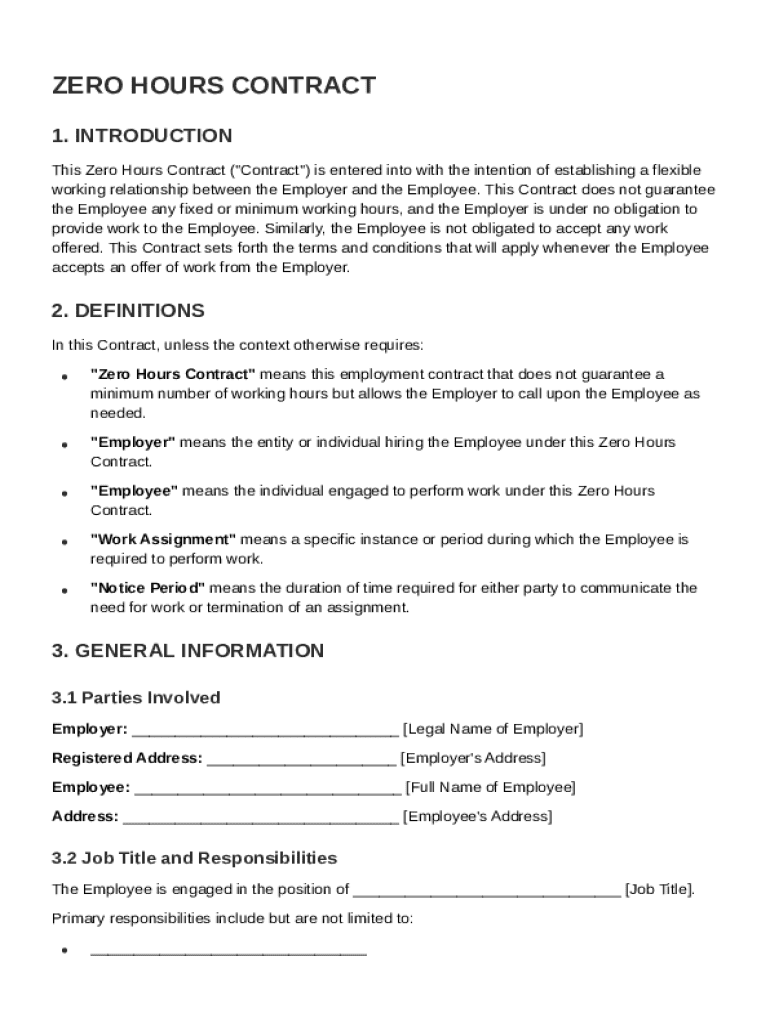
A Zero Hours Contract Template outlines the flexible working arrangement between an employer and an employee. This form of contract allows employers to hire staff with no guaranteed minimum working hours. Employees, on their part, are not obligated to accept any work that is offered. This template is versatile as it accommodates fluctuating workloads. The core elements of this type of contract include definitions, job responsibilities, payment terms, the rights and responsibilities of both parties, termination procedures, confidentiality obligations, dispute resolution methods, and governing law. The contract emphasizes flexibility while ensuring compliance with statutory rights.
How to Use the Zero Hours Contract Template
To effectively use the Zero Hours Contract Template, familiarize yourself with its components and ensure they apply to your specific situation. It serves as a guide for drafting legally compliant and fair contracts between employers and employees. The template should be reviewed and modified to align with the organizational requirements and comply with local employment laws. Key aspects such as job descriptions and expectations should be clearly defined. Employers and employees should consult legal counsel if uncertain about any clauses to ensure clarity and mutual understanding.
Steps to Complete the Zero Hours Contract Template
- Identify the Parties Involved: Clearly state the names and contact information of both the employer and the employee.
- Define Job Responsibilities: Outline the expected duties and responsibilities of the employee under this contract.
- Specify Payment Terms: Detail how and when the employee will be compensated for their work.
- Include Rights and Responsibilities: Make sure both parties understand their rights and obligations under the contract.
- Establish Termination Procedures: Define the terms under which either party can terminate the contract.
- Address Confidentiality Obligations: Ensure any sensitive information handled by the employee is protected.
- Outline Dispute Resolution Methods: Provide a clear process for resolving any conflicts that may arise.
- Determine Governing Law: State which jurisdiction’s laws will govern the terms of the contract.
Each step requires careful attention to detail to ensure the contract is comprehensive and legally sound.
Key Elements of the Zero Hours Contract Template
- Flexibility: Allows for adjustments in work hours based on organizational needs.
- Mutual Consent: Both parties agree to the terms voluntarily.
- Detailed Job Descriptions: Clarifies expectations and duties.
- Transparent Payment Terms: Ensures understanding of wages and payment schedules.
- Confidentiality Clauses: Protects sensitive information.
- Termination and Dispute Resolution: Provides clear procedures for ending the contract and resolving issues.
These elements are crucial for establishing a functional and beneficial employment relationship.
Legal Use of the Zero Hours Contract Template
The Zero Hours Contract Template is designed to be legally compliant, subject to local and federal employment regulations. It is crucial to ensure that the contract adheres to laws such as the Fair Labor Standards Act (FLSA) regarding payment and working conditions. Employers must be aware of any state-specific employment laws that may influence contract terms. Legal advice should be sought to modify the template to comply with jurisdictional laws, protecting both parties from potential legal disputes.
Important Terms Related to Zero Hours Contract
- Employer: The organization or individual offering employment under this contract.
- Employee: The individual providing labor under the terms of this contract.
- Minimum Working Hours: The minimum amount of work hours that are guaranteed, typically none in a zero hours contract.
- Statutory Rights: Legal rights afforded to employees under this contract.
- Governing Law: The legal framework under which the contract is governed.
Understanding these terms is fundamental to navigating and understanding zero hours contracts effectively.
State-Specific Rules for Zero Hours Contracts
Employment laws can vary significantly from state to state. For example, some states may have specific rules regarding minimum wage, maximum working hours, and paid leave that affect zero hours contracts. Employers should ensure that their contracts comply with the relevant state employment laws. Researching state labor departments or consulting with a legal professional specializing in employment law can provide insights into state-specific requirements.
Examples of Using the Zero Hours Contract Template
Zero hours contracts can be particularly beneficial in industries with fluctuating demand, such as hospitality or retail. For instance, a restaurant might employ additional staff on a zero hours basis to handle peak hours without committing to regular salaries. Another example is hiring warehouse workers during a busy holiday shipping season, allowing businesses to scale their workforce up or down in response to immediate demands.
These examples illustrate how zero hours contracts provide flexibility in staffing, benefiting both employers seeking operational efficiency and employees looking for flexible work arrangements.