






Definition & Meaning
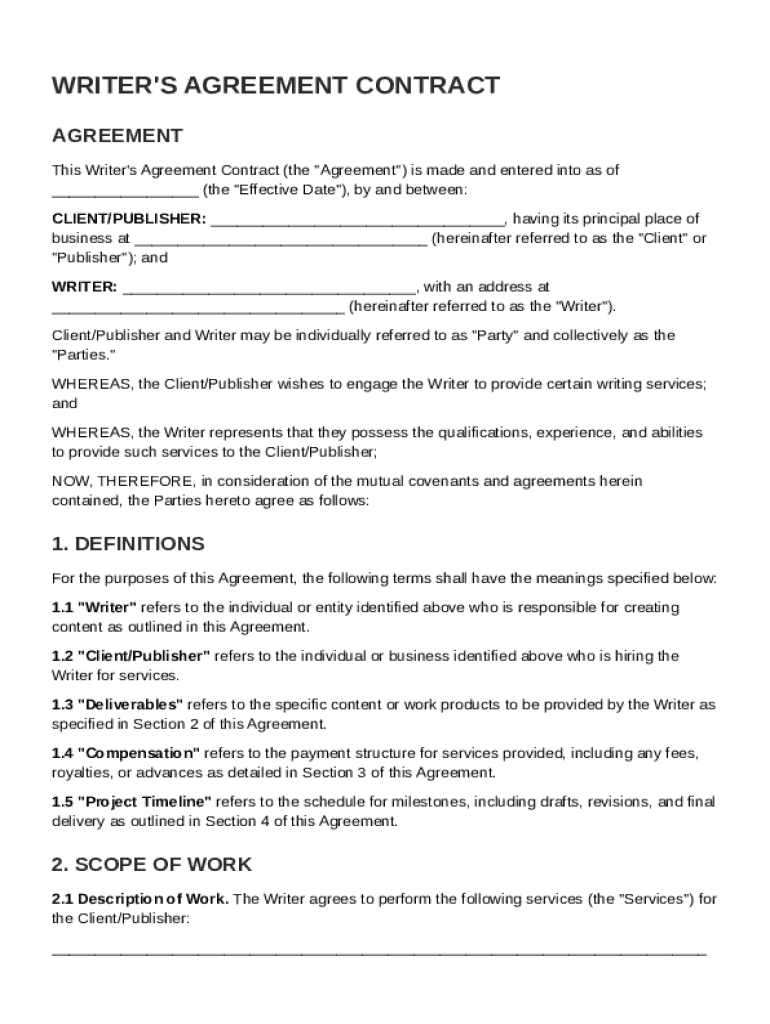
A Writer's Contract Template is a formal document outlining the terms and conditions between a Client or Publisher and a Writer. This template serves to define the scope of work, payment terms, and responsibilities, ensuring both parties have a mutual understanding of the project. It includes detailed sections on rights and ownership, confidentiality obligations, termination conditions, and other relevant clauses, thereby establishing a legally binding agreement. The purpose of this template is to mitigate potential disputes and ensure a smooth collaboration.
Key Elements of the Writers Contract Template
The Writer's Contract Template consists of several crucial components, which include:
- Definitions: Clarifies the terminology used in the contract to avoid misunderstandings.
- Scope of Work: Details the specific tasks and outputs expected from the writer, including deadlines and submission guidelines.
- Payment Terms: Specifies the compensation structure, payment schedule, and any advance payment details. It also covers any penalties for late payment.
- Rights and Ownership: Assigns the ownership of the work to the respective parties once delivered, often including intellectual property rights.
- Confidentiality Obligations: Details the information that must remain confidential and the repercussions of breaching this clause.
- Termination Conditions: Outlines the circumstances under which the contract can be terminated and any associated financial implications.
Steps to Complete the Writers Contract Template
Completing the Writer's Contract Template involves the following steps:
- Gather Preliminary Information: Collect all necessary details about the writing project, including the scope, timelines, and payment terms.
- Draft the Contract Sections: Complete each section of the template with precise and clear information, ensuring alignment with legal standards.
- Review and Revise: Both the client and the writer should review the draft contract, suggesting changes or clarifications if needed.
- Seek Legal Advice: It's beneficial to have a legal professional review the contract to ensure compliance with applicable laws.
- Incorporate Revisions: Make any necessary revisions based on feedback received from the review process.
- Final Approval and Signatures: Once satisfied, both parties should sign the document to make it legally binding.
Why Should You Use a Writers Contract Template
Using a Writer's Contract Template provides several benefits:
- Clarity: Clearly outlines the expectations and responsibilities of both parties involved in the project.
- Protection: Offers legal protection by defining rights, payments, and ownership of the deliverables.
- Efficiency: Saves time and reduces the possibility of disputes by preemptively addressing potential misunderstandings.
- Professionalism: Demonstrates professionalism and a commitment to transparent and fair business practices.
- Preservation of Relationships: Helps maintain a cordial working relationship by setting clear boundaries and expectations upfront.
Important Terms Related to the Writers Contract Template
Understanding specific terms related to Writer's Contract Templates is essential:
- Intellectual Property: Refers to the ownership rights of any original work created under the agreement.
- Indemnification: A clause that protects one party from legal responsibility for the actions of another.
- Force Majeure: Addresses unforeseeable circumstances preventing one party from fulfilling the contract.
- Non-Disclosure Agreement (NDA): An agreement to keep certain information confidential.
- Work for Hire: Indicates that the content created will be owned by the client, not the writer.
Legal Use of the Writers Contract Template
The Writer's Contract Template's legal enforceability hinges on several factors:
- Jurisdiction: The governing law under which the contract is interpreted needs to be specified.
- Compliance with Laws: The contract must comply with federal and state laws, including those concerning freelance and contract work.
- Signatures: Both parties must sign the document for it to be legally binding.
- Modification Clauses: Outlines how changes to the contract should be made and agreed upon by both parties.
Examples of Using the Writers Contract Template
Practical usage scenarios of a Writer's Contract Template include:
- Freelance Projects: A freelance writer engaged by a magazine to produce articles over a defined period.
- Ghostwriting: An author hires a writer to complete a book, with rights assigned to the author.
- Corporate Content: A company contracts a writer for content creation such as blogs, white papers, and reports.
- Literary Agent Agreements: Used when an author engages a literary agent to handle the sales of their work to publishers.
State-Specific Rules for the Writers Contract Template
While the Writer's Contract Template outlines general terms, state-specific legislations can affect certain clauses:
- Employment Classification: States may differ in their definitions of an independent contractor versus employee status.
- Payment Terms: Some states enforce stricter deadlines for payments and impose penalties for late payments.
- Intellectual Property: Variations in state laws can influence the details of the rights and ownership clauses.
Keeping abreast of state-specific regulations is crucial to crafting and adhering to a legally sound contract in compliance with local laws.