
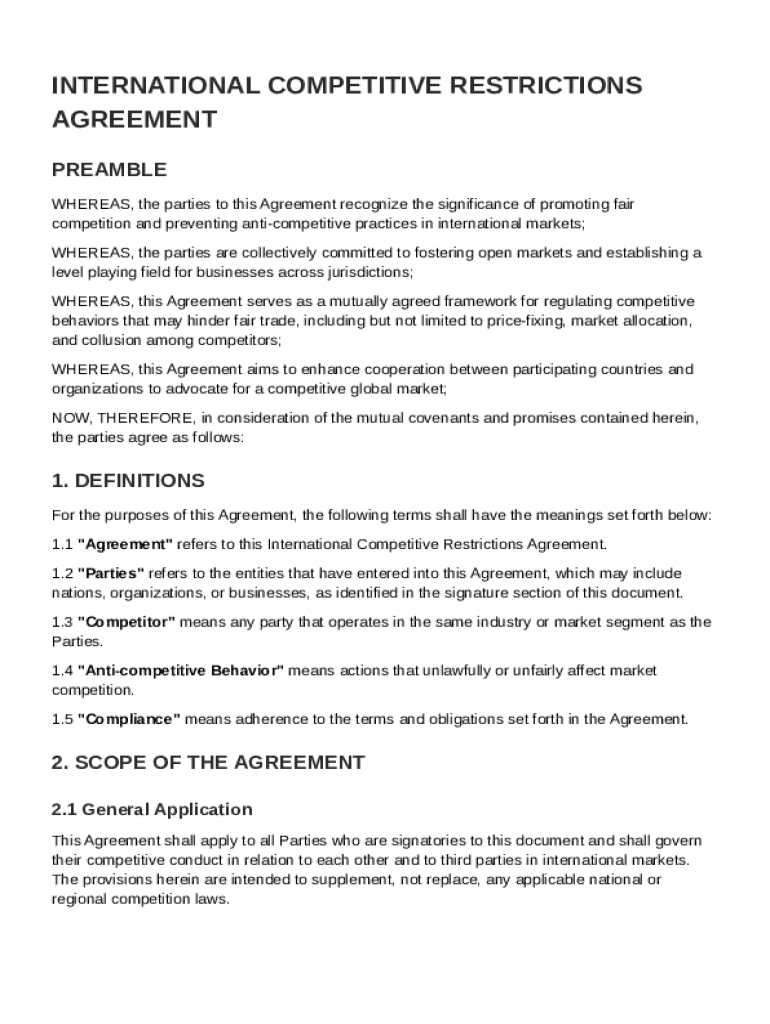







Definition & Meaning
The International Competitive Restrictions Agreement Template provides a structured framework to foster fair competition and deter anti-competitive practices across participating nations. This agreement outlines legal obligations for its signatories, including restrictions on price fixing, market allocation, and bid rigging. Essential elements include enforcement mechanisms and dispute resolution processes, ensuring compliance and cooperation among countries. The goal is to maintain a competitive global market by encouraging transparency and ethical business practices. Confidentiality requirements protect sensitive information, and general provisions establish the foundational legal context for signatories, providing a comprehensive understanding of their commitments under this international framework.
How to Use the International Competitive Restrictions Agreement Template
To effectively use the International Competitive Restrictions Agreement Template, a sequential understanding of steps is vital. Begin by thoroughly reviewing the template to comprehend all stipulations regarding fair competition. Identify specific sections relevant to your organization's operations. Modify sections to align with your entity's particular needs while ensuring compliance with international regulations. Collaboration with legal experts to customize provisions is advisable. Once tailored, the document should be distributed to all relevant stakeholders. Regular updates might be necessary to ensure ongoing adherence to changes in international competition law and market dynamics.
Steps to Complete the International Competitive Restrictions Agreement Template
- Initial Review: Start by carefully reading each section to understand the scope and requirements outlined in the template.
- Customization: Modify specific sections to align with your organization's strategies and operational practices while maintaining adherence to international laws.
- Legal Consultation: Engage legal professionals to review the customized agreement for compliance and protection against potential liabilities.
- Stakeholder Engagement: Share the proposed agreement with organizational leaders and stakeholders for input and concurrence.
- Finalize Details: Incorporate feedback and finalize the document, ensuring all parties agree with the terms and conditions.
- Documentation: Securely store the signed agreement and document any amendments or conditional terms for future reference.
- Regular Review: Schedule regular reviews to ensure ongoing relevance and adherence to updated international competition regulations.
Key Elements of the International Competitive Restrictions Agreement Template
- Definitions: Establish clear terminology for all parties to eliminate ambiguity.
- Obligations: Outline specific legal responsibilities related to competitive practices.
- Enforcement Mechanisms: Describe methods for monitoring and enforcing compliance.
- Dispute Resolution: Detail procedures for resolving conflicts among parties.
- Confidentiality: Protect proprietary and sensitive information shared between parties.
- General Provisions: Include foundational legal contexts, applicable laws, and jurisdiction.
Important Terms Related to International Competitive Restrictions Agreement Template
- Price Fixing: Prohibited practice of setting prices amongst competitors to maintain inflated prices.
- Market Allocation: Dividing markets among competitors to limit competition.
- Bid Rigging: Coordinating bids between parties to ensure predetermined outcomes.
- Enforcement Mechanisms: Strategies and policies in place to assure compliance.
- Dispute Resolution: Methods used to resolve disagreements, often involving arbitration or mediation.
Legal Use of the International Competitive Restrictions Agreement Template
Using the International Competitive Restrictions Agreement Template legally involves understanding both international competition laws and specific jurisdictional requirements. The agreement serves as a legal document ensuring that all member parties commit to fair trading practices, thereby avoiding unlawful activities that may lead to legal sanctions. Organizations must regularly audit their practices against the template to prevent legal repercussions and foster compliant business environments that promote fair competition.
Business Types That Benefit Most from International Competitive Restrictions Agreement Template
Businesses engaged in international trade, such as multinational corporations and companies involved in export-import operations, benefit significantly from this agreement. It is also essential for businesses in competitive sectors like technology, pharmaceuticals, and energy, where anti-competitive practices are more likely to occur. The agreement helps these businesses to operate within legal frameworks, enabling them to maintain fair competition standards and gain consumer trust globally.
Examples of Using the International Competitive Restrictions Agreement Template
- Multinational Corporations: Engage in cross-border trade while avoiding practices like price fixing through adaptive compliance with the agreement.
- International Joint Ventures: Establish clear guidelines for partnership operations in diverse markets, ensuring equitable competition.
- Technology Firms: Utilize the agreement to prevent market allocation practices, ensuring innovation and competition thrive.
- Pharmaceutical Companies: Implement directives within the agreement to avoid bid rigging during government tenders, ensuring transparent operations.
State-Specific Rules for the International Competitive Restrictions Agreement Template
While the International Competitive Restrictions Agreement Template sets a global framework, individual states within countries such as the U.S. may impose additional regulations. These might involve stricter enforcement protocols or variable definitions of anti-competitive practices. Organizations using the template must ensure their practices align with both international guidelines and state-specific regulations to prevent local legal issues and maintain consistent operational compliance.




