






Definition & Meaning
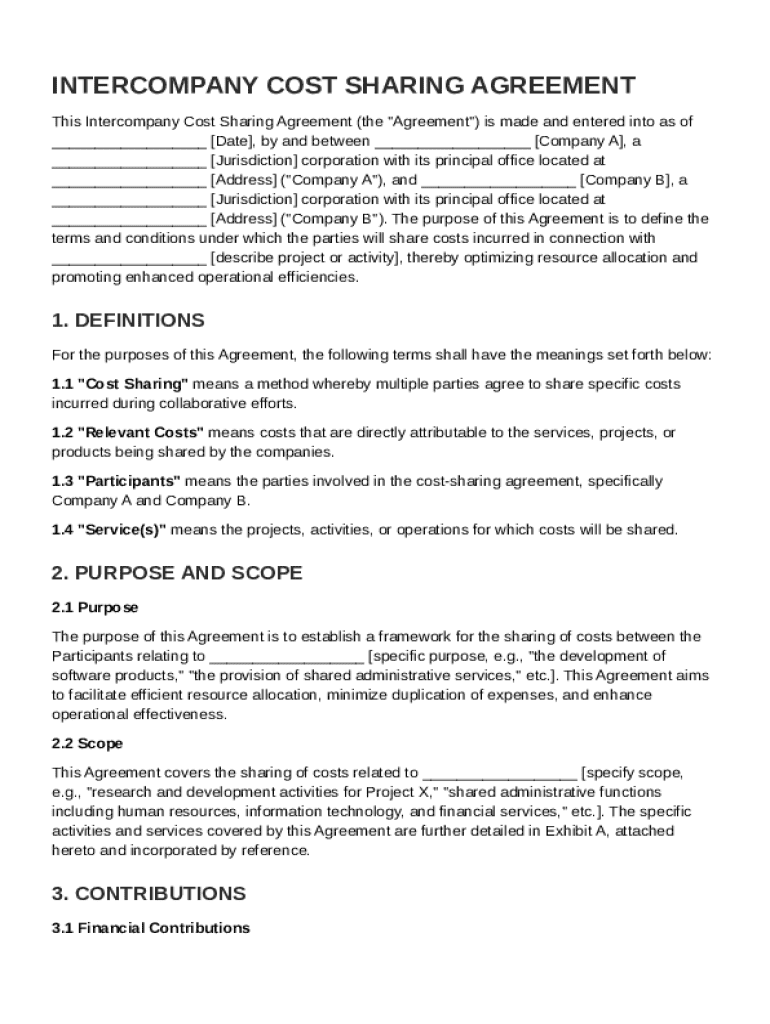
An Intercompany Cost Sharing Agreement Template is a document used to define the terms and conditions under which two or more affiliated companies share costs related to a specific project or activity. This agreement establishes a framework for the allocation of expenses between parties, specifying financial contributions, responsibilities, and the scope of shared activities. By detailing the operational and financial arrangement, it ensures clarity and understanding among participating entities, thus promoting efficient resource allocation and operational success.
Key Elements of the Intercompany Cost Sharing Agreement Template
An effective Intercompany Cost Sharing Agreement Template comprises several essential components designed to facilitate smooth collaboration between parties:
- Parties Involved: Clearly identify the companies partaking in the agreement.
- Purpose and Scope: Define the objectives and extent of cost-sharing activities.
- Cost Allocation Methods: Outline how costs will be distributed among parties.
- Terms: Specify payment terms, frequency, and method of financial contributions.
- Responsibilities: Detail the roles and obligations of each participating entity.
- Duration: Indicate the length of the agreement and conditions for renewal.
- Termination Clauses: Establish scenarios and procedures for ending the agreement.
- Dispute Resolution: Describe mechanisms for resolving conflicts between parties.
- Confidentiality Obligations: Protect sensitive information shared within the agreement.
How to Use the Intercompany Cost Sharing Agreement Template
Utilizing an Intercompany Cost Sharing Agreement Template involves several crucial steps to ensure all parties understand their roles and responsibilities:
- Review the Template: Familiarize yourself with the template’s structure and content.
- Customize for Specific Needs: Modify sections as necessary to reflect the unique details of your agreement, including parties involved, coverage scope, and cost-sharing specifics.
- Consult with Stakeholders: Discuss the agreement draft with all parties to confirm mutual understanding and agreement.
- Legal Review: Seek advice from legal experts to ensure compliance with applicable laws.
- Finalize the Agreement: Make necessary adjustments based on feedback from stakeholders and legal advisors.
- Execute the Agreement: Have all authorized representatives from involved companies sign the document.
- Monitor and Update: Regularly review the agreement’s performance and make amendments as necessary.
Who Typically Uses the Intercompany Cost Sharing Agreement Template
The template is primarily used by multinational corporations, parent companies, and subsidiaries engaged in collaborative projects or shared functions. Entities such as:
- Large Corporations: Utilizing shared services and operational efficiencies for functions like R&D, marketing, or administrative support.
- Subsidiaries and Affiliates: Allocating costs across different jurisdictions for strategic projects.
- Joint Ventures: Ensure equitable cost sharing between partners undertaking a combined project.
Such agreements help in maintaining clear operational understandings and financial transparency between partnering entities.

Important Terms Related to the Intercompany Cost Sharing Agreement Template
To fully grasp an Intercompany Cost Sharing Agreement, it’s vital to understand key terminology commonly used in these documents:
- Cost Allocation: The method by which expenses are divided among participating entities.
- Contribution: The financial or non-financial resources provided by each party.
- Joint Activity: Any project or function undertaken collectively by the entities involved.
- Shared Services: Functions shared across entities, such as information technology or human resources.
- Transfer Pricing: The price at which divisions of a company transact with each other internationally.
Understanding these terms aids in creating a precise agreement that reflects the needs and constraints of all involved parties.
Steps to Complete the Intercompany Cost Sharing Agreement Template
To successfully finalize the Intercompany Cost Sharing Agreement Template, follow this step-by-step process:
- Identify Parties: Clearly define and include details of all involved entities.
- Define Objectives: State the purpose and goals of the cost-sharing arrangement.
- Detail Cost Allocation: Include methods and formulas for dividing shared costs.
- Assign Responsibilities: Allocate roles specific to each party in the project.
- Outline Payment Terms: Specify timelines, methods, and conditions for payments.
- Include Termination and Dispute Resolution Clauses: Prepare for potential disagreements or changes in agreement status.
- Review and Approve: Ensure all parties agree before obtaining signatures from authorized personnel.
By following these steps, participants can ensure clarity, prevent misunderstandings, and build a foundation for successful collaboration.
Legal Use of the Intercompany Cost Sharing Agreement Template
The legal enforceability of an Intercompany Cost Sharing Agreement is vital for its effectiveness. Ensure the following for legal robustness:
- Compliance: Align the agreement with applicable laws and regulations.
- Jurisdiction: Define which legal jurisdiction's laws govern the agreement.
- Legal Consultation: Engage legal advisors early in the drafting process.
- Documentation: Keep an audit trail of negotiations and drafts for reference.
Legal considerations are central to upholding the agreement’s terms and mitigating risks associated with non-compliance or renegotiations.
Examples of Using the Intercompany Cost Sharing Agreement Template
An Intercompany Cost Sharing Agreement can be applied in various real-world scenarios:
- Global Marketing Campaign: When subsidiaries in different countries collaborate financially for a worldwide product launch.
- Research and Development: Cost-sharing among Company A and Company B for developing new technology that's beneficial to both.
- Shared IT Infrastructure: Allocation of expenses for a centralized IT service utilized by multiple branches of a multinational company.
These examples illustrate the template's versatility in managing shared financial responsibilities across diverse business activities and geographies.
Software Compatibility
While managing the Intercompany Cost Sharing Agreement process, ensuring compatibility with popular business and accounting software can enhance efficiency:
- Compatibility with ERP systems such as SAP or Oracle for cost tracking
- Integration with legal software for contract management
- Digital Storage and management compatibility with platforms like Google Workspace or DocHub
Utilizing compatible software eases the agreement’s administration, storage, modification, and retrieval processes, thereby streamlining workflows across departments.