
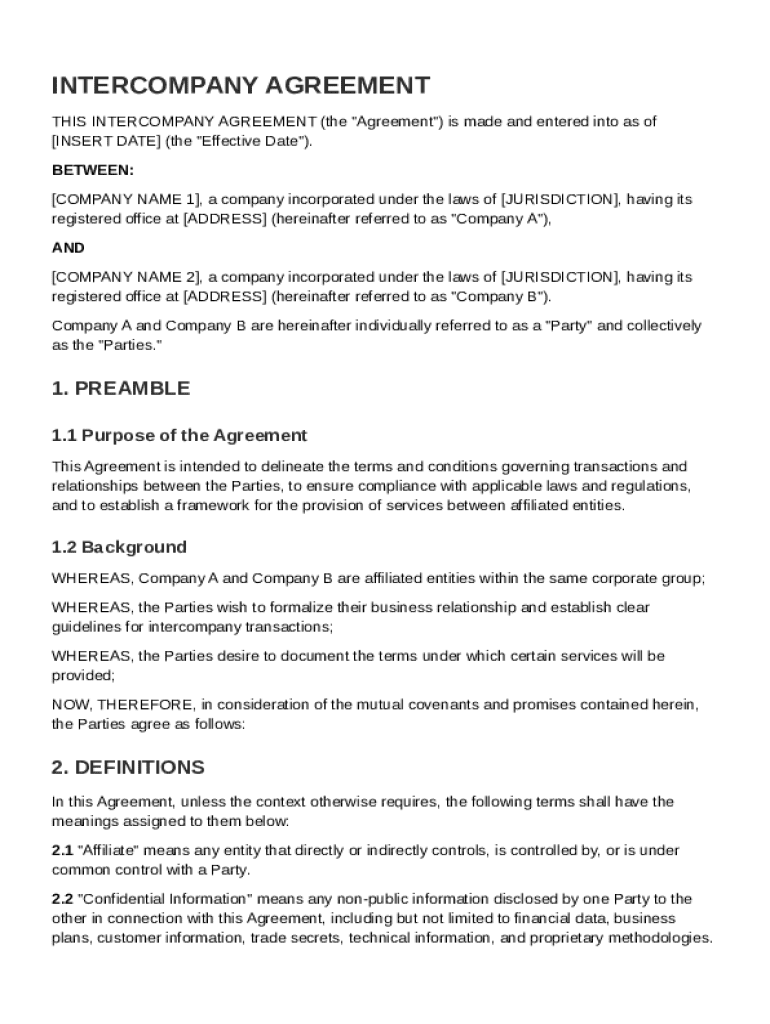







Definition and Meaning of an Intercompany Agreement Template
An Intercompany Agreement Template serves as the foundational document outlining the structure and rules governing the transactions and relationships between affiliated companies. Typically, this agreement involves two entities, such as subsidiaries or divisions within a larger corporation, often referred to as Company A and Company B. The template is designed to standardize the terms of engagement to ensure efficiency, compliance, and clarity. This agreement covers various aspects including the provision of services, pricing structures, payment terms, and confidentiality obligations. By laying down these parameters, the intercompany agreement helps in mitigating misunderstandings and establishing a clear operational framework that aligns with both corporate policies and regulatory standards.
Key Elements of the Intercompany Agreement Template
The intercompany agreement encompasses several critical components that collectively define the terms of cooperation between the parties involved. These elements include:
- Service Provision: Details the types of services or products that will be exchanged between the companies, including delivery timelines and service-level agreements.
- Pricing and Payments: Outlines the pricing models, including any discounts or adjustments, while specifying the payment terms such as currency, invoicing procedures, and due dates.
- Confidentiality: Ensures the protection of sensitive and proprietary information exchanged under the agreement, enforcing non-disclosure obligations on both parties.
- Compliance with Laws: Asserts that all activities under the agreement adhere to relevant local and international laws and regulations.
- Dispute Resolution: Specifies the methods for resolving any disagreements or disputes, which could include arbitration, mediation, or litigation.
How to Use the Intercompany Agreement Template
To effectively utilize the Intercompany Agreement Template, companies should follow a systematic approach that involves several steps:
- Customization: Tailor the template to fit the specific needs and conditions of the involved companies. This includes inserting company-specific details and modifying clauses to align with internal policies.
- Review and Approval: Ensure that all involved stakeholders, including legal and compliance teams, review the document to confirm that it adheres to corporate standards and regulatory requirements.
- Execution: Both entities should sign the agreement, either digitally or physically, to formalize the arrangement. It is crucial to have authorized representatives who have the power to bind the respective companies sign off on the document.
- Implementation: Once executed, both parties should implement the terms of the agreement into their operational procedures and ensure all staff members involved are informed and trained on their respective responsibilities and obligations.
Steps to Complete the Intercompany Agreement Template
Completing an Intercompany Agreement Template involves a detailed process that requires attention to legal, financial, and operational details:
- Gather Required Information: Collect all relevant data and details from both companies that will be incorporated into the agreement, such as company names, addresses, and the scope of activities.
- Define Terms and Conditions: Clearly outline the terms and conditions applicable to the services and transactions that will occur between the affiliated companies.
- Incorporate Legal Clauses: Include necessary legal provisions to protect both parties, addressing key areas such as liability, indemnification, and termination conditions.
- Finalize the Document: Review the entire document to ensure accuracy and completeness, then prepare the final version for signatures.
Legal Use of the Intercompany Agreement Template
The Intercompany Agreement is a legally binding document intended to standardize and regulate operations between affiliated enterprises. It carries legal weight, making compliance with its terms mandatory once signed. The legal use of this template includes:
- Formalizing Business Relationships: Establishing clear legal agreements between entities to facilitate seamless transactions.
- Regulatory Compliance: Ensuring that the terms set forth in the agreement comply with applicable laws, including those related to taxation and corporate governance.
- Risk Mitigation: Legally binding terms help mitigate risks associated with misunderstandings or non-compliance by any involved party.
State-Specific Rules for the Intercompany Agreement Template
While the core elements of an Intercompany Agreement remain consistent across locations, state-specific rules may impact certain aspects:
- Regulations: Certain states may have specific regulations concerning intercompany transactions, such as taxation requirements or reporting obligations.
- Dispute Resolution Locations: The agreement might need to specify a jurisdiction for dispute resolution that is compliant with state laws.
- Legal Provisions: Variations in state laws might necessitate additional legal clauses or modifications to existing ones to ensure enforceability.
Examples of Using the Intercompany Agreement Template
Here are practical examples of scenarios where an Intercompany Agreement Template is effectively utilized:
- Shared Services: When companies within a larger conglomerate share services such as IT, HR, or administration to achieve cost efficiencies.
- Product Distribution: When one subsidiary is tasked with the manufacturing of products, while another handles distribution under specified pricing terms.
- Cross-Border Operations: Handling transactions where subsidiaries in different countries engage in services or product exchanges, respecting international tax treaties and transfer pricing regulations.
Business Types that Benefit Most from the Intercompany Agreement Template
Various business structures can gain significant advantages from implementing an Intercompany Agreement Template:
- Large Corporations: Major enterprises with multiple subsidiaries or divisions benefit from standardized agreements that enhance operational efficiency.
- Multinational Companies: Firms operating across multiple jurisdictions can leverage these templates to coordinate and legally manage cross-border transactions.
- Holding Companies: Entities that own controlling shares in several businesses find these templates useful for maintaining operational cohesion among affiliates.




