







Definition and Purpose
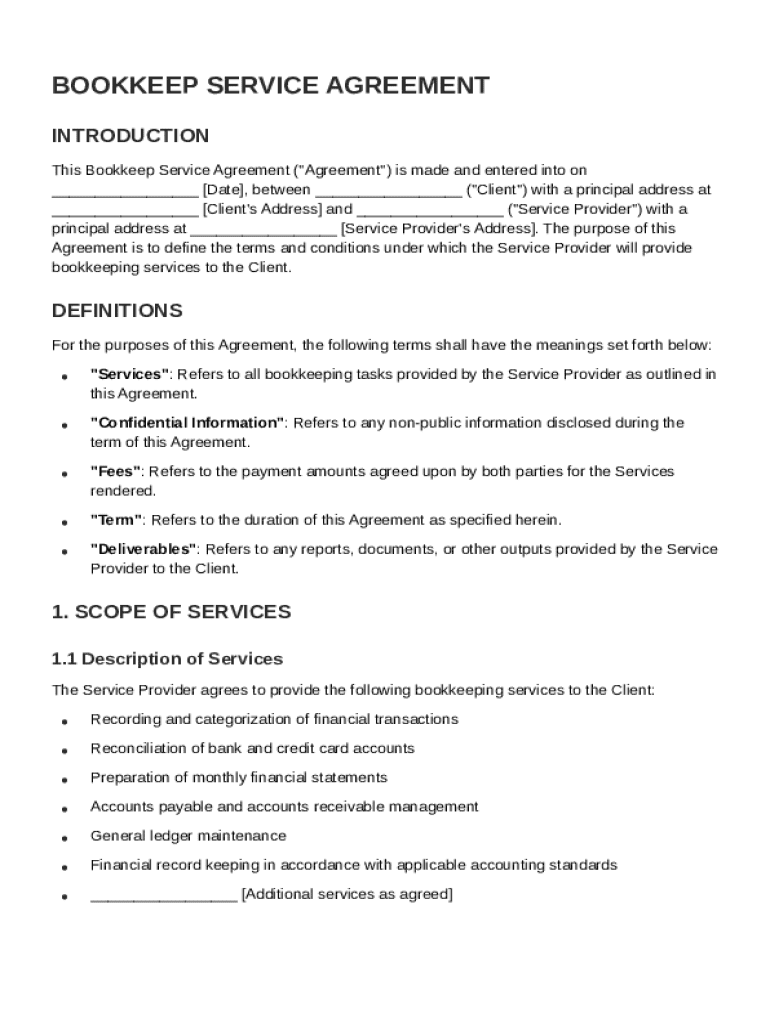
The Bookkeep Service Bookkeep Contract Template serves as a legal document that establishes the terms between a service provider and a client regarding bookkeeping services. It delineates the responsibilities of both parties, ensuring clarity in their professional relationship. Key components include the scope of services, payment terms, confidentiality agreements, and the nature of the contractor relationship. This template is vital for defining the professional boundaries and obligations, minimizing misunderstandings, and protecting the interests of both the service provider and the client.
How to Use the Bookkeep Service Agreement
To effectively utilize the Bookkeep Service Agreement, begin by reviewing and understanding each section of the template. Input details specific to the agreement, such as names, contact information, and detailed service descriptions. Follow these steps:
- Customization: Fill in the blanks with relevant information, including project details, names, and dates.
- Scope of Work: Clearly define the bookkeeping tasks to avoid future disputes.
- Payment Terms: Specify the compensation structure, including rates, payment schedules, and any additional costs.
- Confidentiality: Ensure that client data protection measures are in place, respecting legal requirements and client trust.
- Review and Sign: Both parties should review the completed document for accuracy and sign it to formalize the agreement.
Obtaining the Bookkeep Service Contract Template
The Bookkeep Service Contract Template is accessible through various platforms that offer legal document templates. These templates are available for download from legal service websites, where they can be customized to fit specific business needs. Once downloaded, they can be edited using any compatible word processing software.
Key Elements of the Bookkeep Service Agreement
Key components of the Bookkeep Service Agreement include:
- Scope of Services: A detailed description of the bookkeeping tasks and responsibilities.
- Payment Structure: Information about how and when the service provider will be compensated.
- Confidentiality Clause: Stipulations related to the protection of sensitive client information.
- Termination Conditions: Terms under which the contract can be terminated by either party.
- Indemnification: A section outlining the responsibilities of each party in protecting each other from claims or damages.
Important Terms Related to the Template
Understanding important terms within the Bookkeep Service Agreement is crucial:
- Service Provider: The individual or business providing bookkeeping services.
- Client: The individual or organization receiving the services.
- Deliverables: The expected output or results of the bookkeeping services.
- Non-disclosure: Agreement to keep information confidential and not disclose it to third parties.
- Governing Law: The legal jurisdiction that will oversee the contract.
Who Typically Uses This Template
Typically, small business owners, freelance bookkeepers, and accounting firms use the Bookkeep Service Agreement to formalize their engagements with clients. It is particularly beneficial for ensuring clear communication and setting tangible expectations, which is crucial for establishing lasting business relationships.
Legal Considerations
When using the Bookkeep Service Agreement, consider the legal implications. Ensure compliance with local laws regarding service contracts, tax reporting, and data protection. Each state may have specific regulations affecting contract terms, making professional legal advice essential when drafting these documents.
Software Compatibility and Integration
The Bookkeep Service Agreement can be integrated with popular financial software tools like QuickBooks for seamless management of financial records. Ensure that the chosen software supports document storage and retrieval functionalities to maintain accurate and up-to-date records. This integration facilitates efficient bookkeeping processes and enhances financial reporting accuracy.
Digital vs. Paper Versions
While traditional paper versions of the Bookkeep Service Agreement are still in use, digital formats offer greater flexibility and efficiency. Digital contracts can be easily modified, shared, and stored electronically, reducing the need for physical storage space and enhancing accessibility. They also support electronic signatures, streamlining the agreement process.
Business Types Benefiting Most
Businesses that benefit most from the Bookkeep Service Agreement include small to medium-sized enterprises (SMEs), startups, and freelance bookkeepers. These entities often require clear service terms to manage financial records effectively while maintaining compliance with statutory requirements. The agreement facilitates structured bookkeeping, which is crucial for financial transparency and decision-making.




