






Definition and Purpose of a Bilateral Contract Template
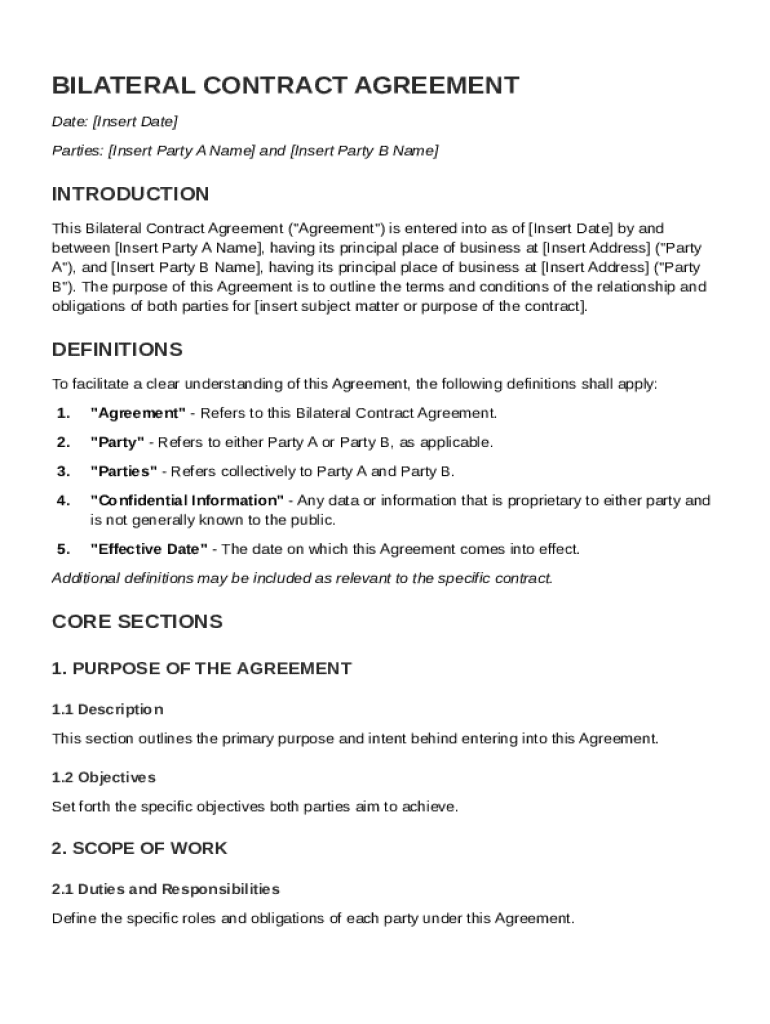
A bilateral contract template establishes a mutual agreement between two parties, outlining the specific obligations each must fulfill. This type of contract is foundational in creating clear expectations and responsibilities, ensuring that both parties are held accountable to the terms agreed upon. The typical elements included are duties of the parties, payment terms, confidentiality clauses, and mechanisms for dispute resolution. By using a standardized template, efficiency is improved, and potential conflicts arising from unclear terms are minimized.
How to Effectively Use the Bilateral Contract Template
Utilizing a bilateral contract template involves several steps to ensure that the contract is comprehensive and tailored to the parties involved. First, identify the parties entering into the agreement and clearly state their responsibilities. Make sure to articulate the objectives and terms with specificity. This ensures all parties clearly understand their roles. Next, fill in any variables such as payment amounts, timelines, and specific milestones. It is also essential to review and adjust any clauses to reflect the unique needs of the parties involved. This ensures that the template serves as an effective framework, customized to meet your specific requirements while maintaining legal compliance.
Steps to Complete the Bilateral Contract Template
- Identify the Parties Involved: Clearly state the names and contact information for all parties.
- Define the Objectives: Explain the purpose and scope of the agreement.
- Outline Obligations: Specify the duties and commitments of each party.
- Set Payment Terms: Detail the financial obligations, including amounts, due dates, and payment methods.
- Include Confidentiality Clauses: Ensure clauses protect the sensitive information exchanged.
- Determine Dispute Resolution Methods: Decide on mediation, arbitration, or court jurisdiction for resolving disagreements.
- Review and Approve: Both parties should review the contract carefully and seek legal advice if necessary before signing.
Key Elements of a Bilateral Contract Template
- Party Identification: Clearly defined details of all parties involved.
- Terms and Conditions: Detailed obligations and expectations for each party.
- Payment Provisions: Specifics on compensation, including installments and penalties for late payments.
- Confidentiality Clauses: Terms that safeguard sensitive information.
- Dispute Resolution: Guidelines for resolving conflicts, stating preferred methods and legal jurisdiction if needed.
- Signatures: Spaces for authorized representatives to sign, indicating agreement to the terms.
Legal Use and Considerations for the Bilateral Contract Template
The bilateral contract template must adhere to applicable federal and state laws to ensure its enforceability. Legal considerations include ensuring that all parties have the capacity to enter into a contract and that the contract's terms are not void for public policy reasons. The inclusion of electronic signature options is essential in today’s digital age, making signing more efficient while maintaining a legally binding status. It's advisable to consult with legal counsel to verify compliance with all pertinent laws, especially if the contract involves complex terms or significant financial transactions.
Who Typically Uses the Bilateral Contract Template
Bilateral contract templates are widely used across various industries, including construction, real estate, business services, and manufacturing. They are ideal for scenarios where two parties agree to exchange goods, services, or promises — such as contracts for services, sales agreements, and employment contracts. Typically, these contracts are employed by businesses, independent contractors, service providers, and sometimes individual parties who wish to formalize their mutual obligations.


Important Terms Related to Bilateral Contract Template
- Offer and Acceptance: The fundamental components where one party proposes terms, and the other agrees.
- Consideration: The value exchanged between parties, which can be monetary or services.
- Capacity: Legal ability of parties to enter a contract.
- Mutuality: Both parties have an understanding of and agree to the contract's terms.
- Legality: Terms must comply with existing laws and public policy.
Examples of Using the Bilateral Contract Template
Real-world applications of a bilateral contract template include:
- Service Agreements: Outlining terms for freelancers or consultants providing services to a company.
- Sales Contracts: Formalizing the sale of goods between suppliers and retailers.
- Employment Agreements: Specifying terms between employers and new hires.
These templates serve as an efficient way to ensure all parties have a clear understanding of their commitments, fostering successful business relationships.